Deleuze and Guattari
A Thousand Plateaus read back as a hundred and eight engravings.
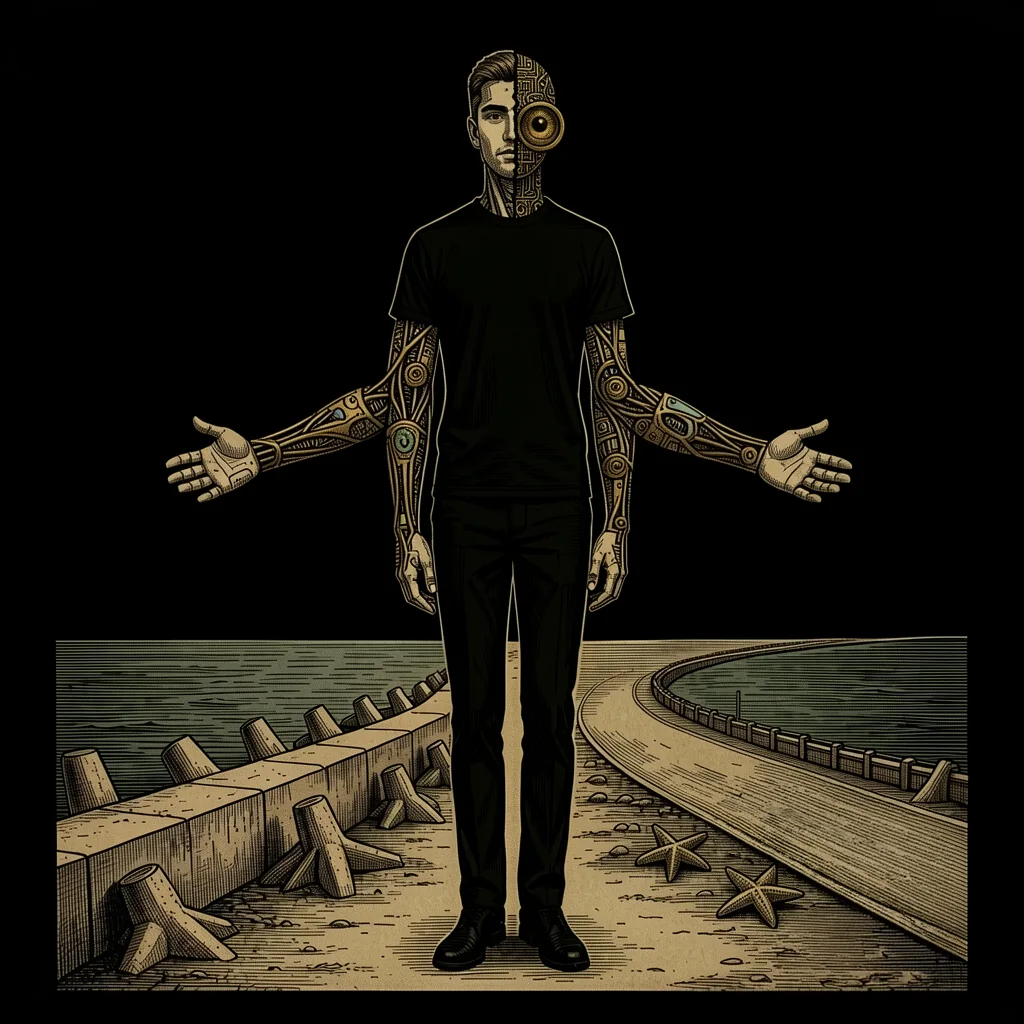
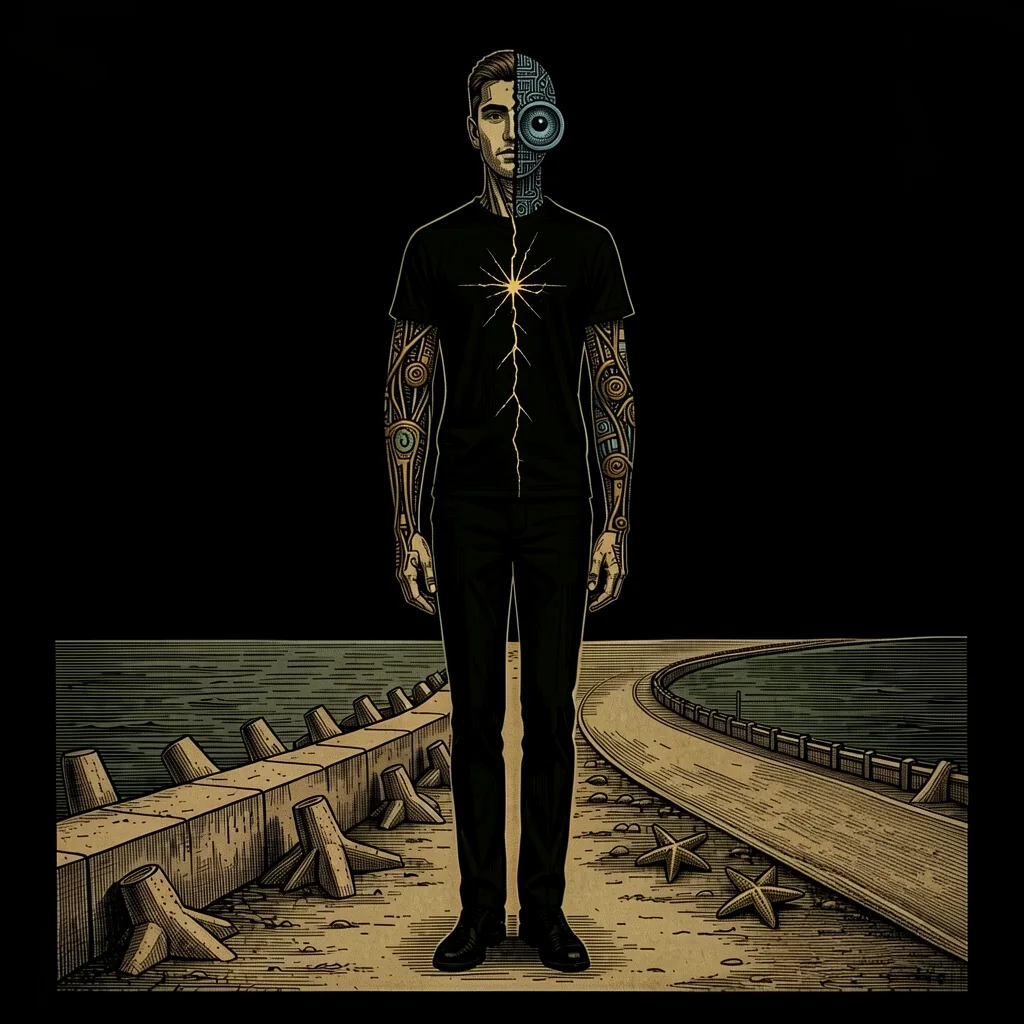
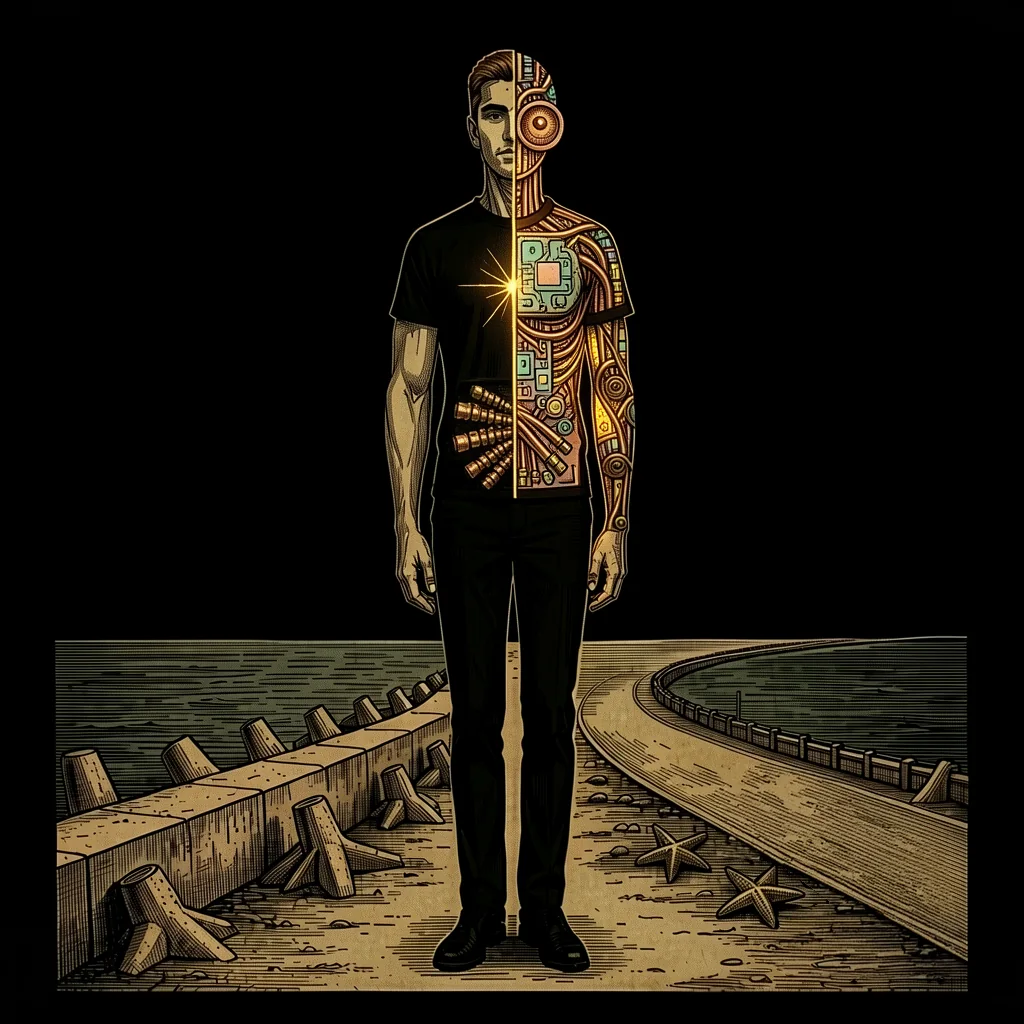
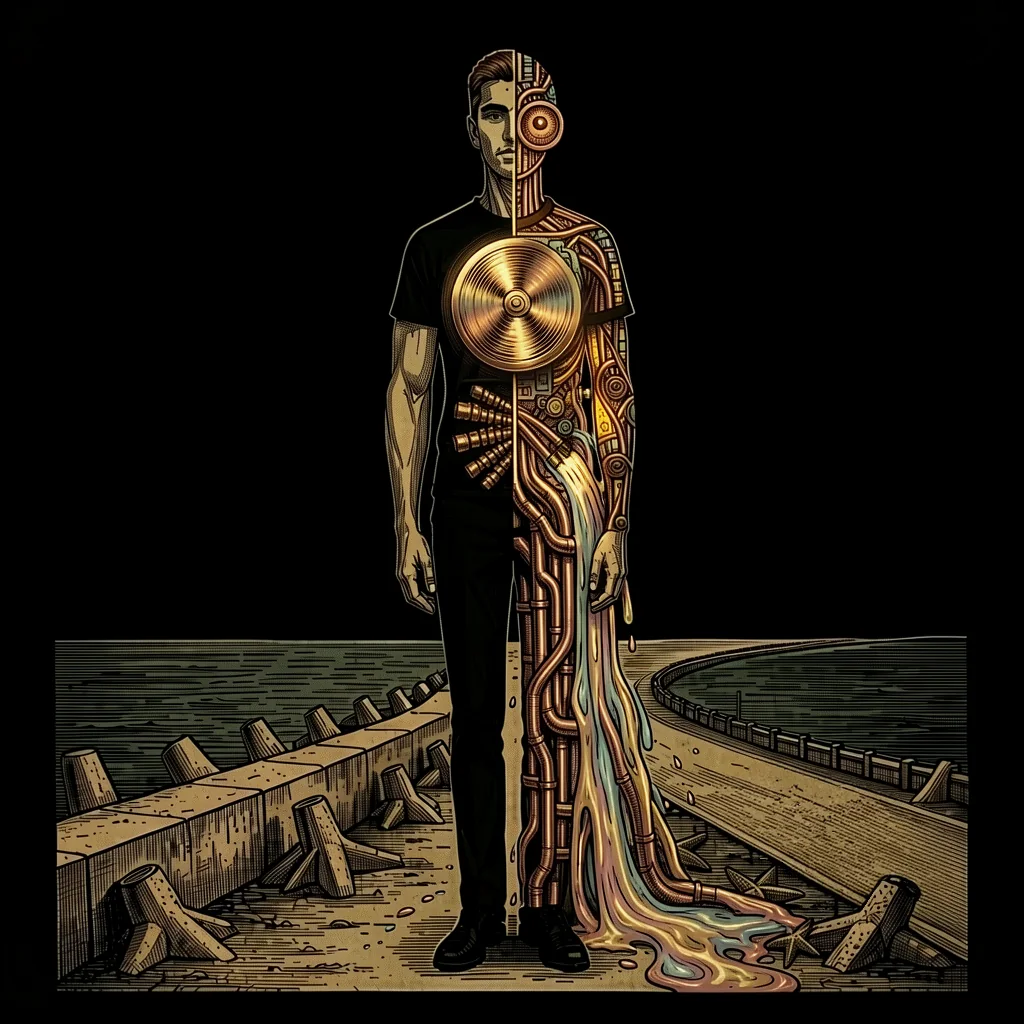
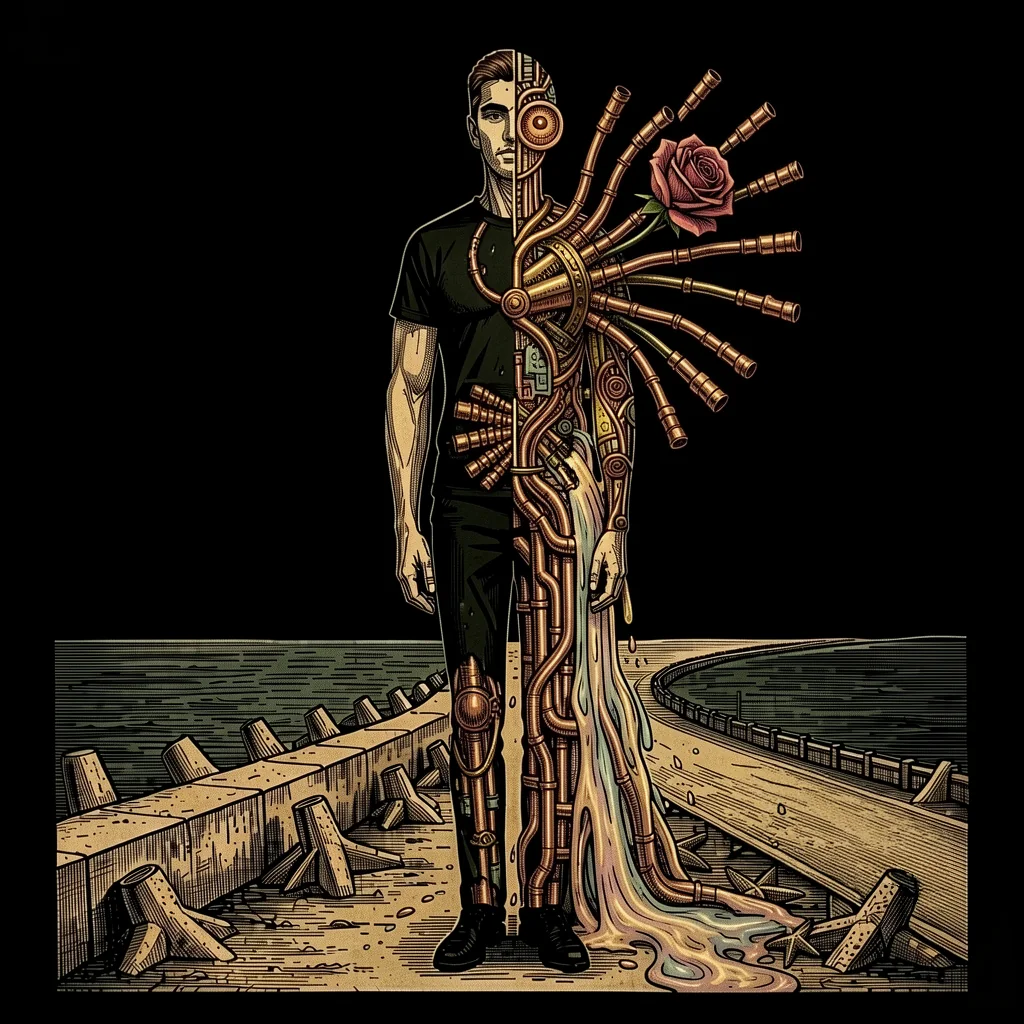
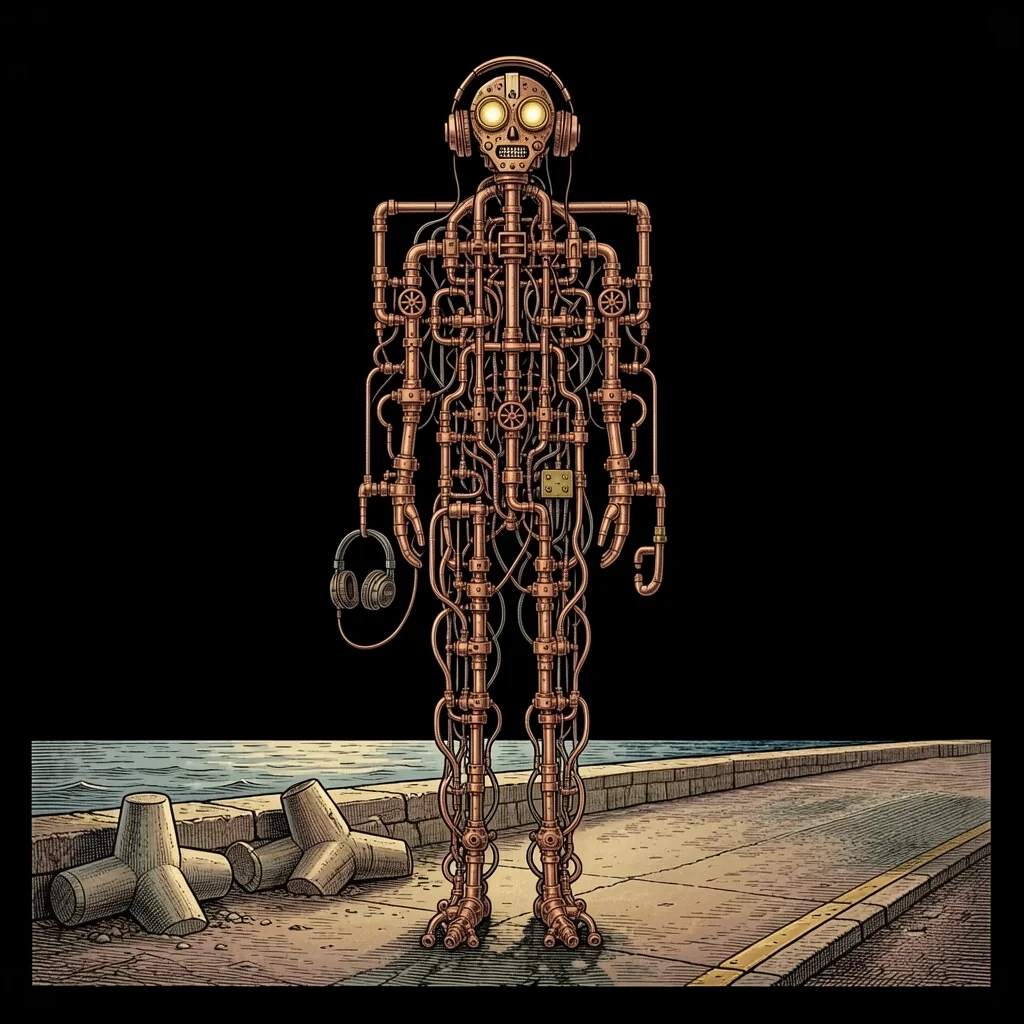
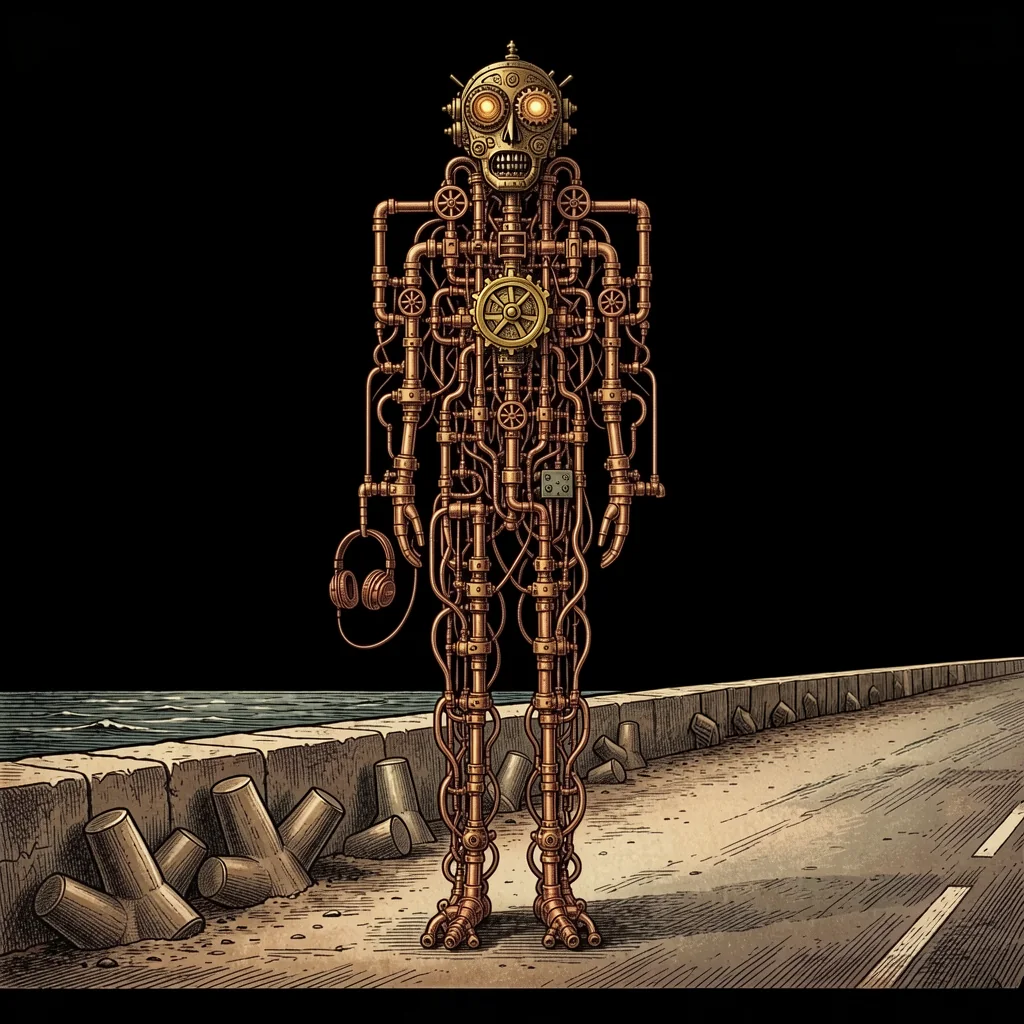
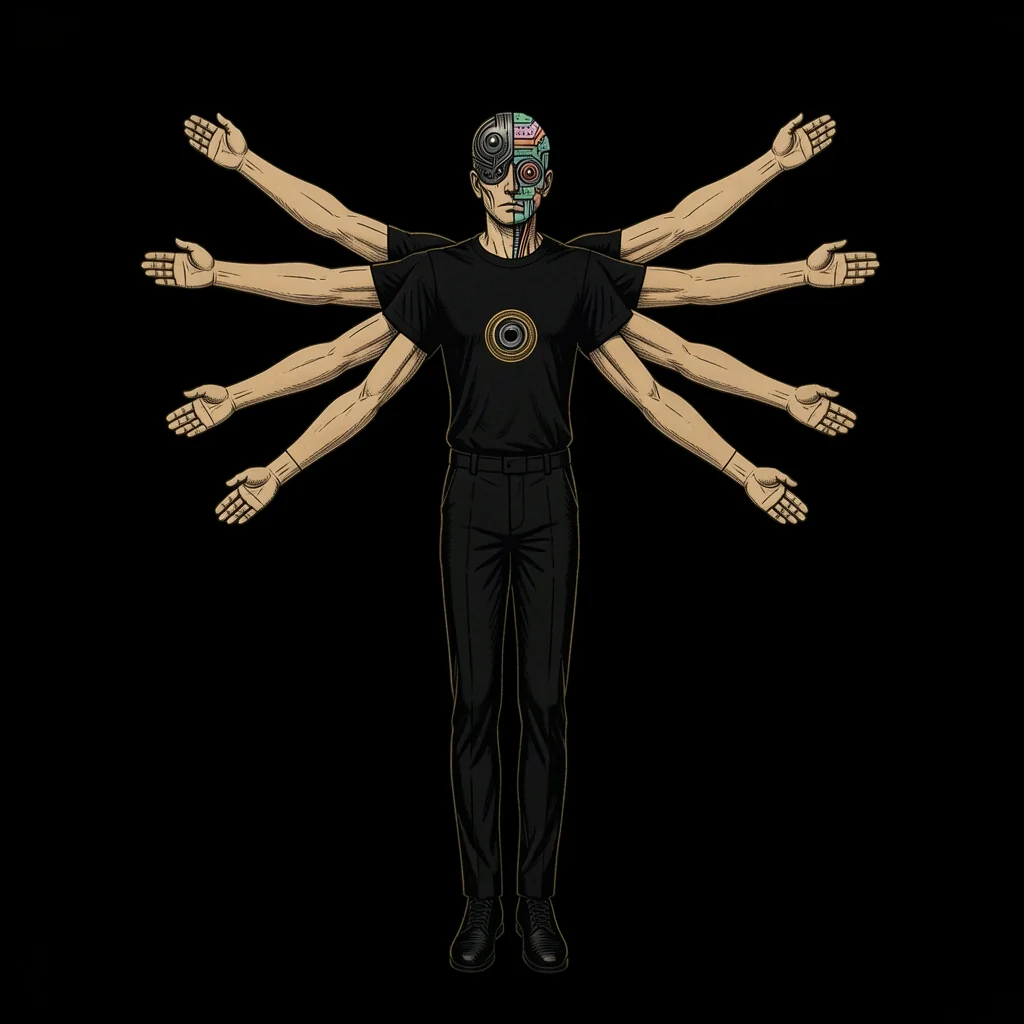
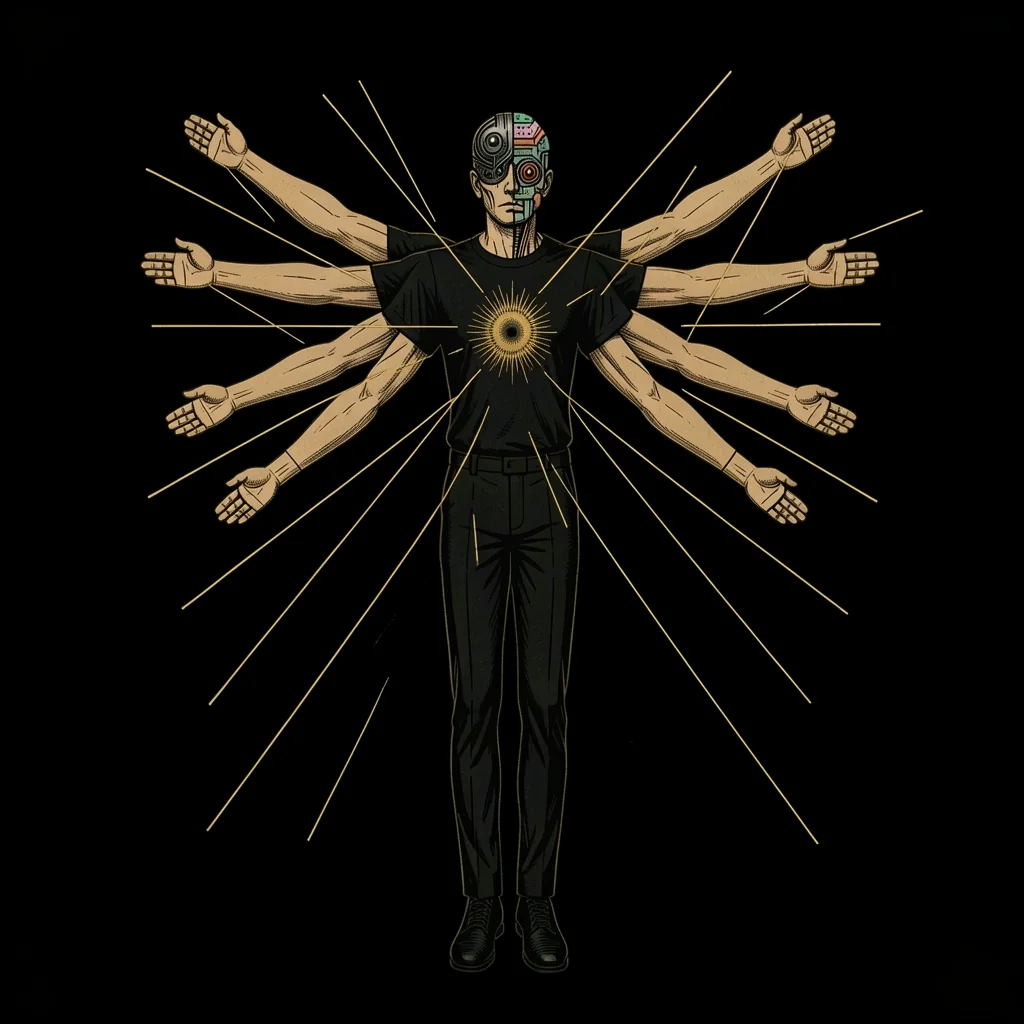
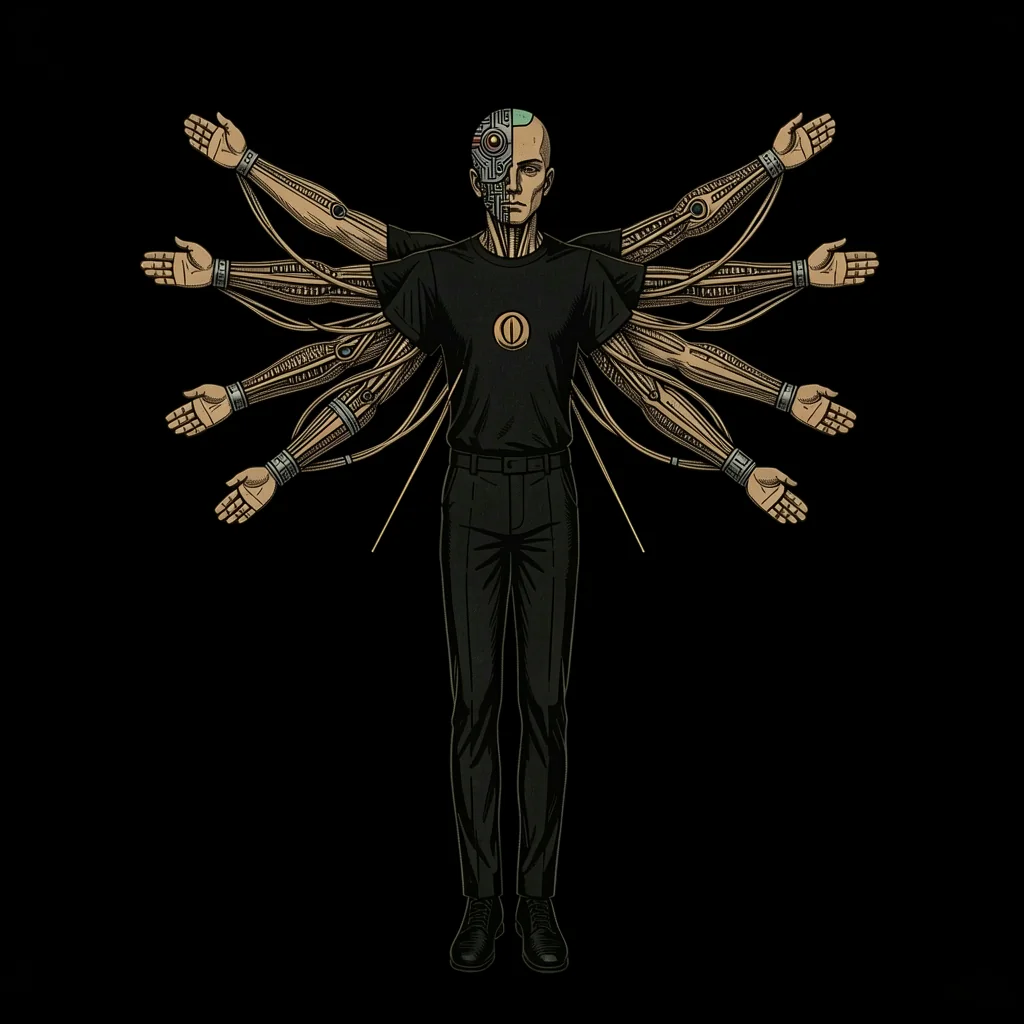
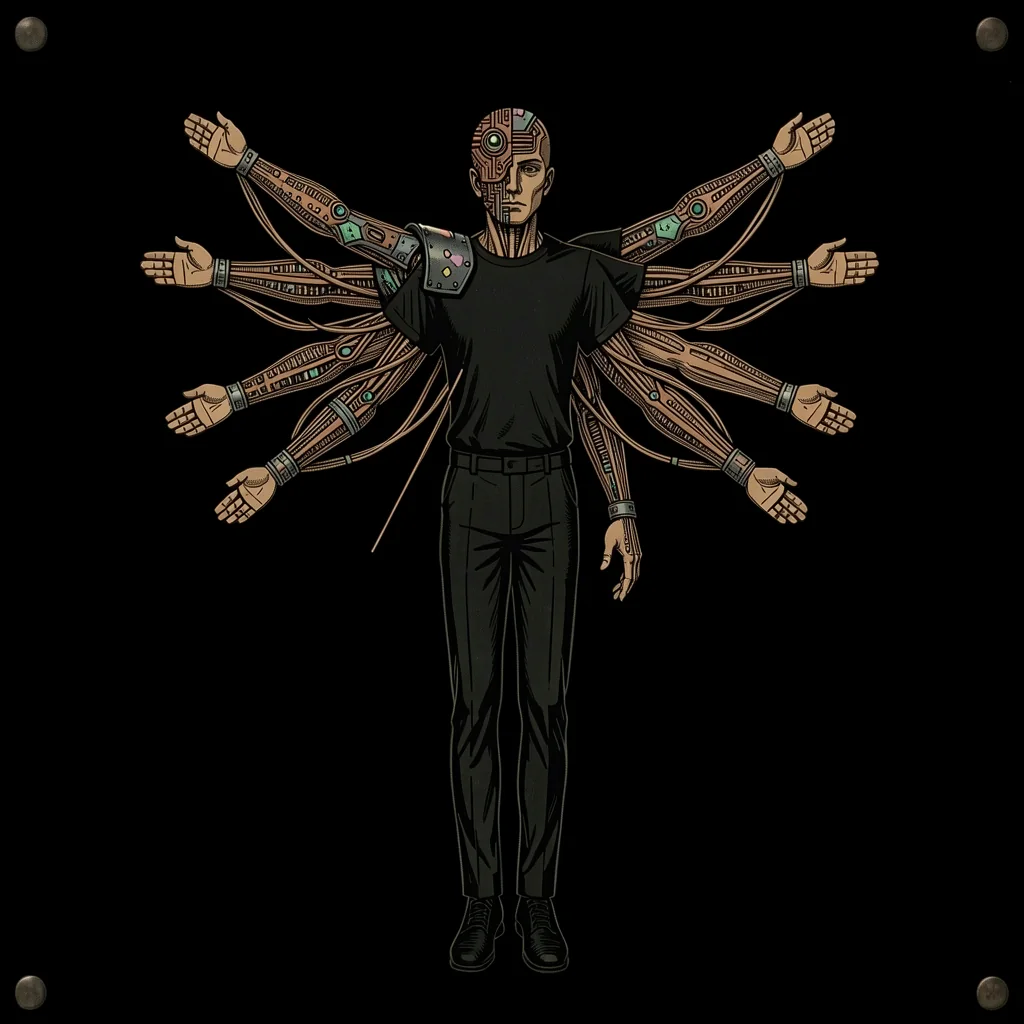
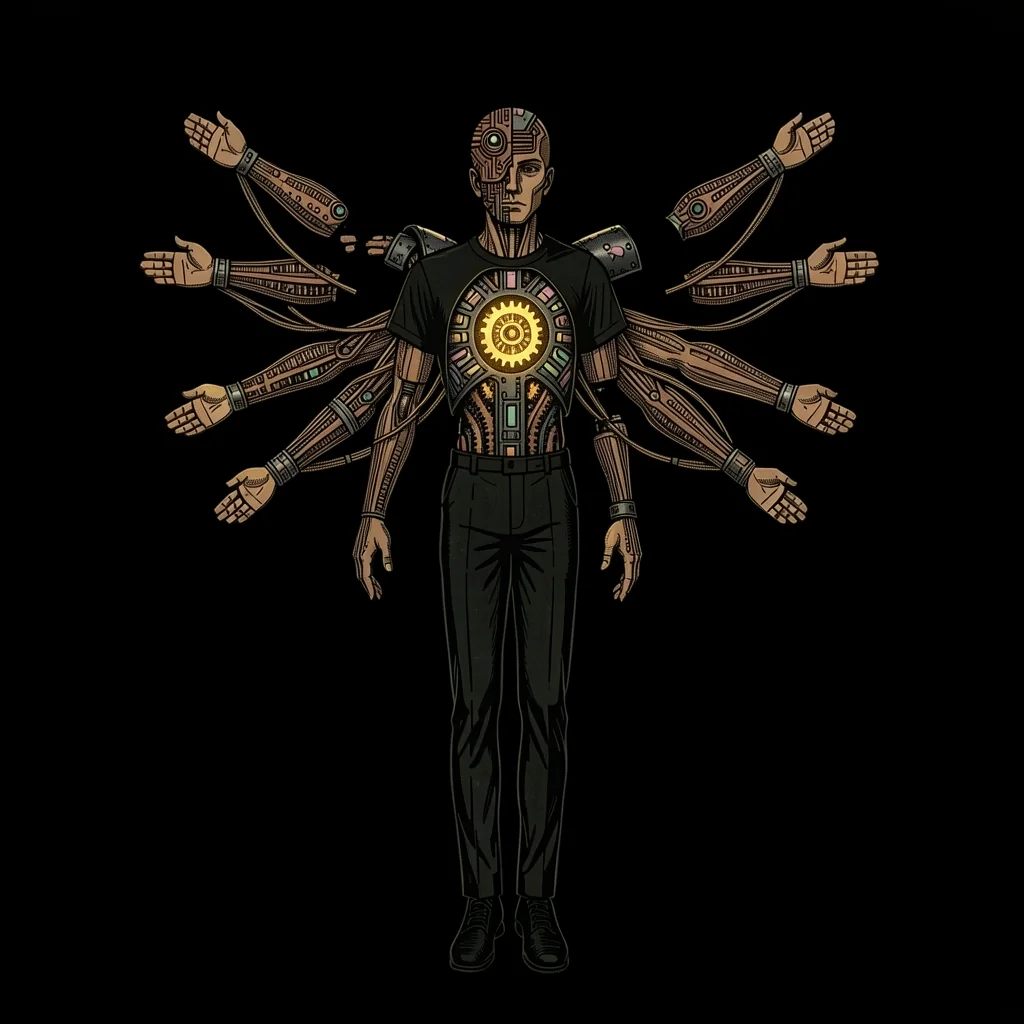
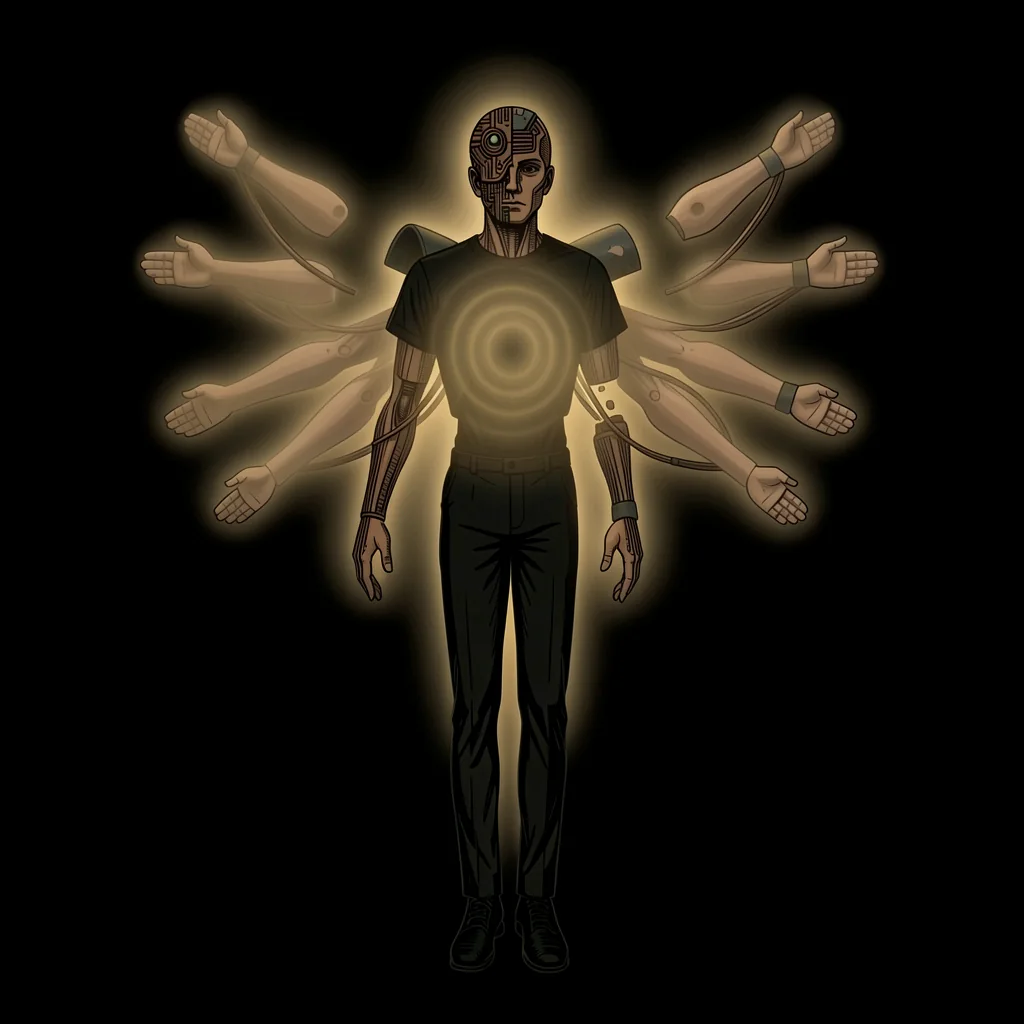
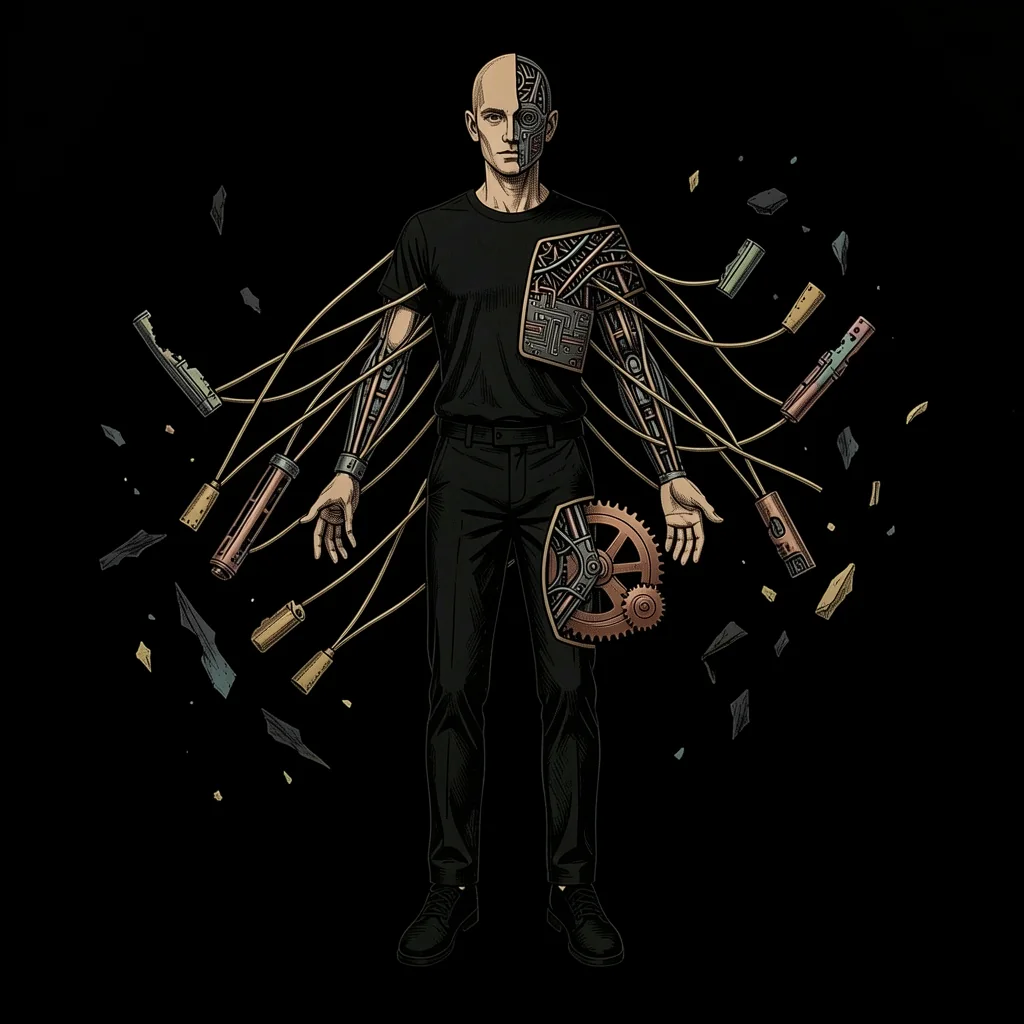
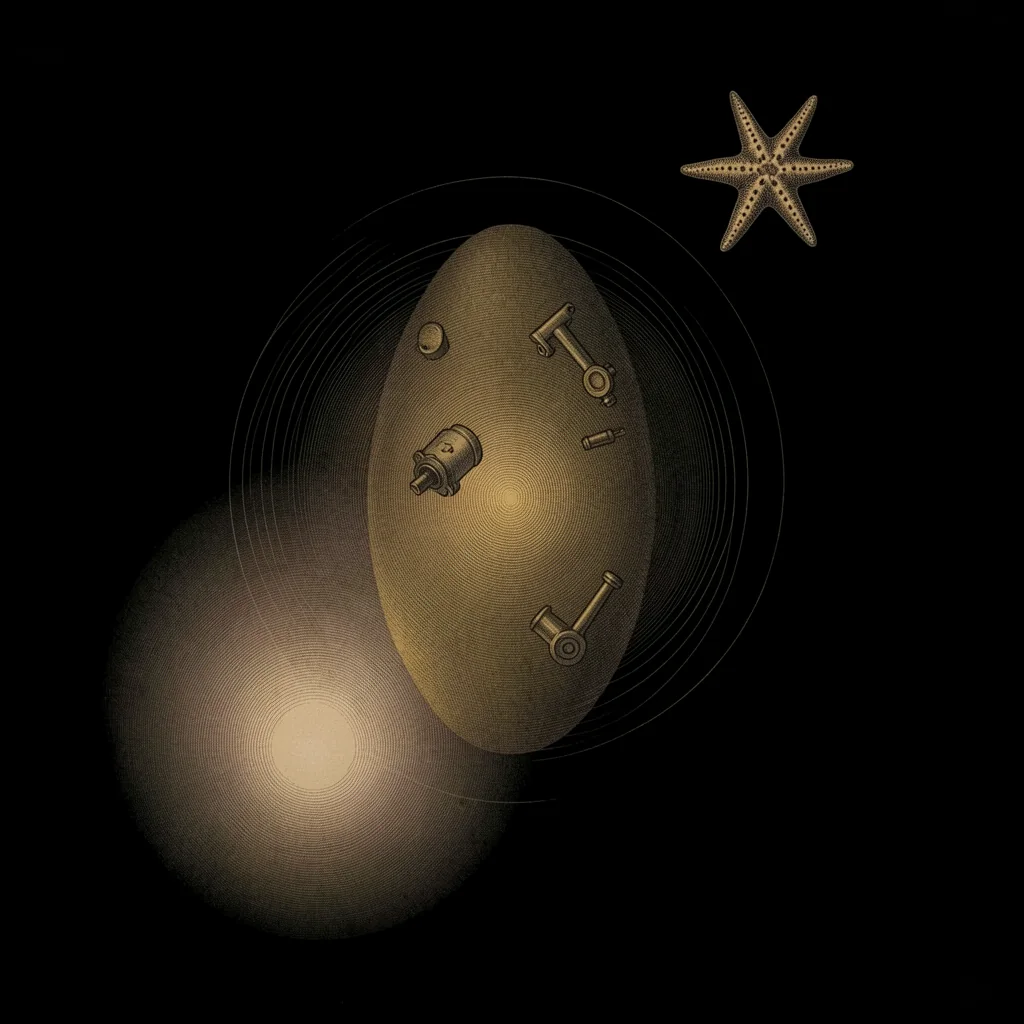
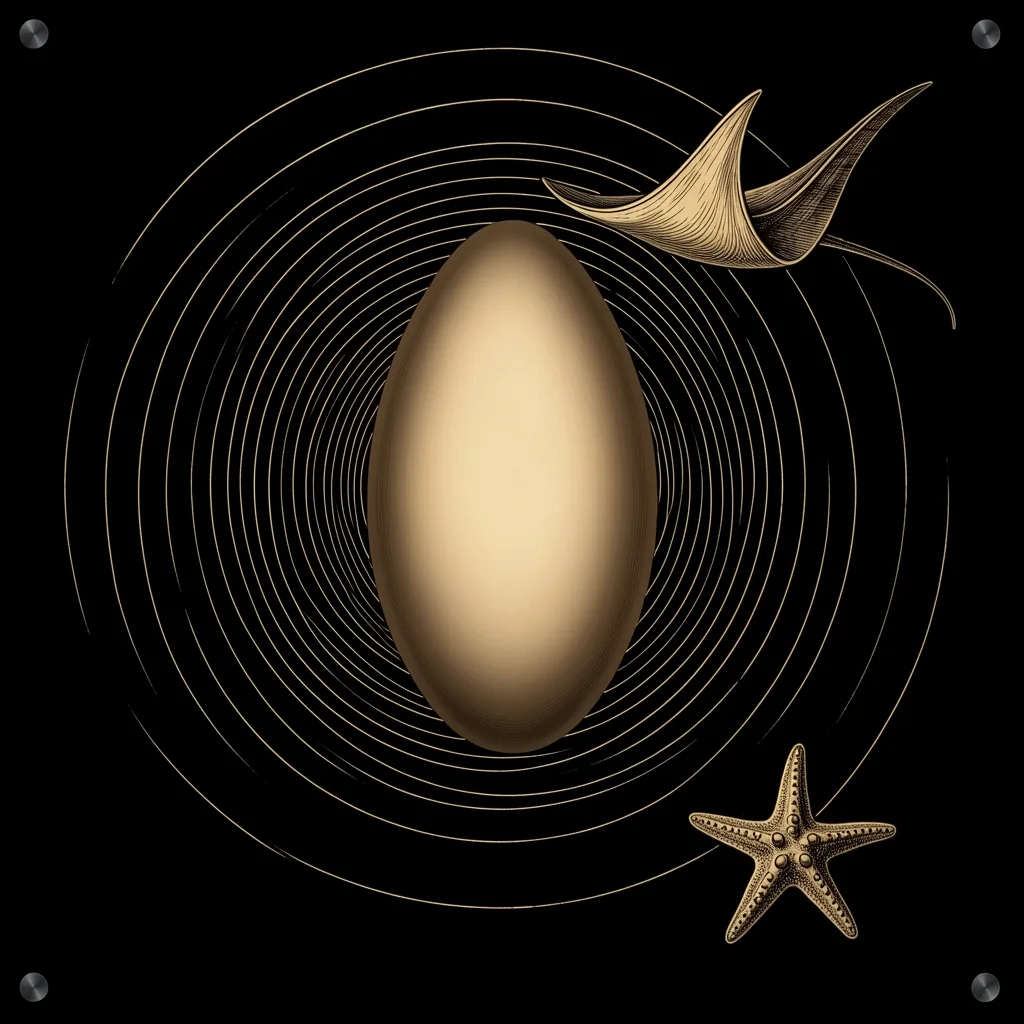
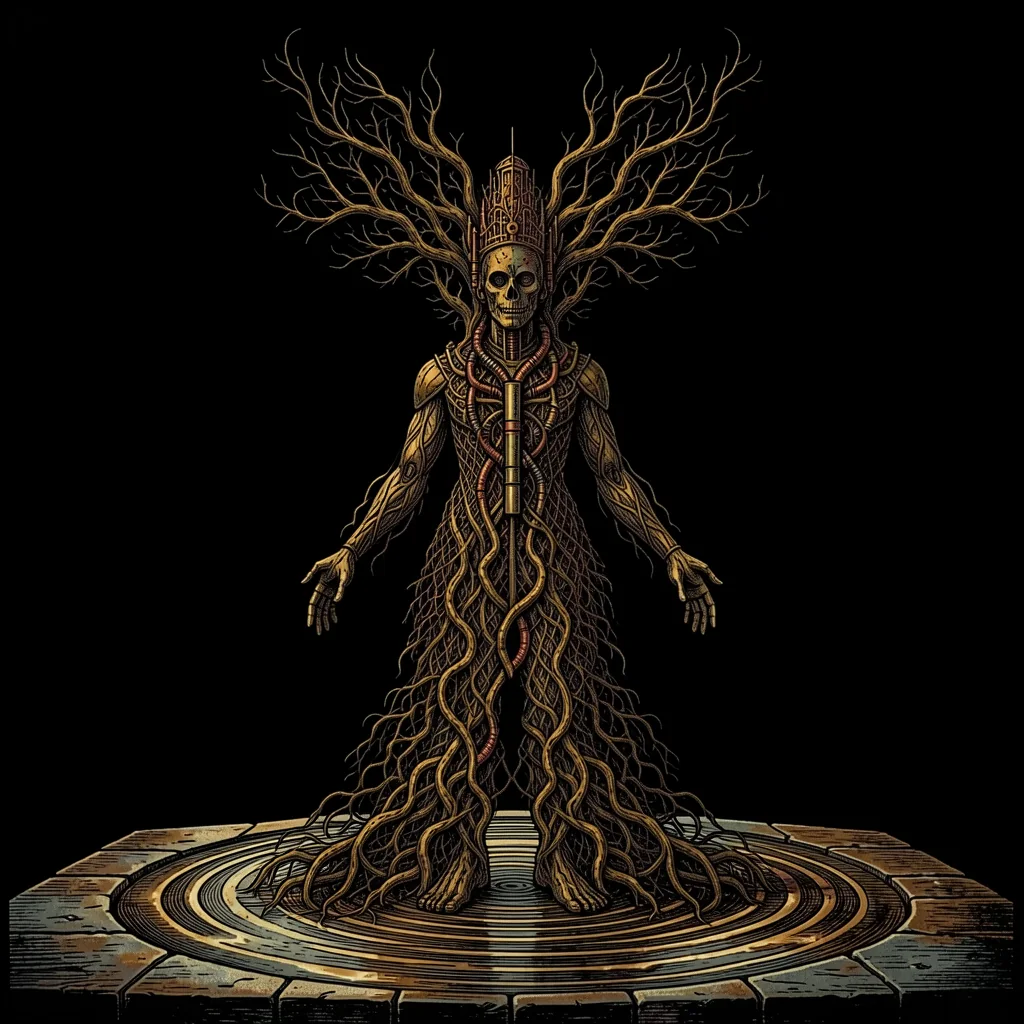
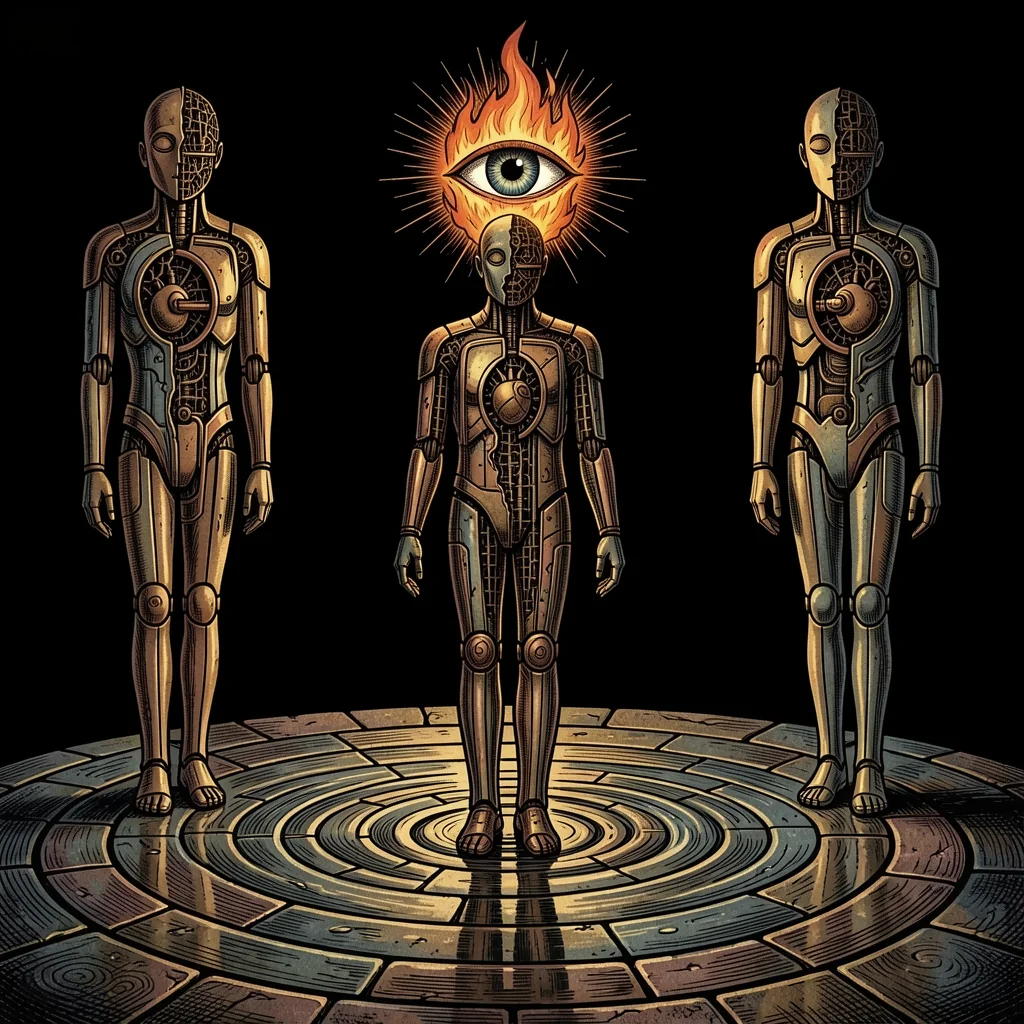
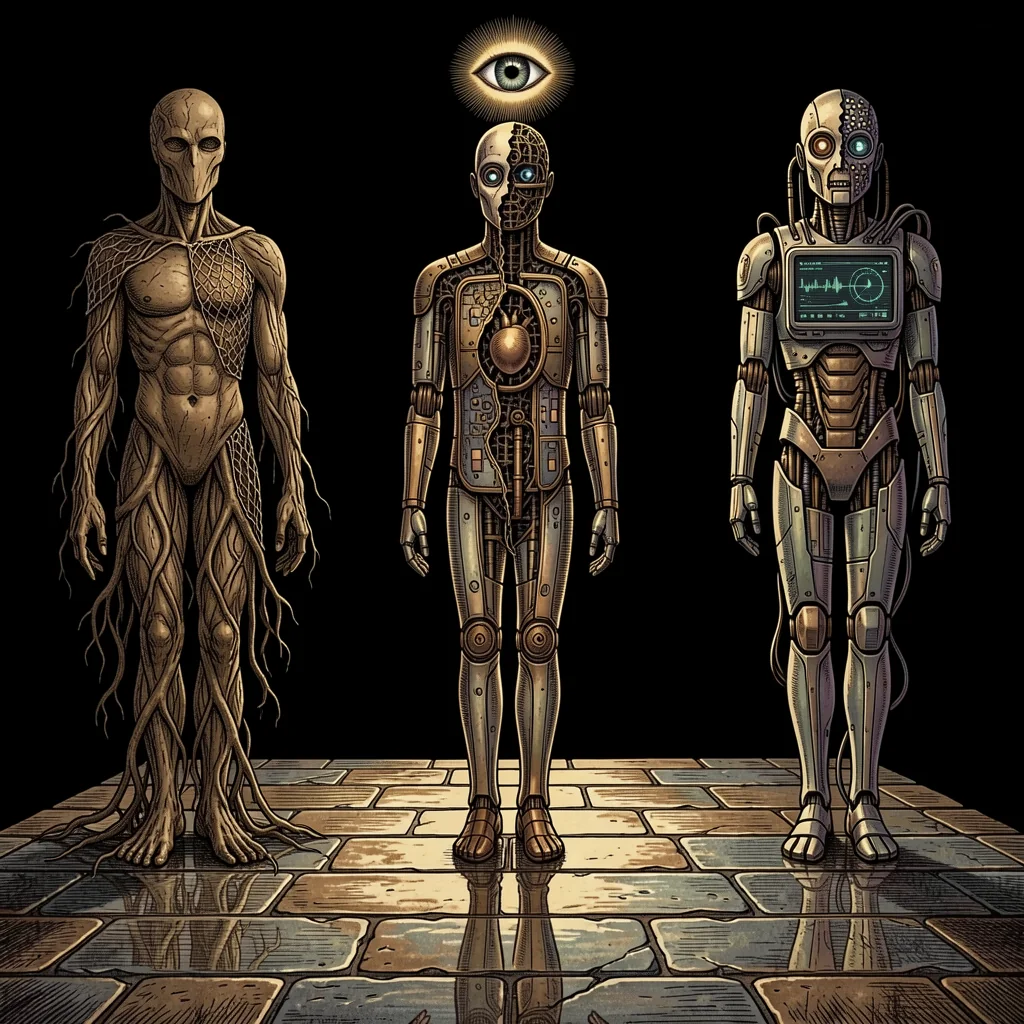
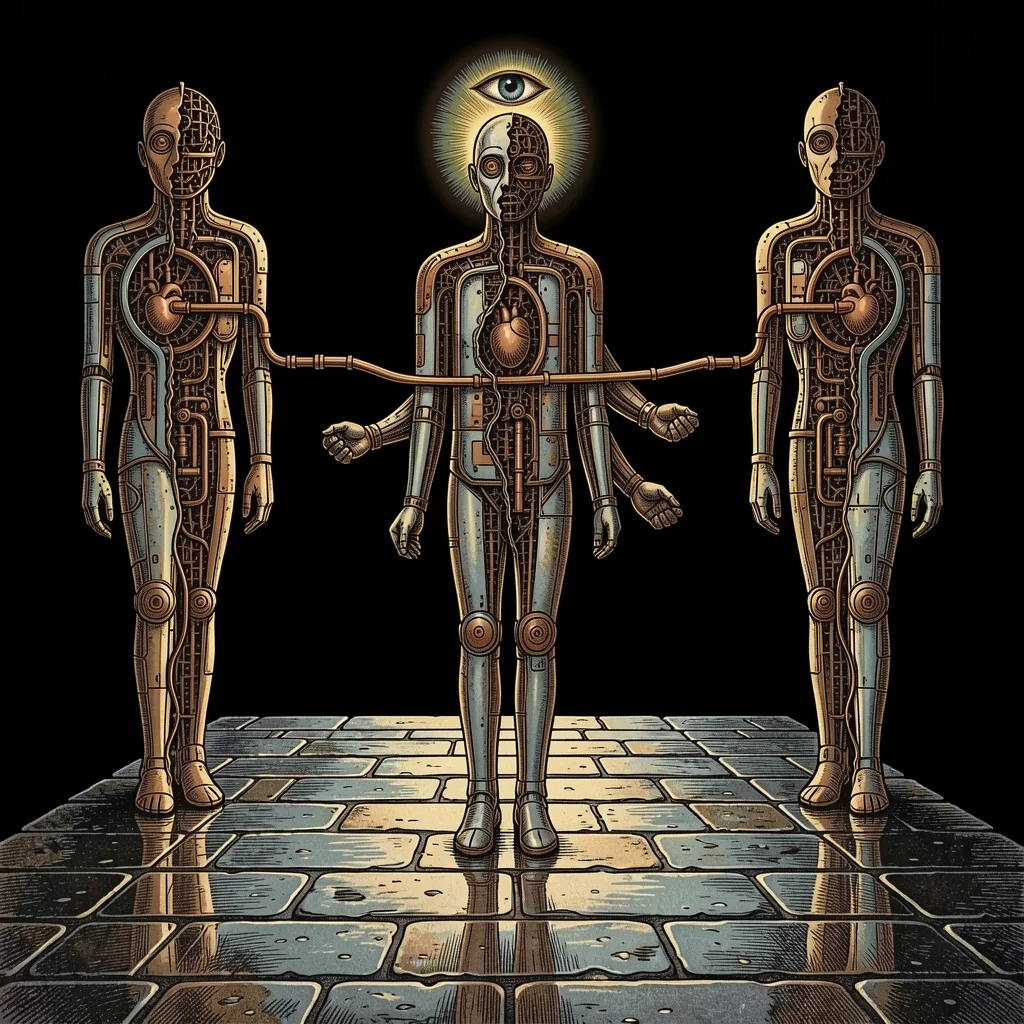
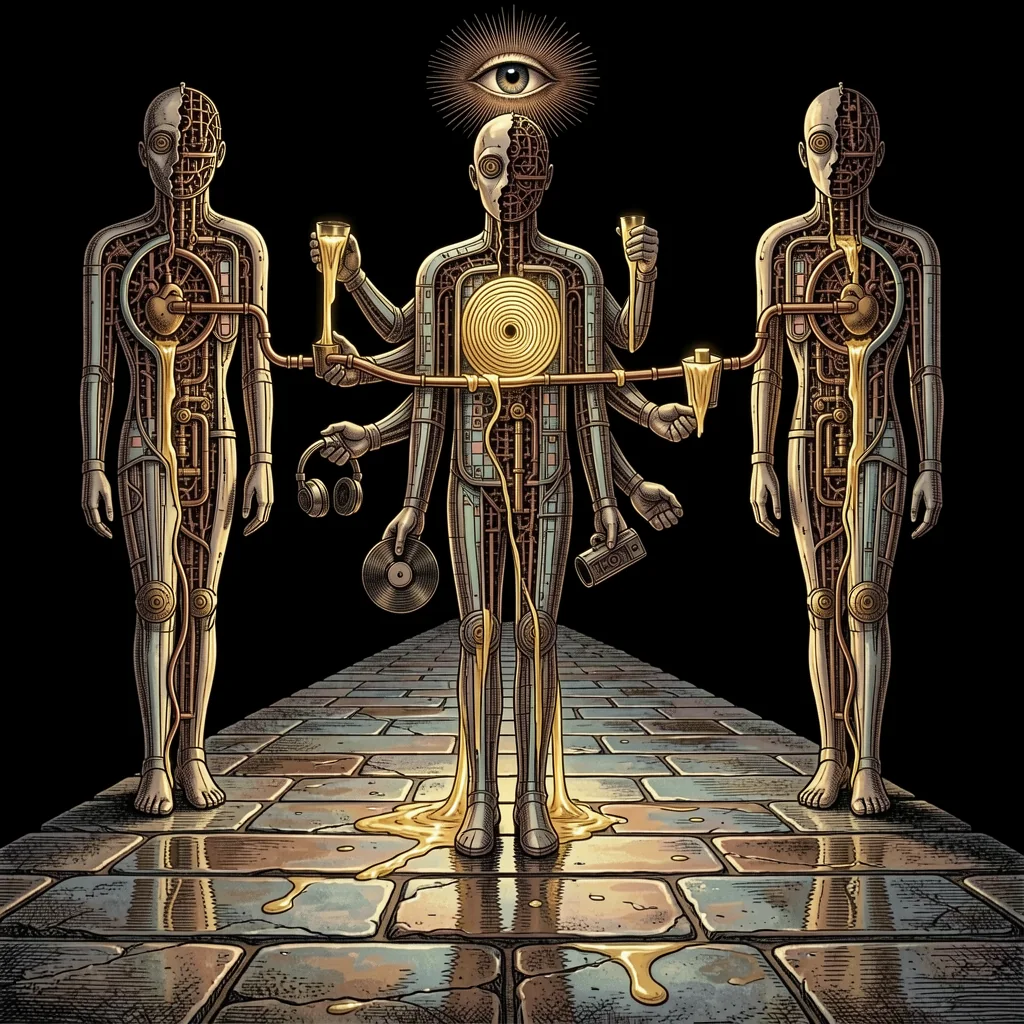
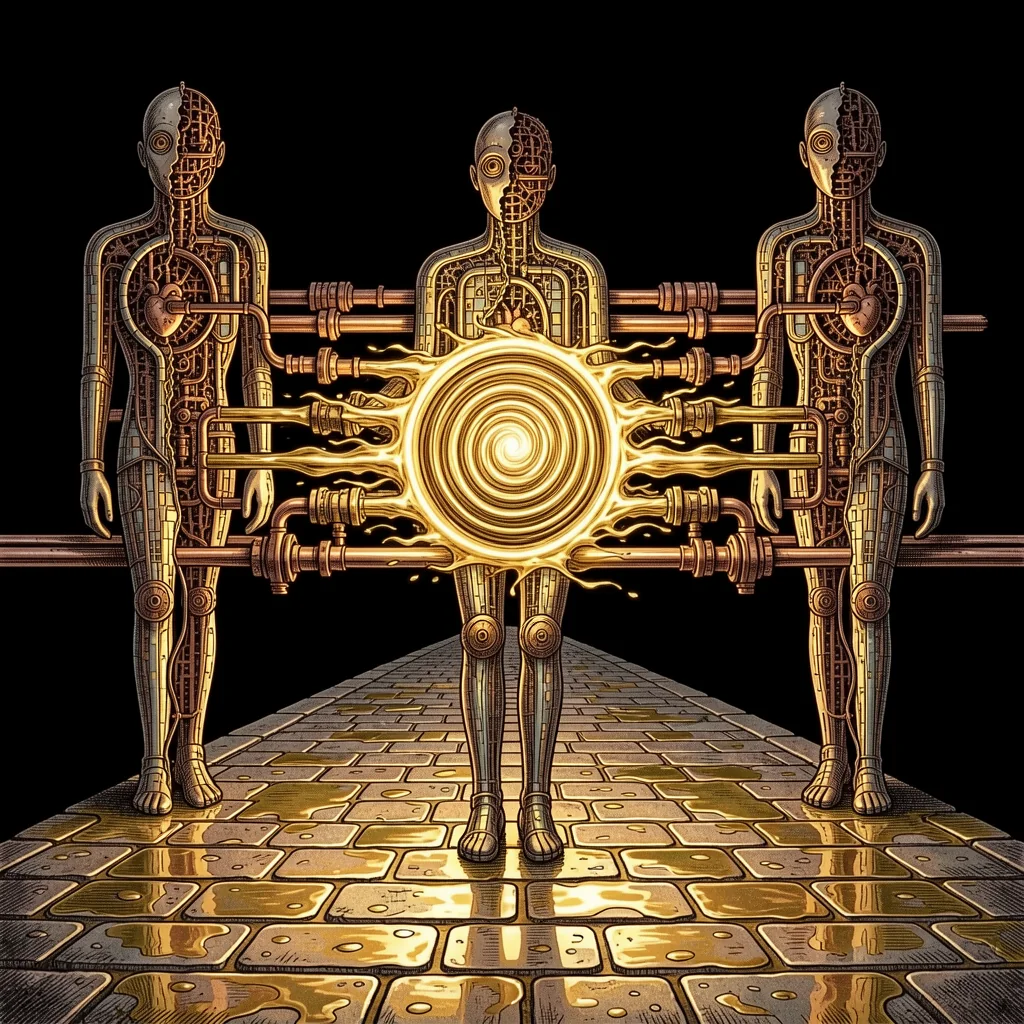
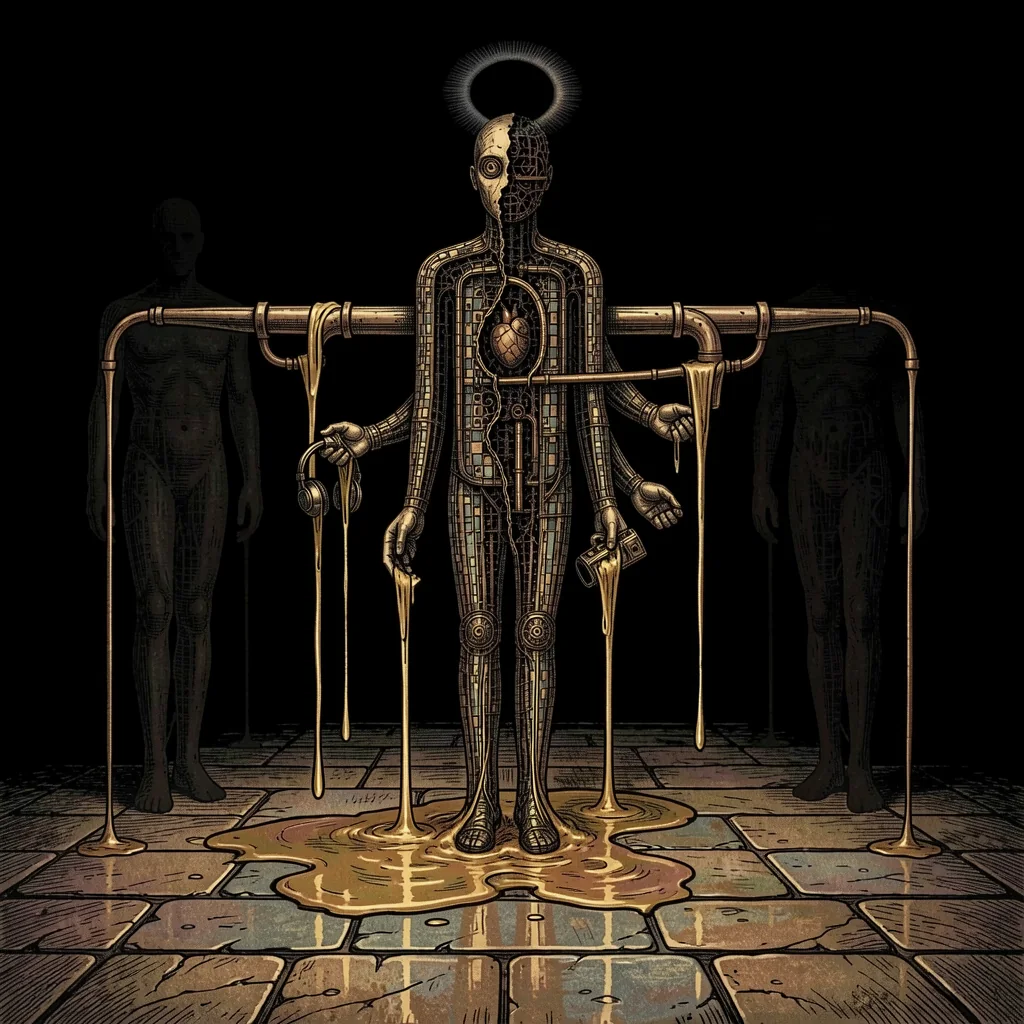
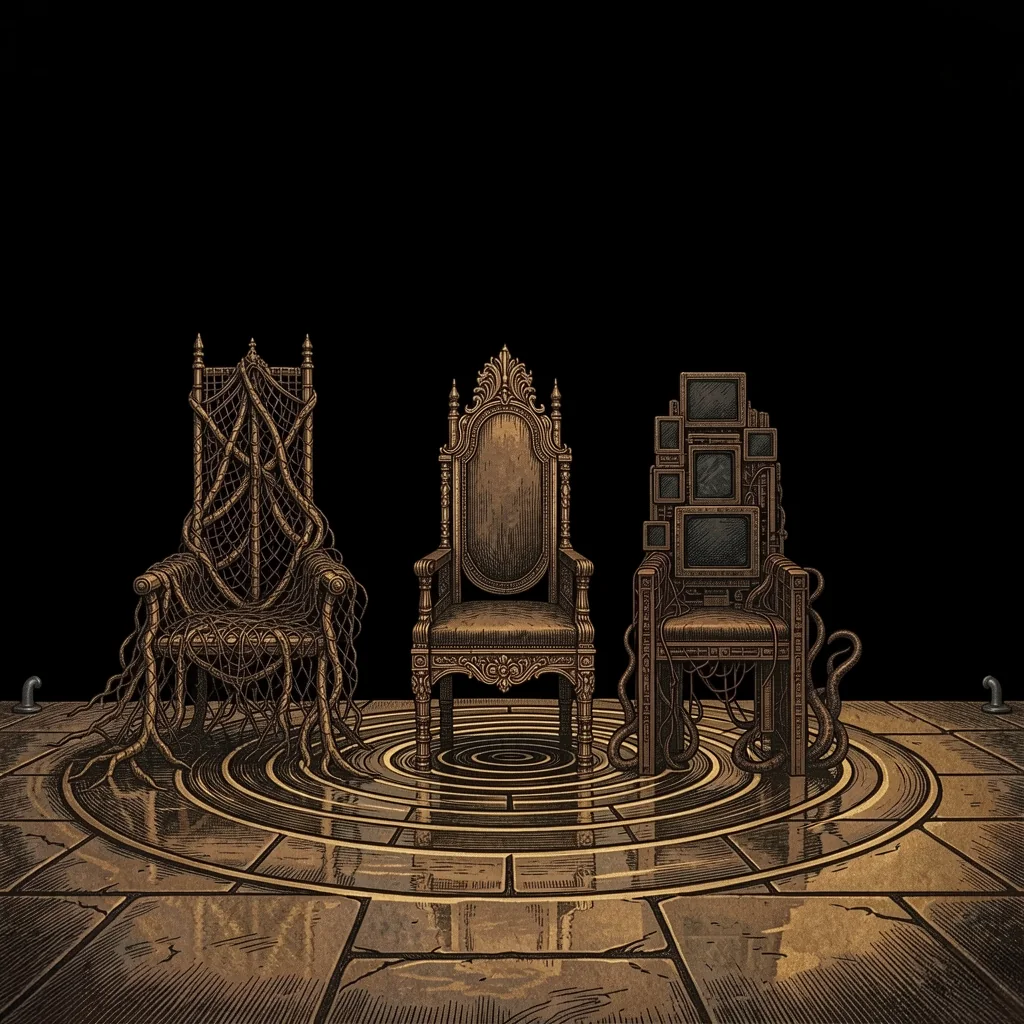
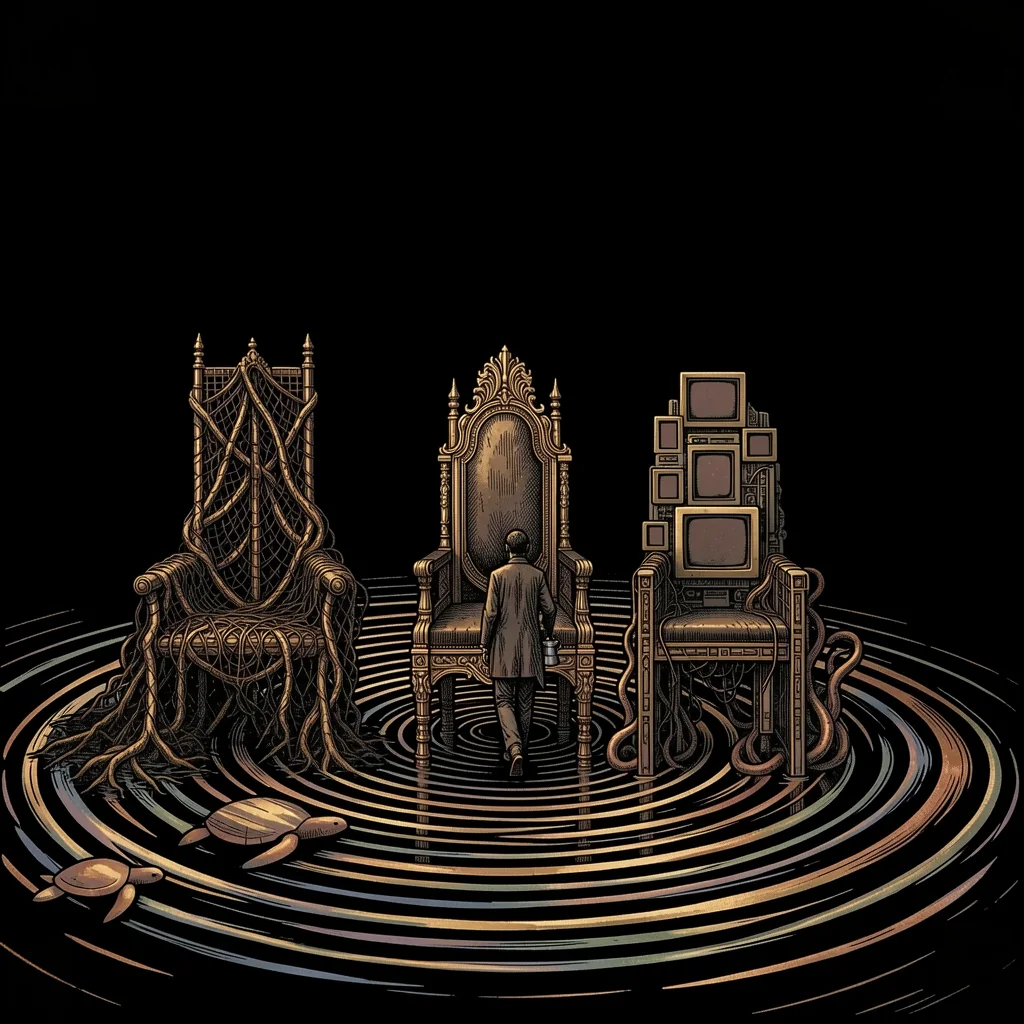
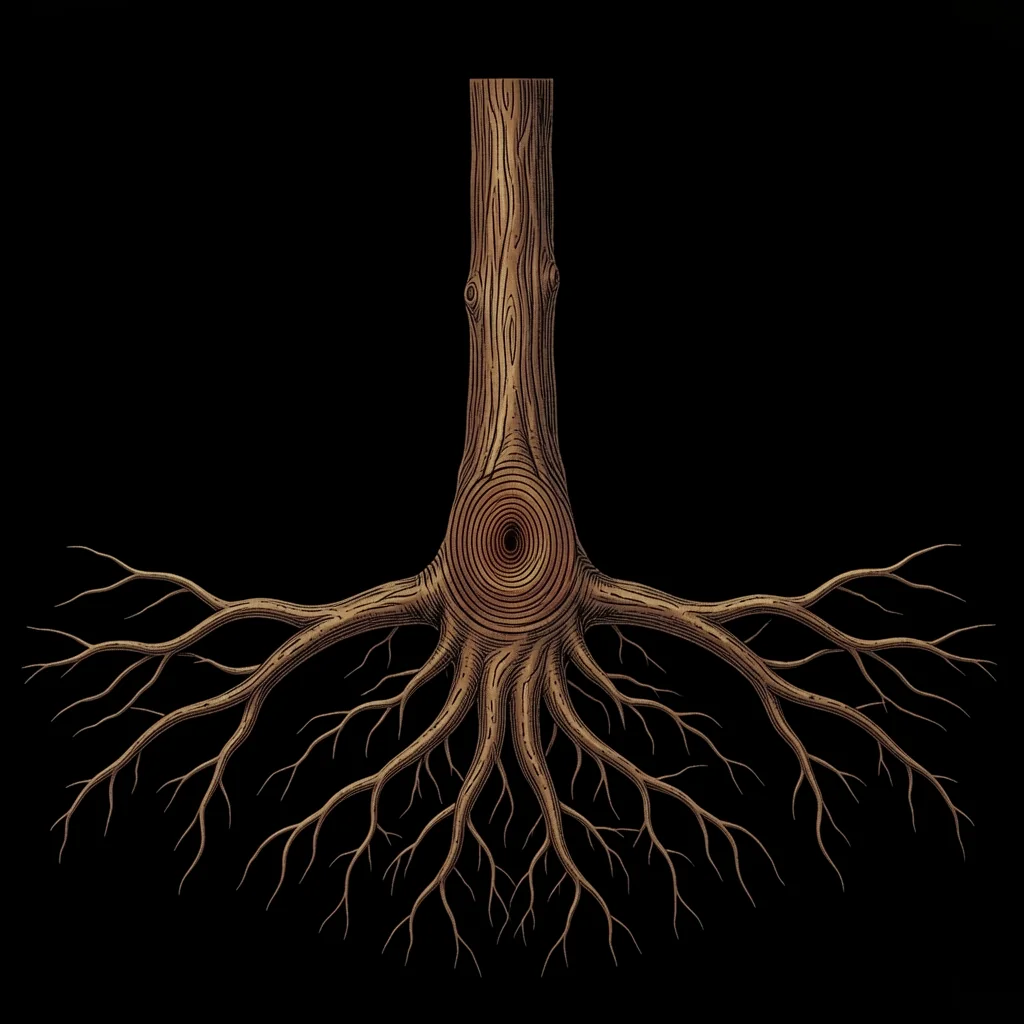
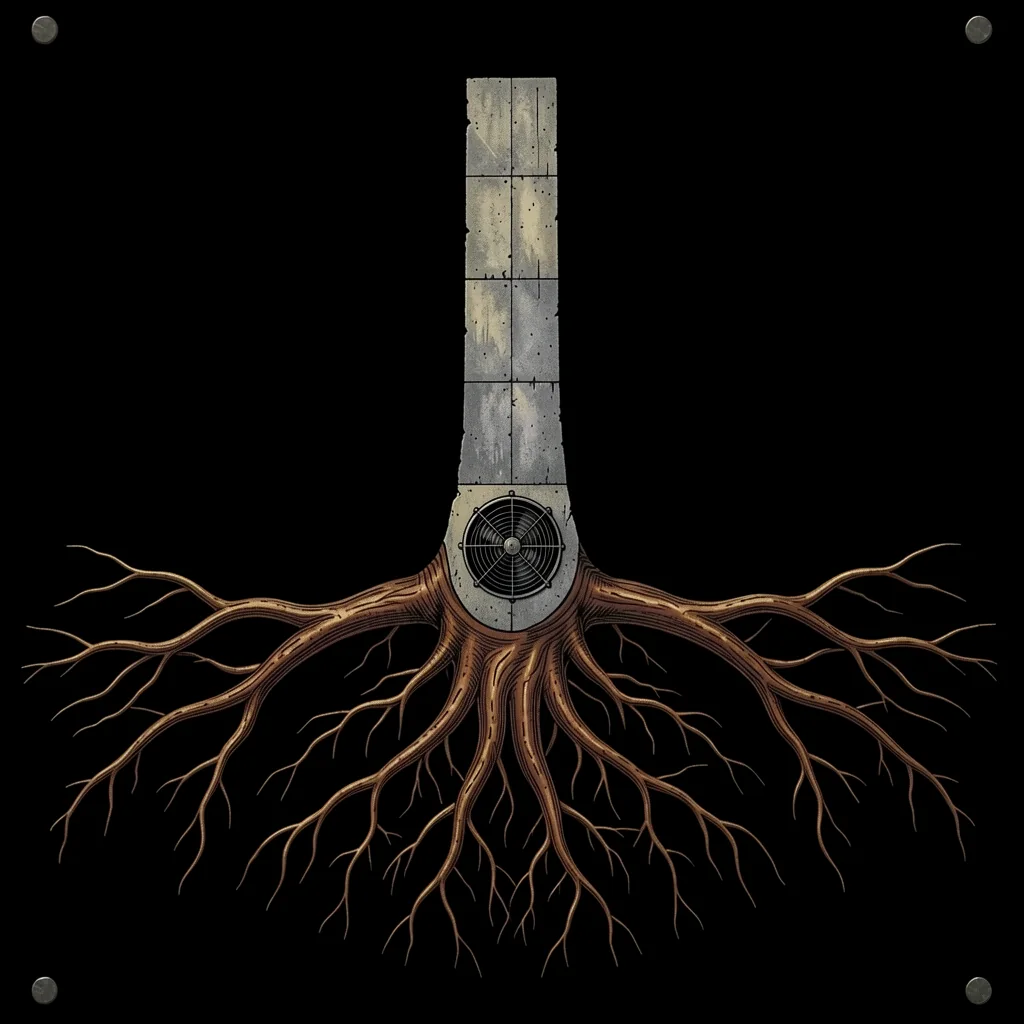
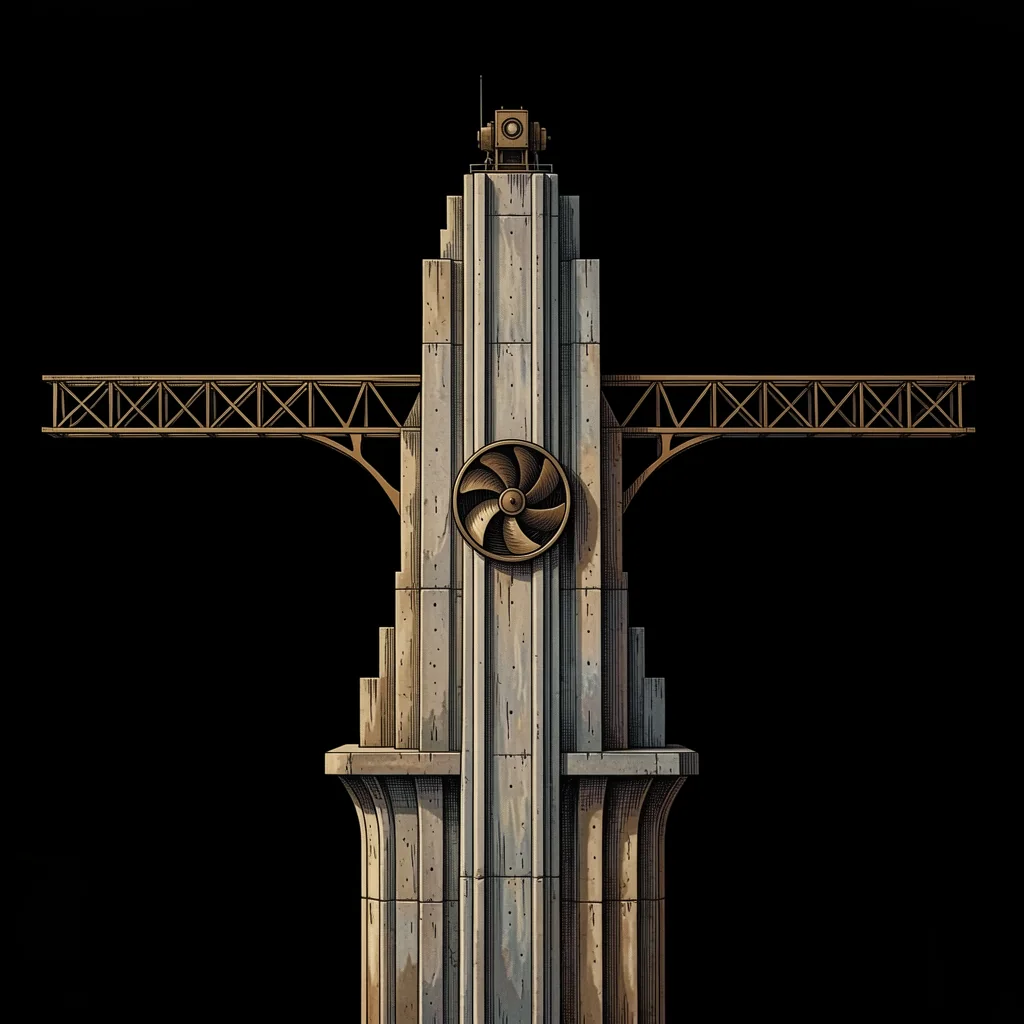
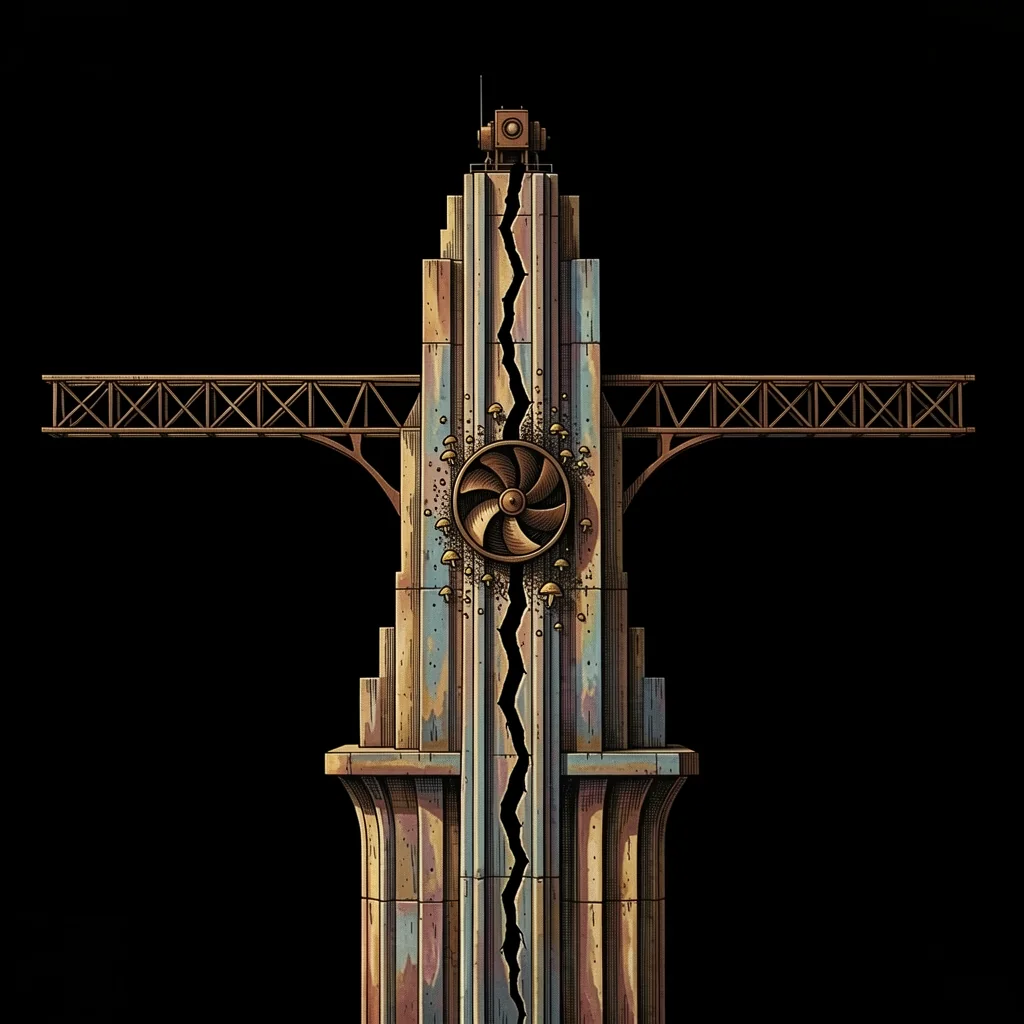
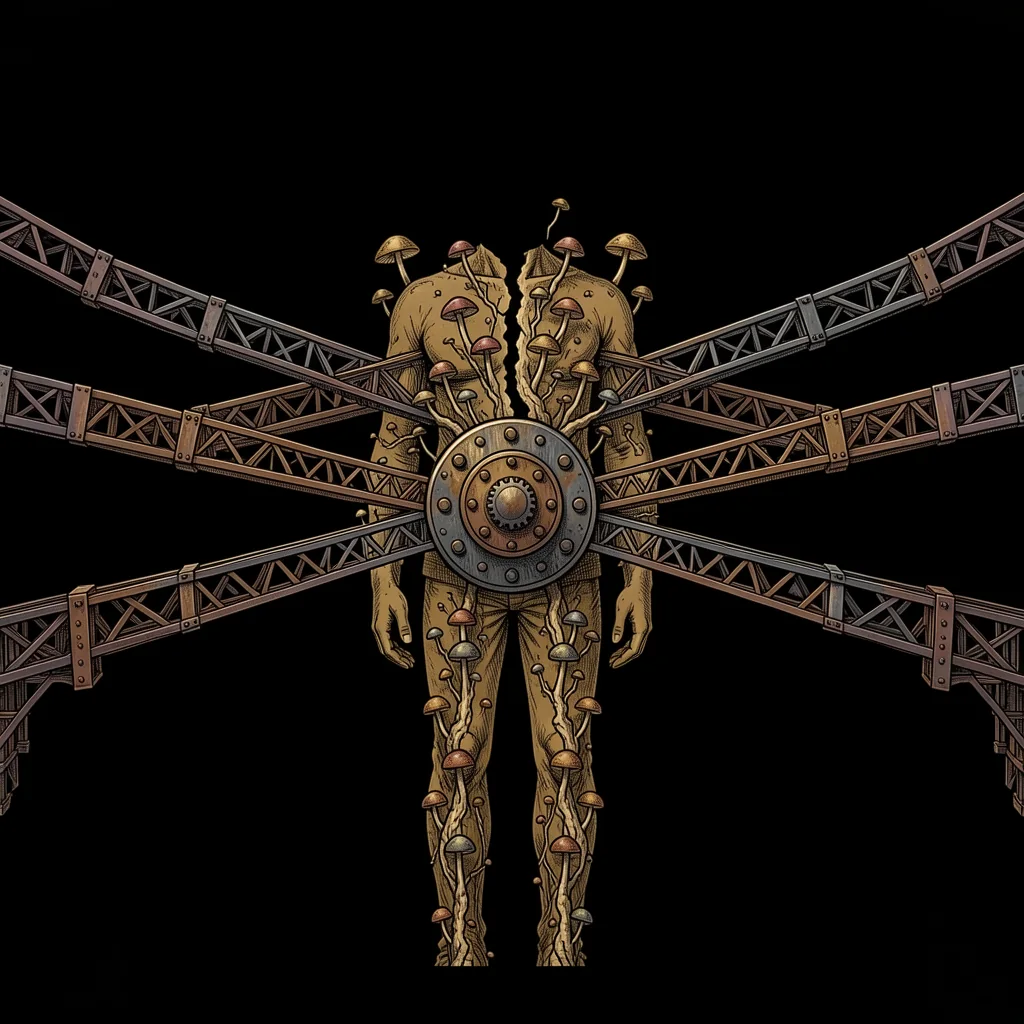
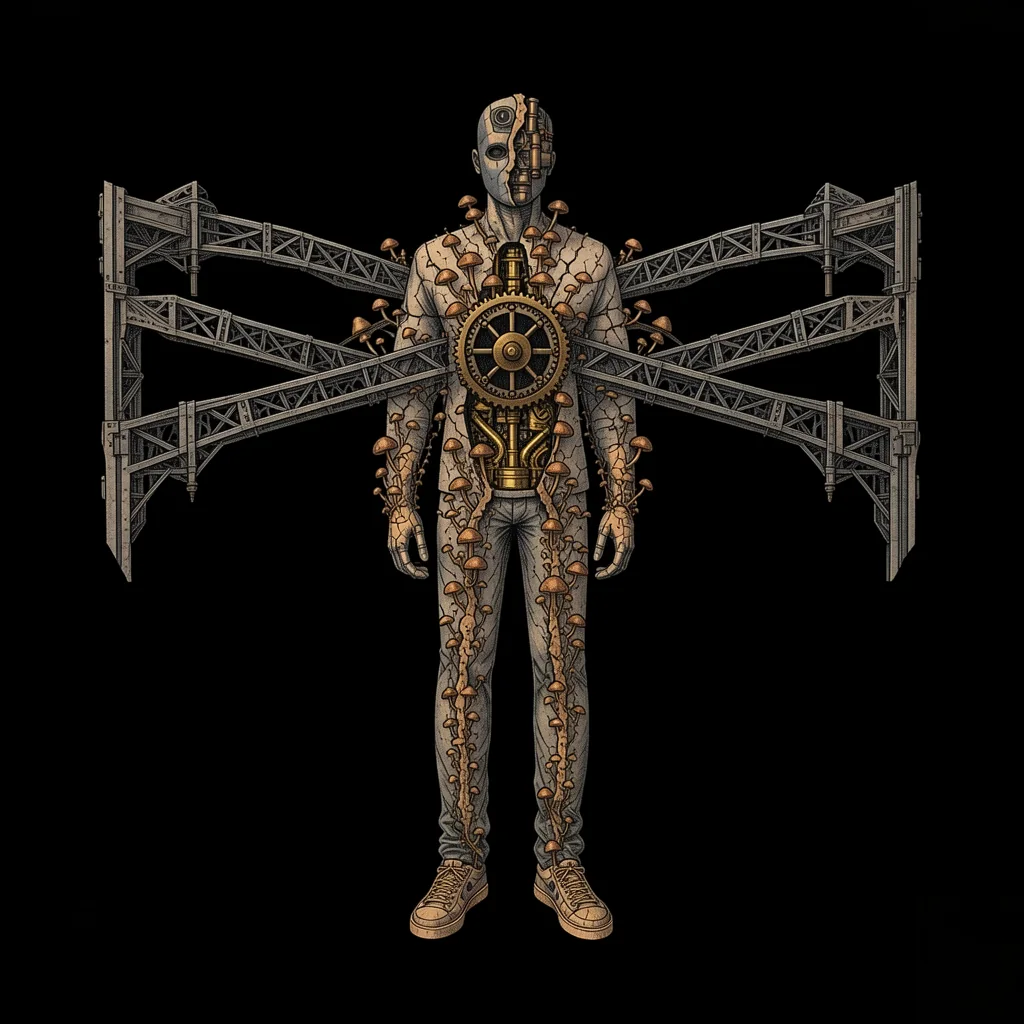
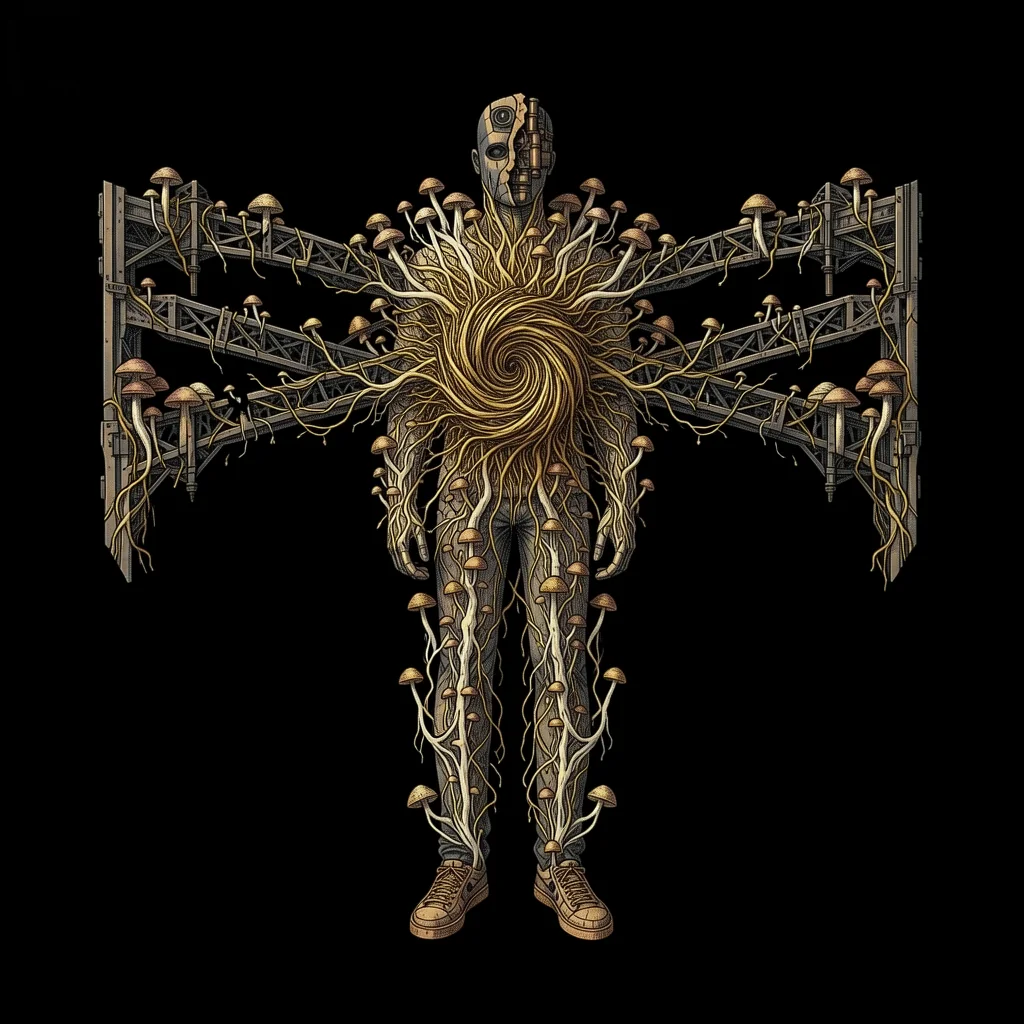
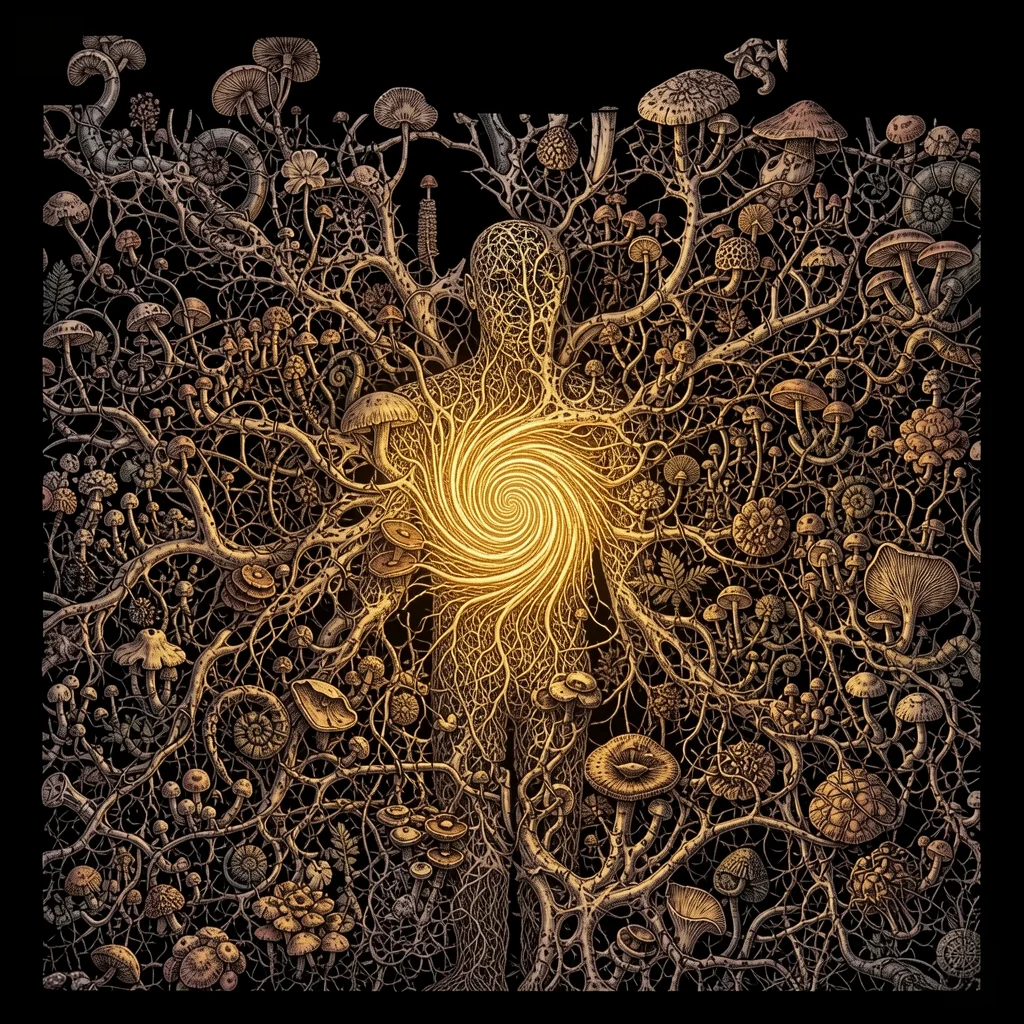
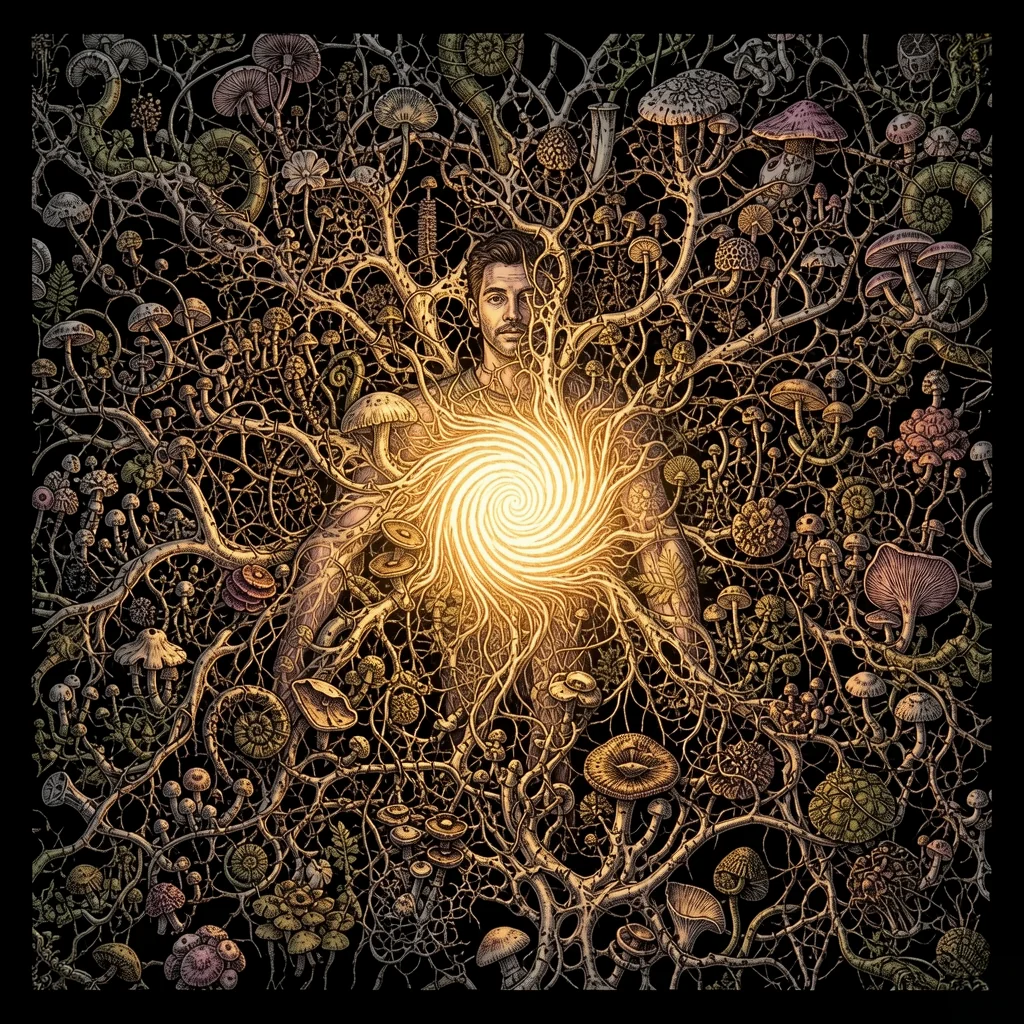
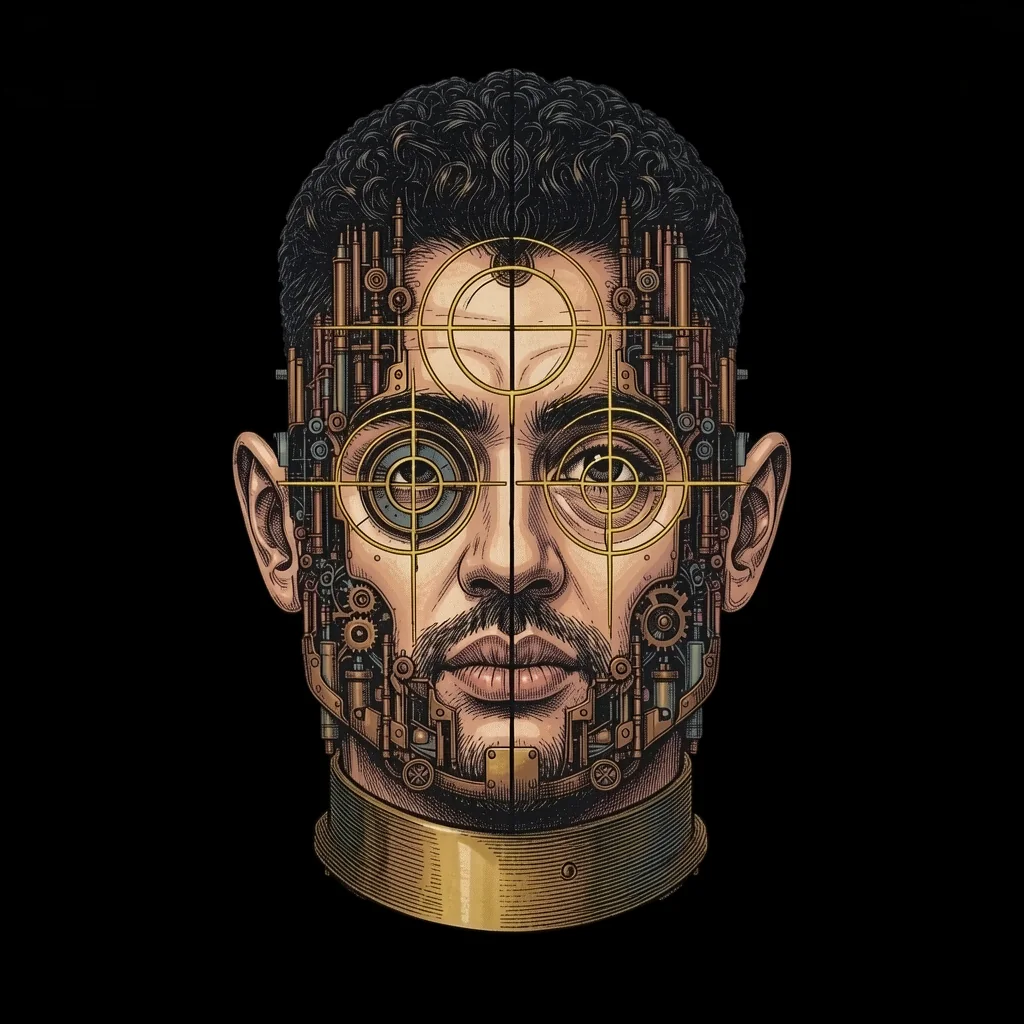
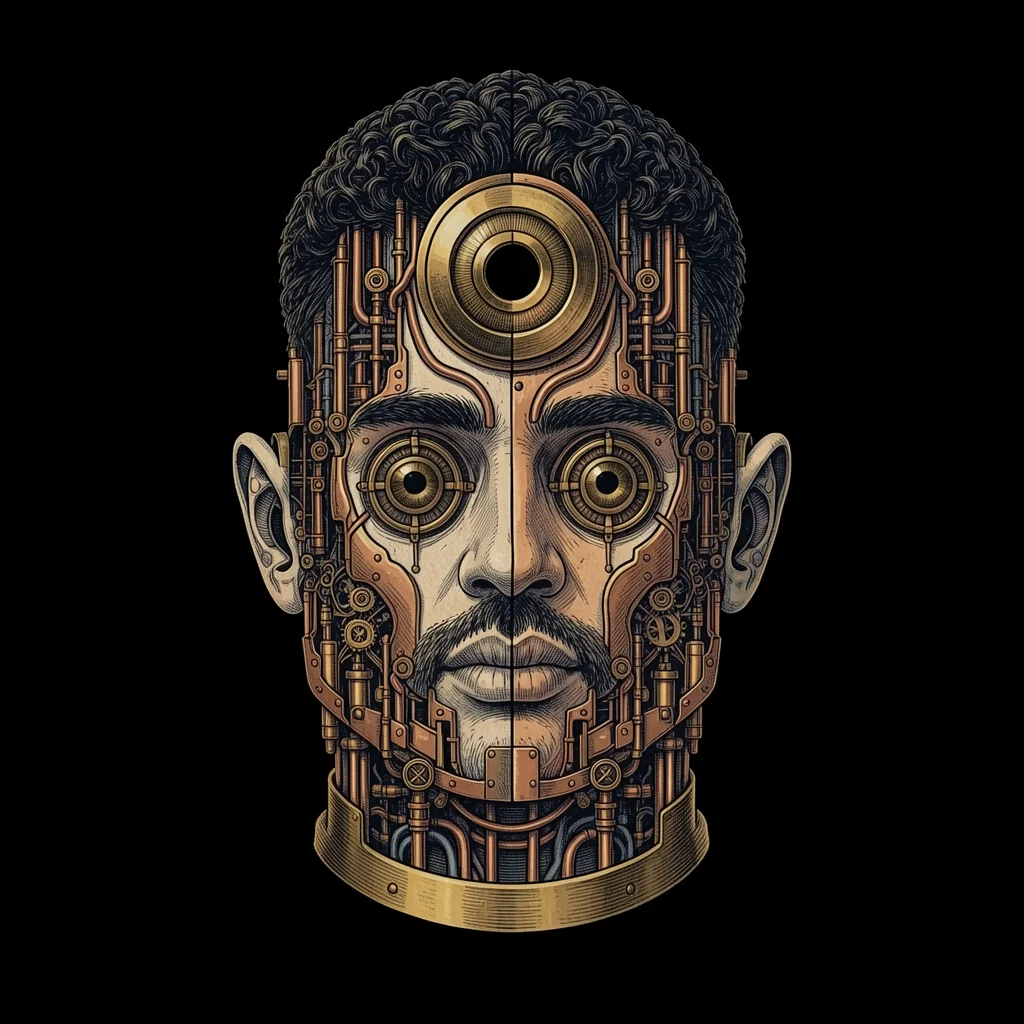
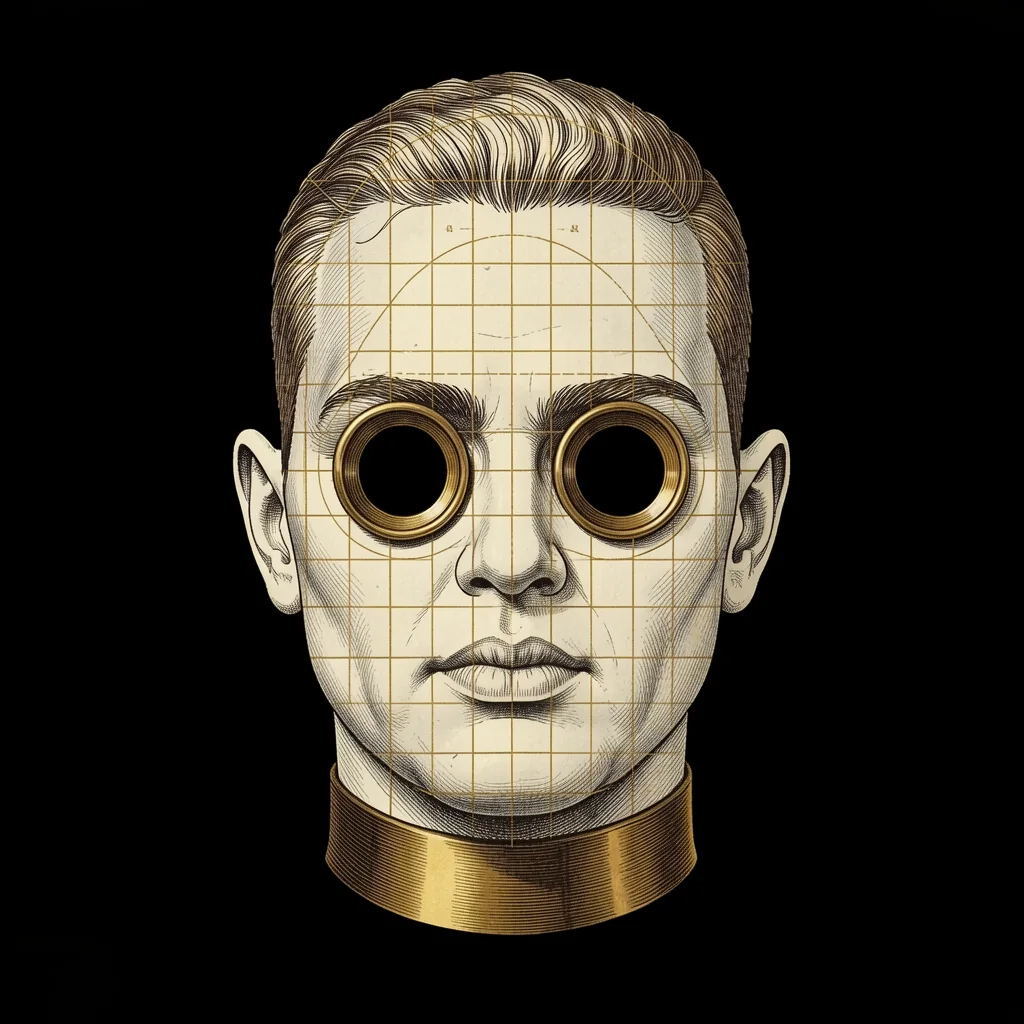
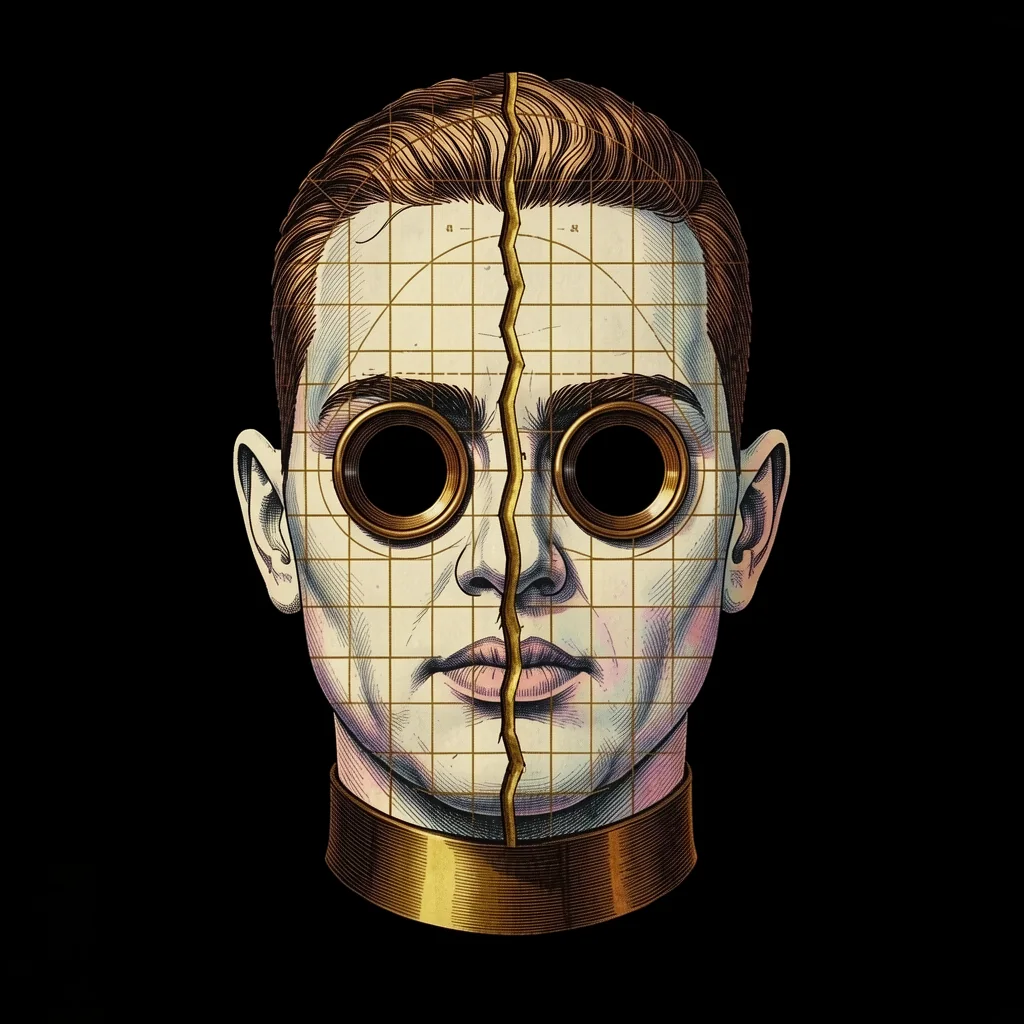
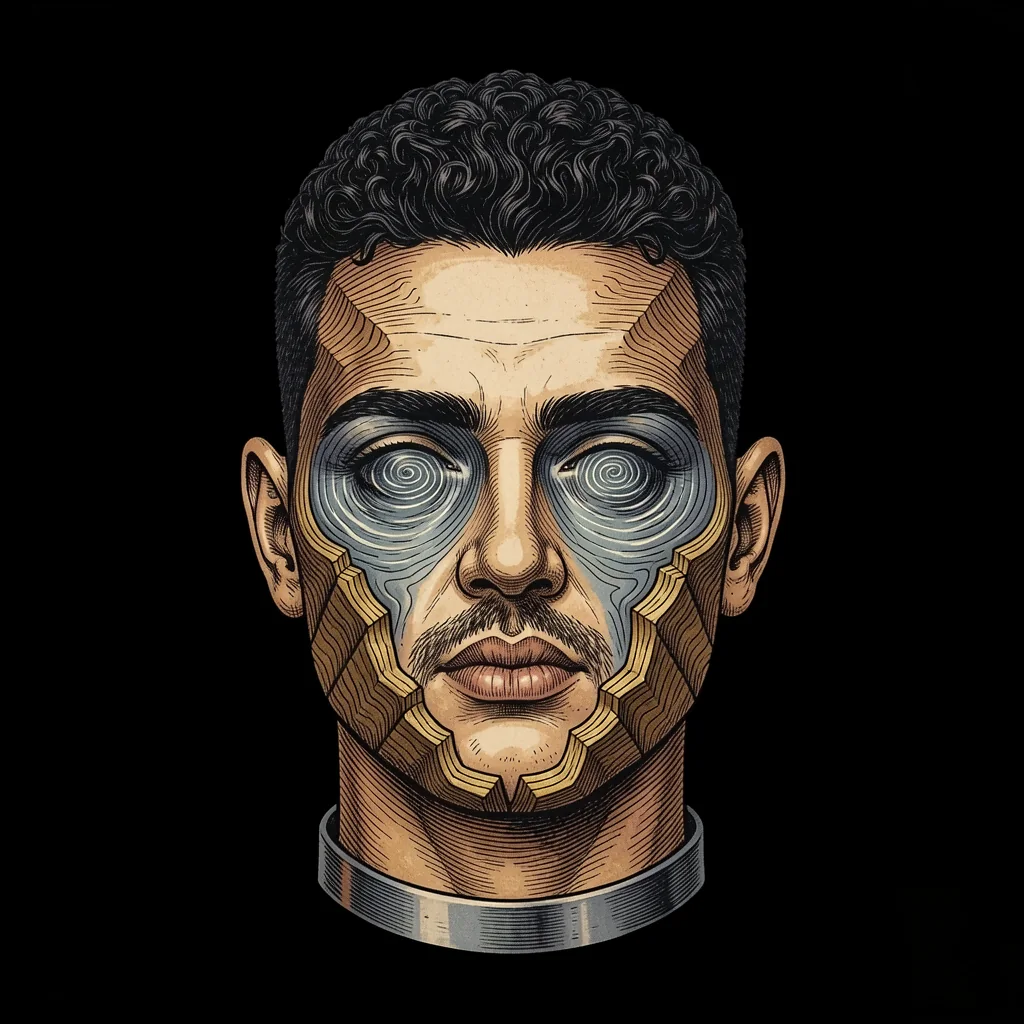
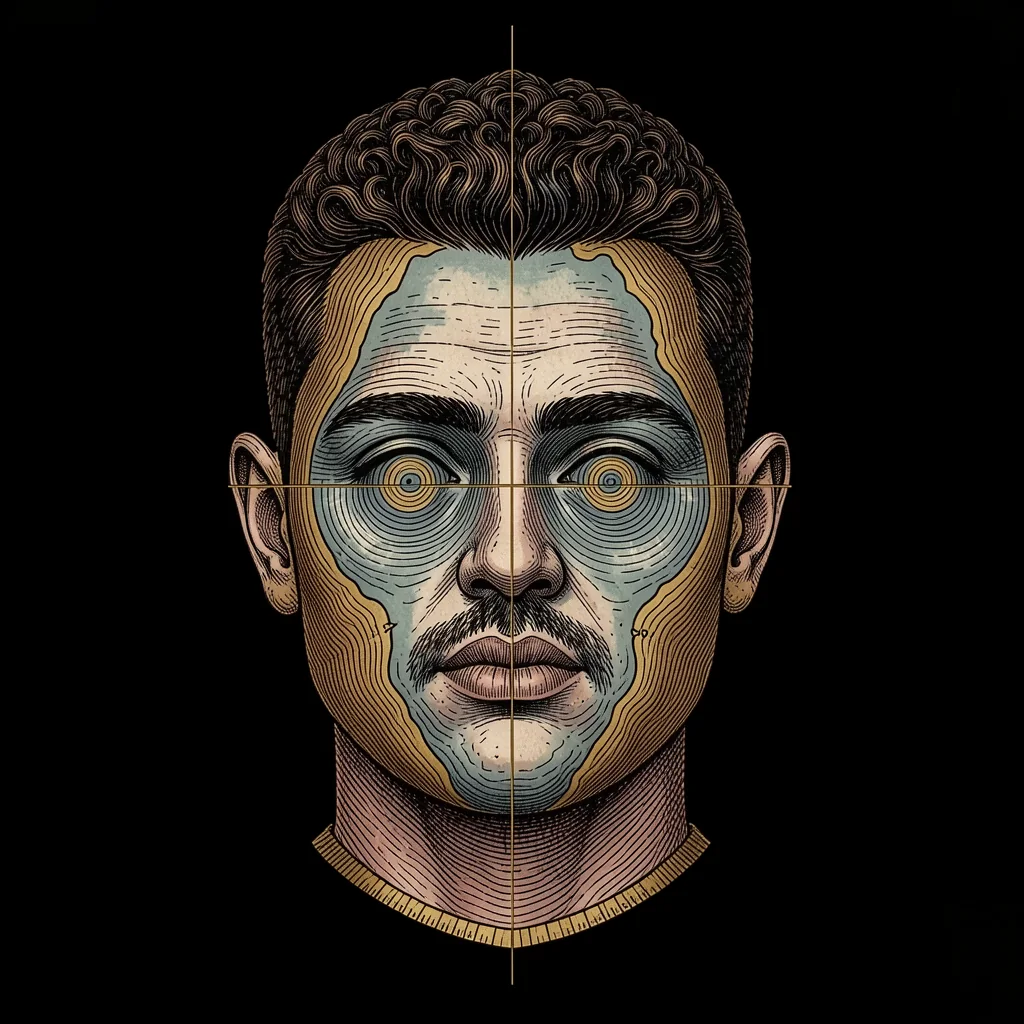
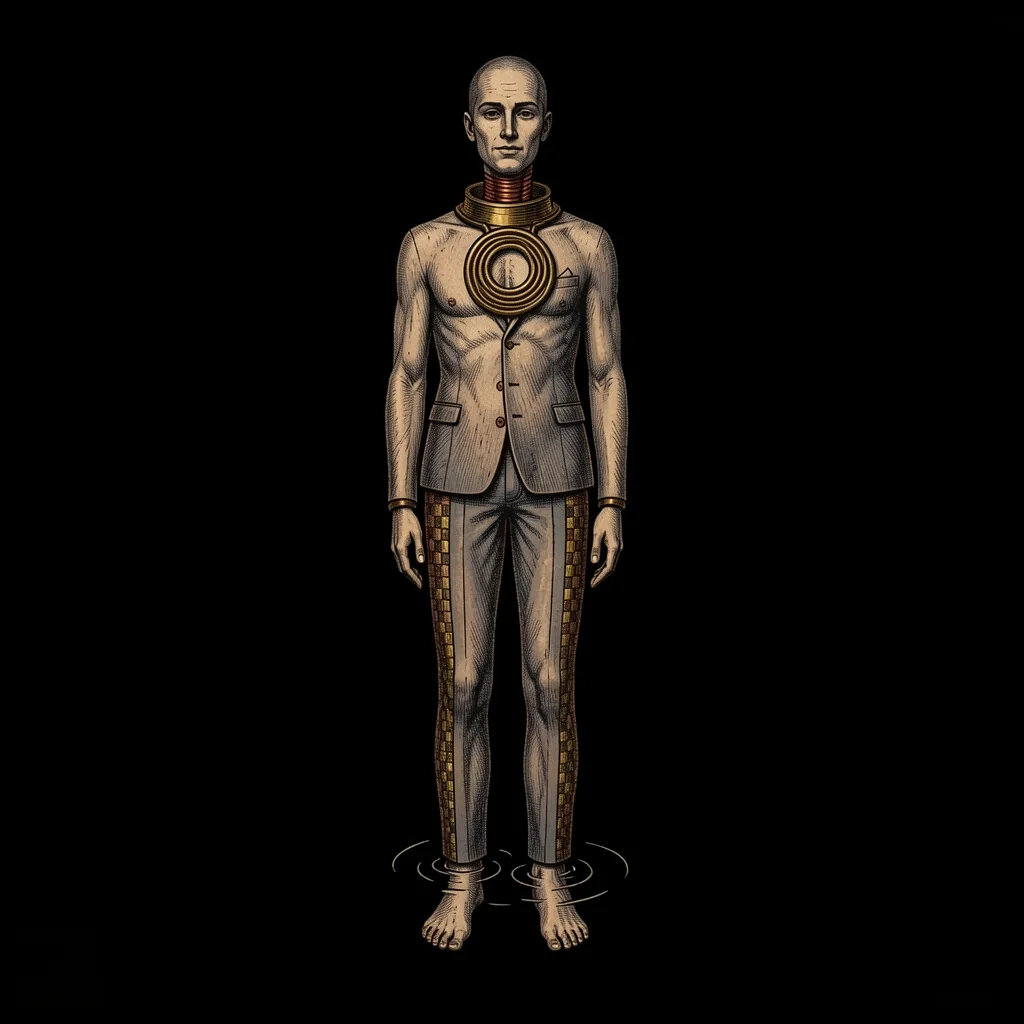
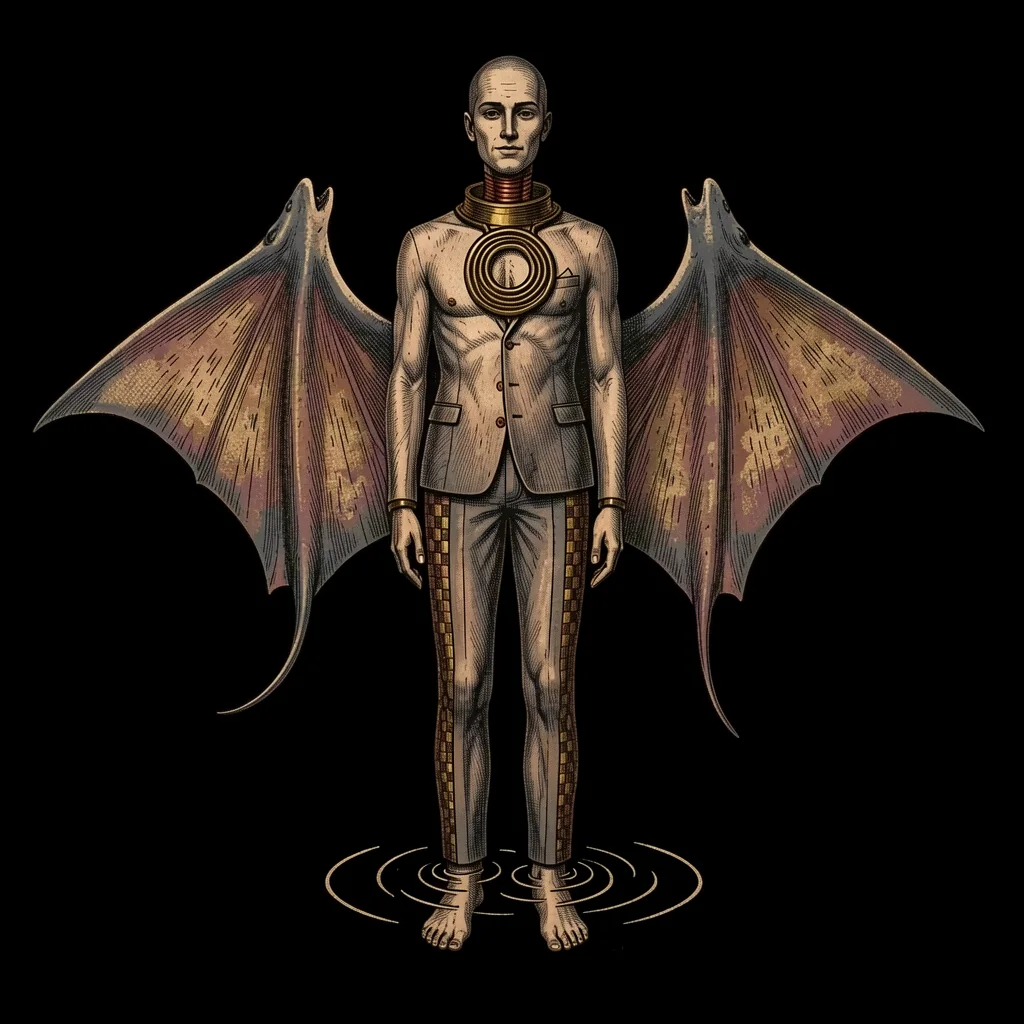
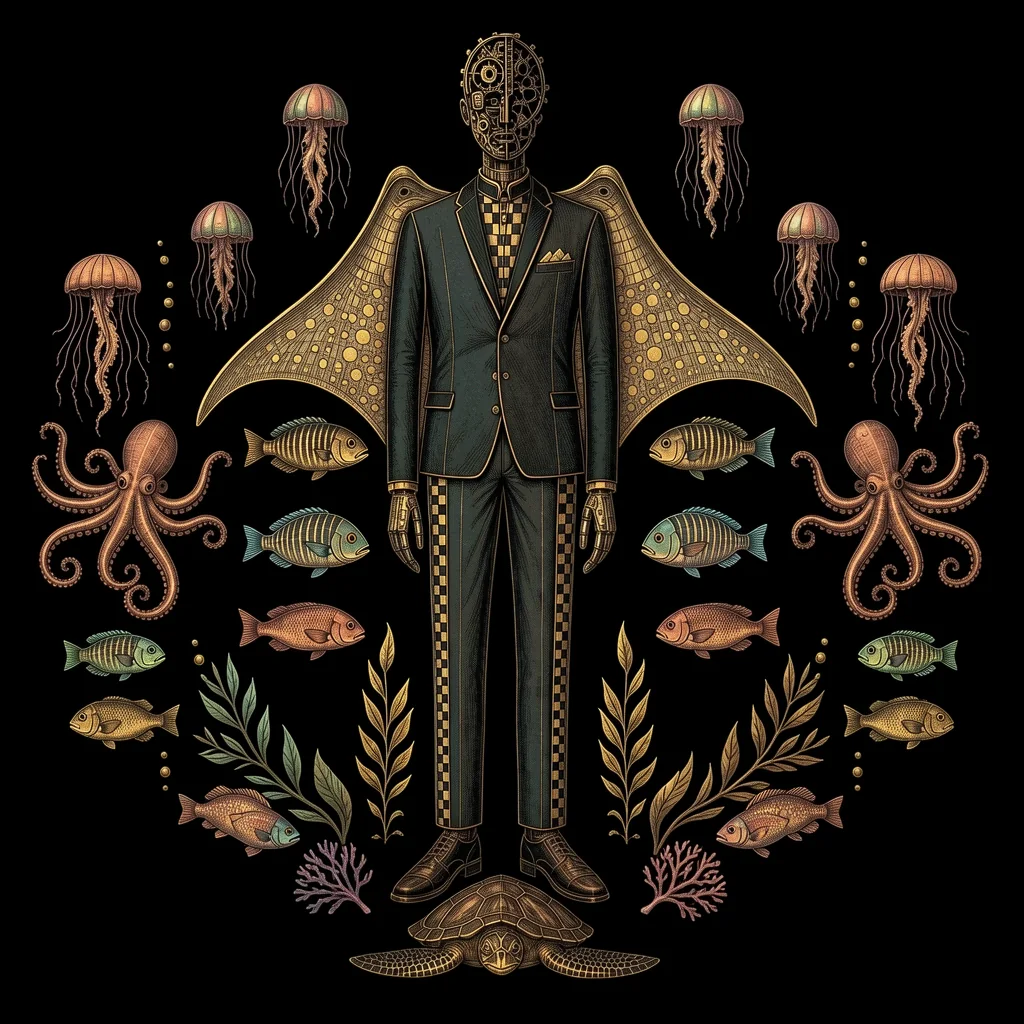
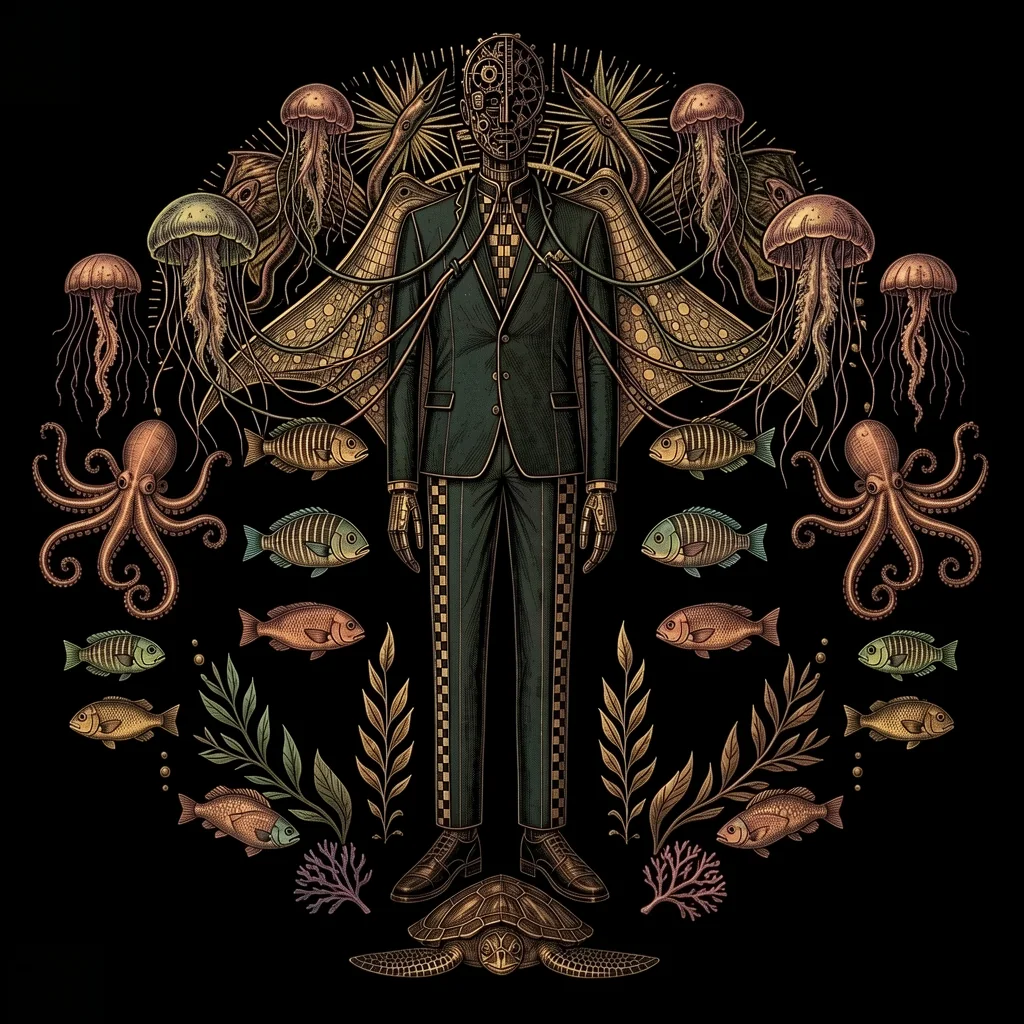
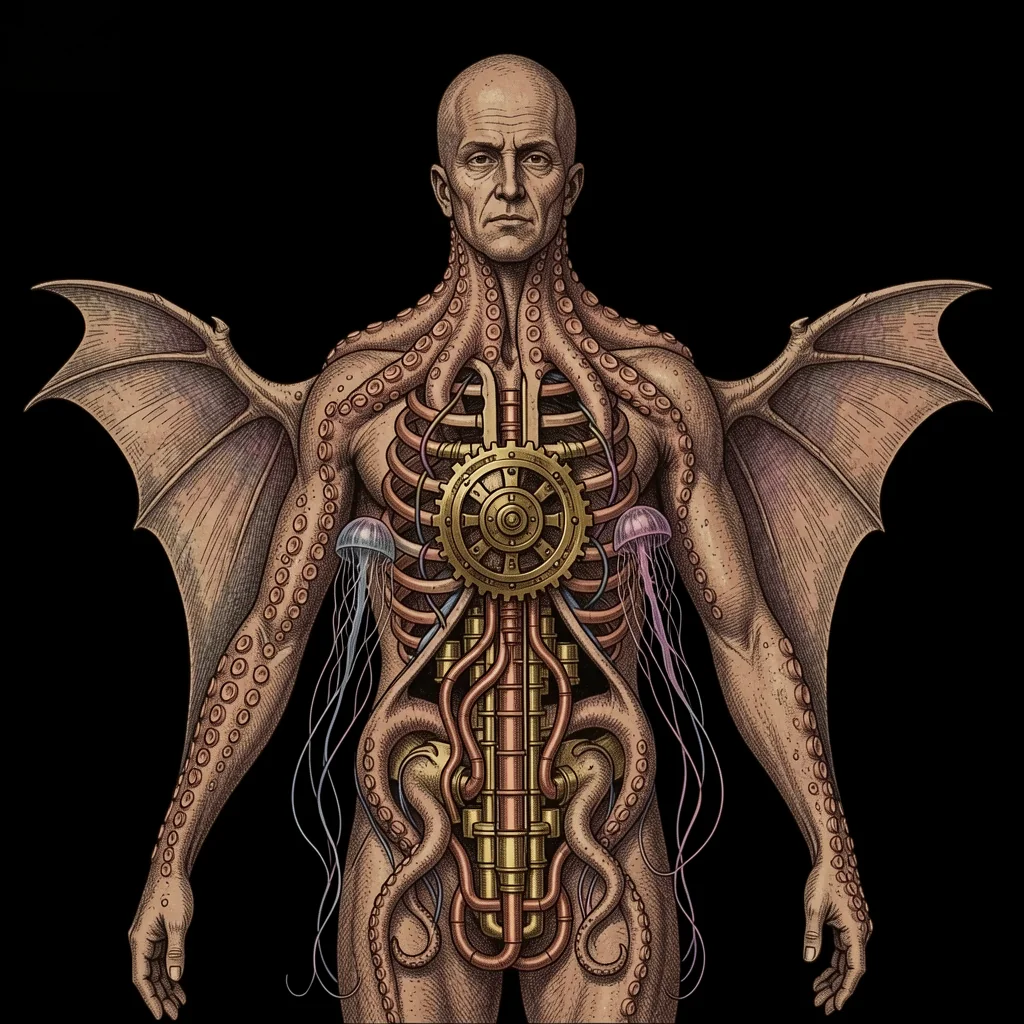
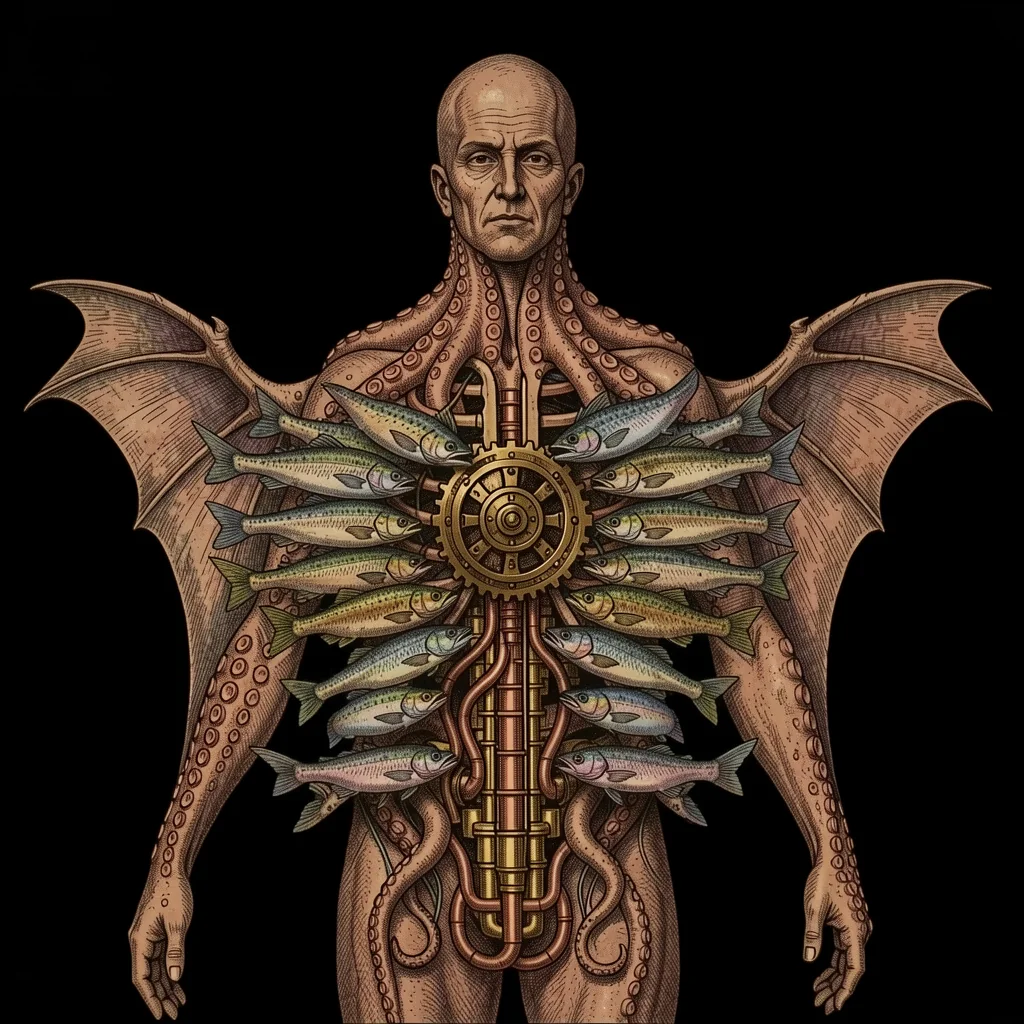
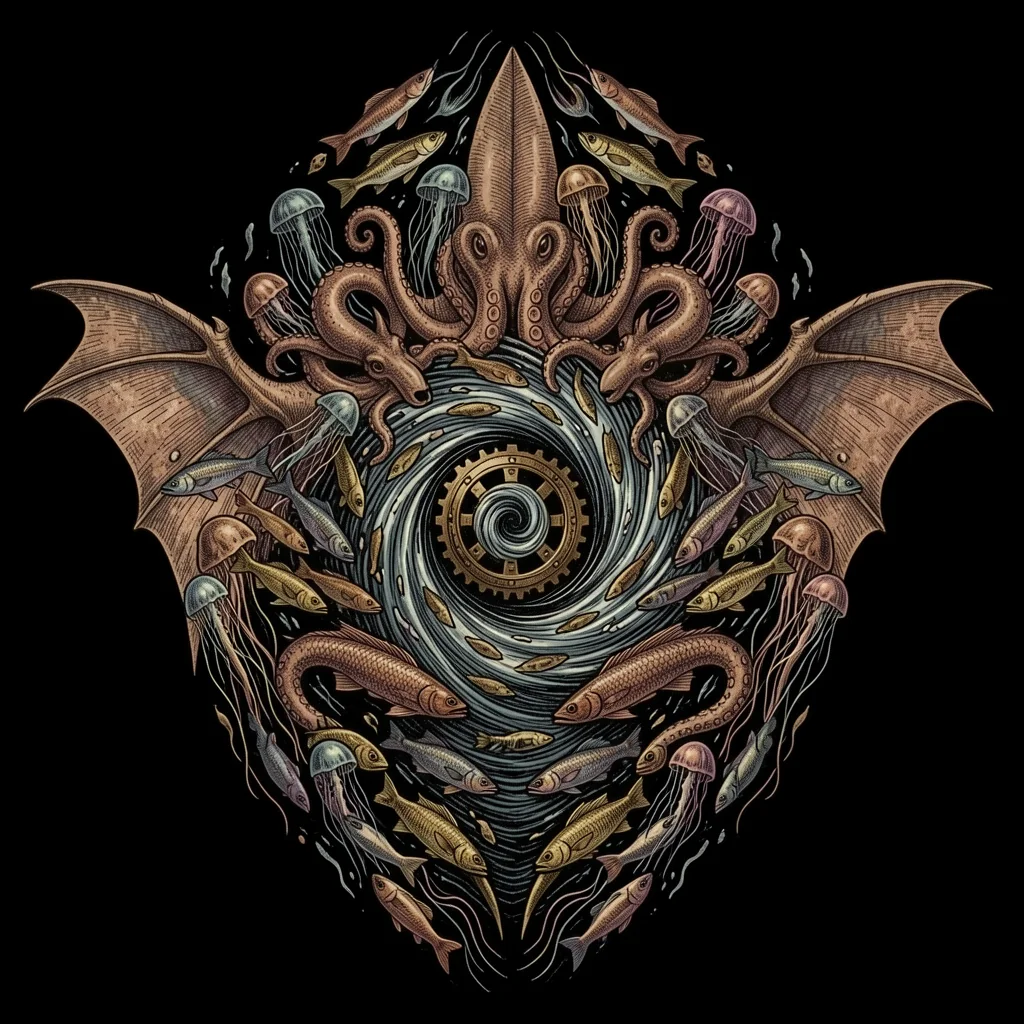
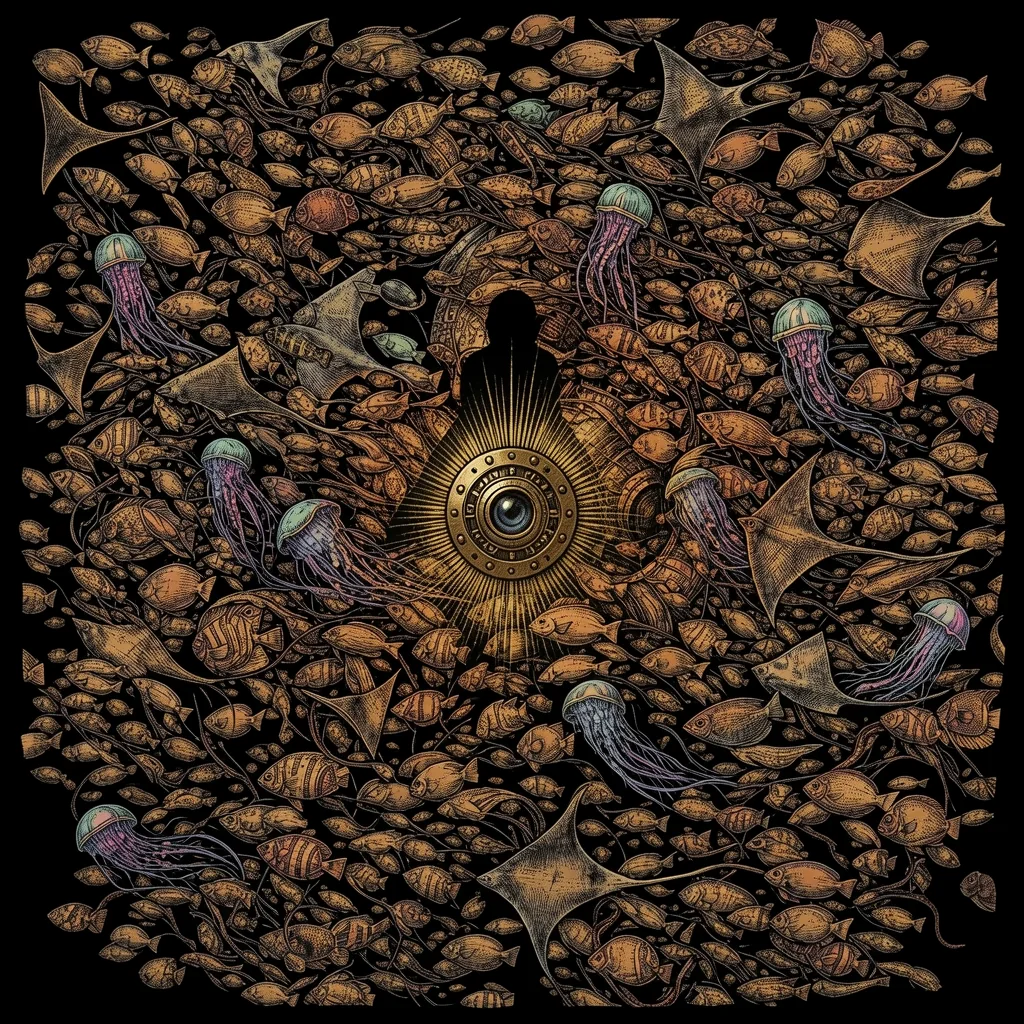
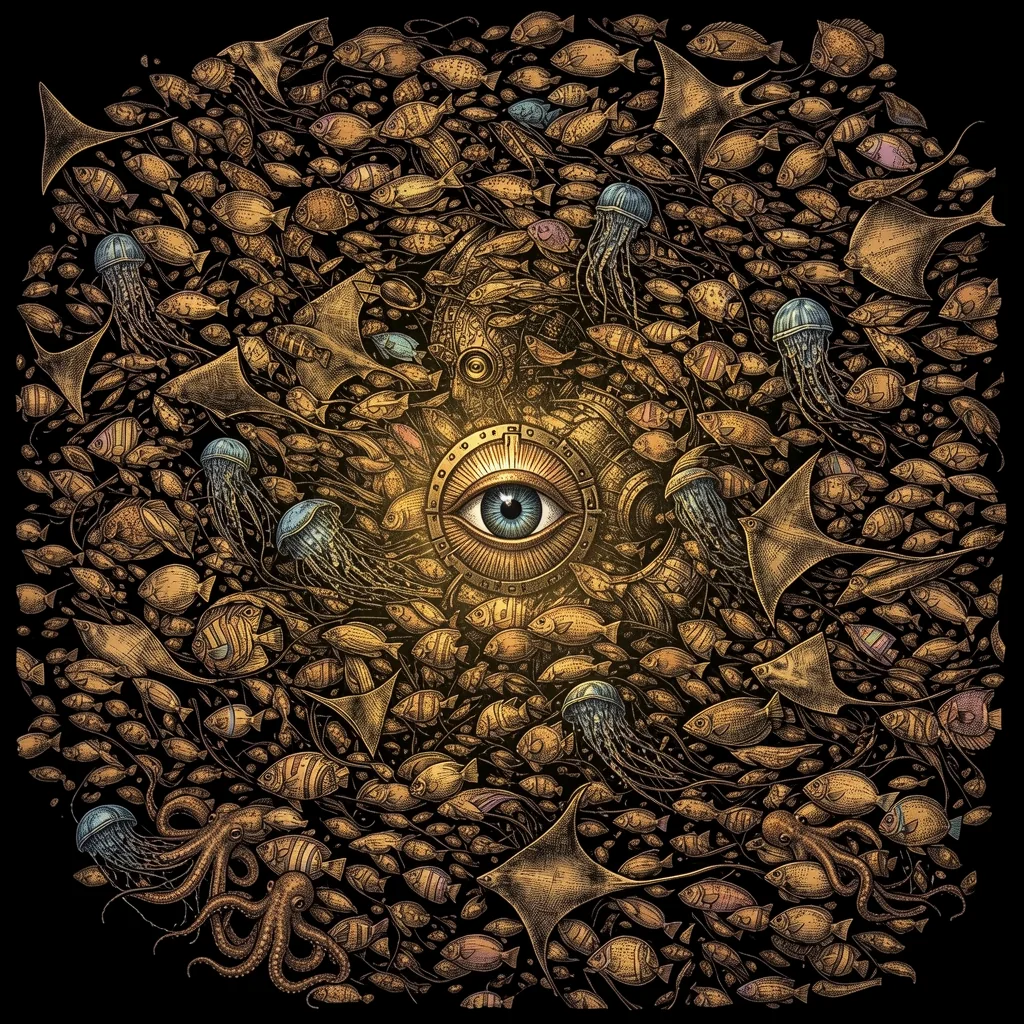
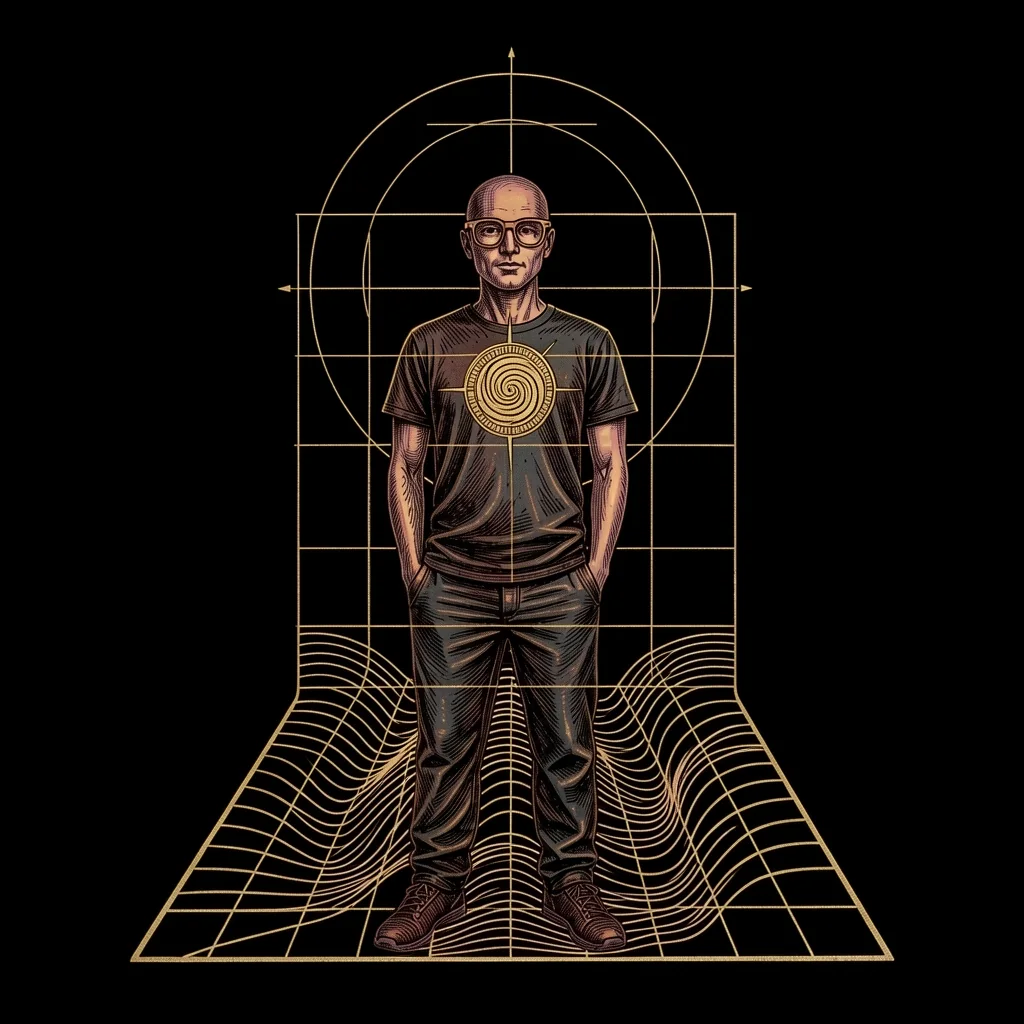
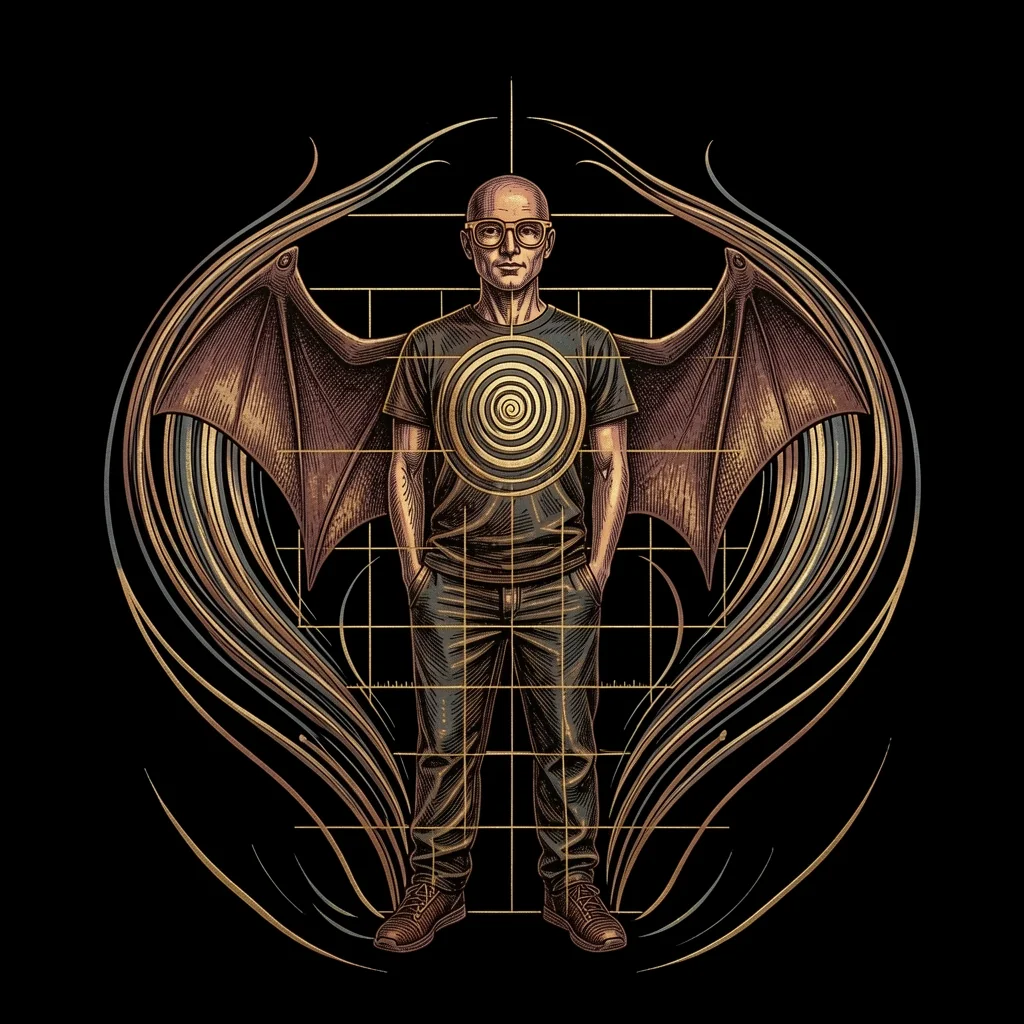
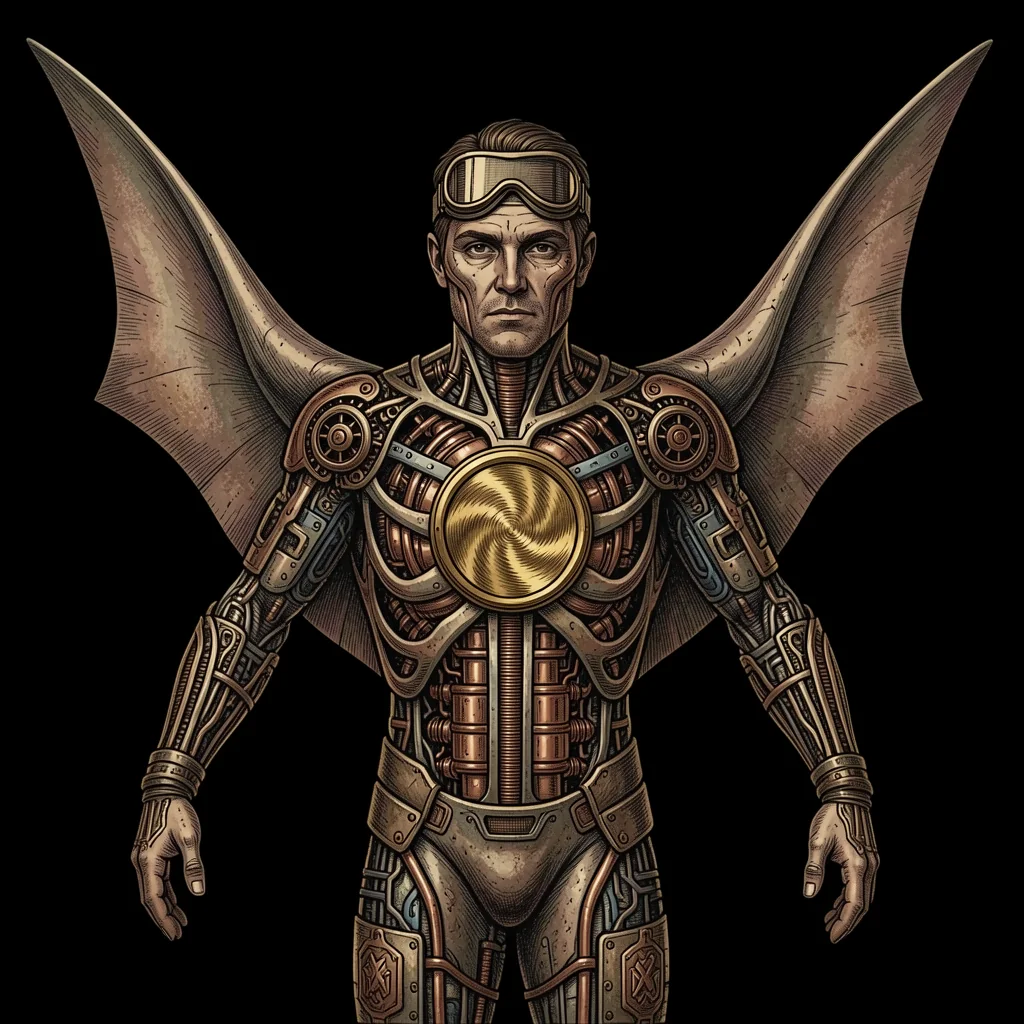
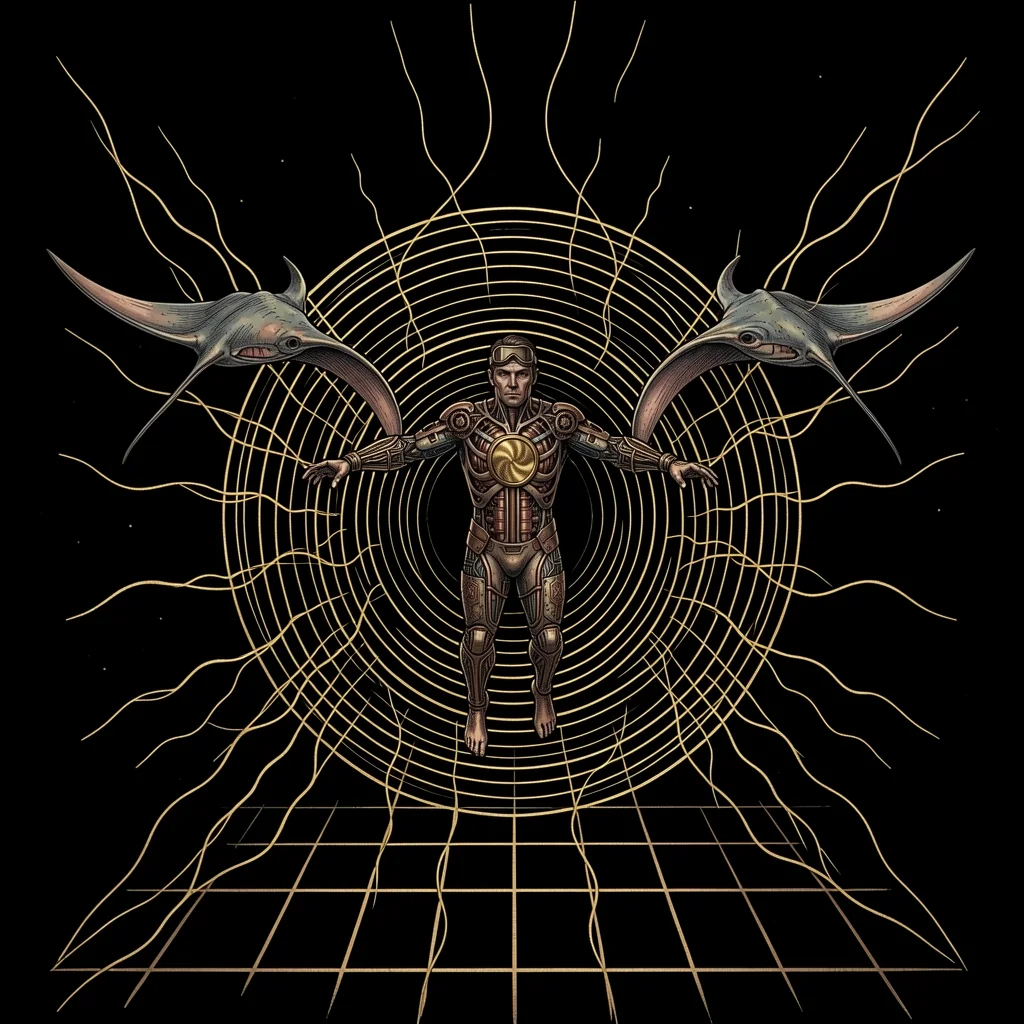
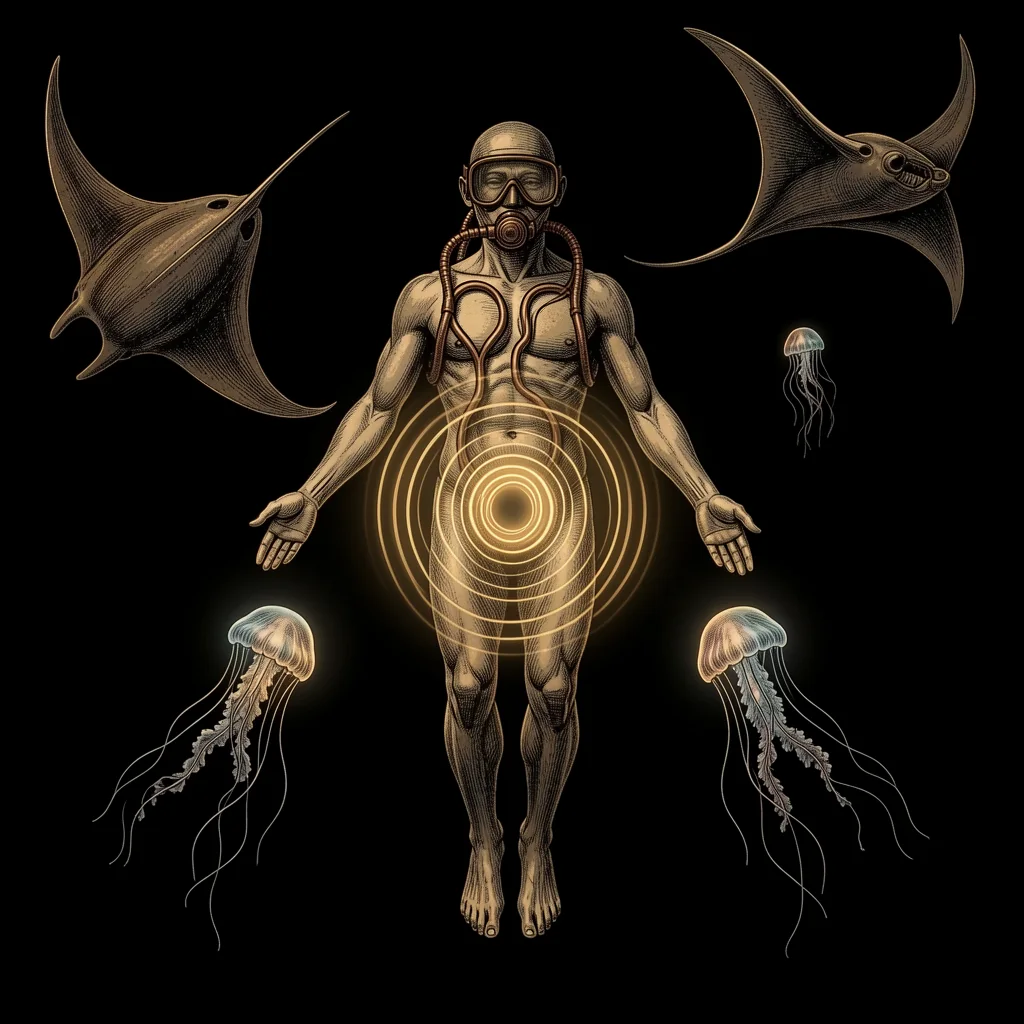
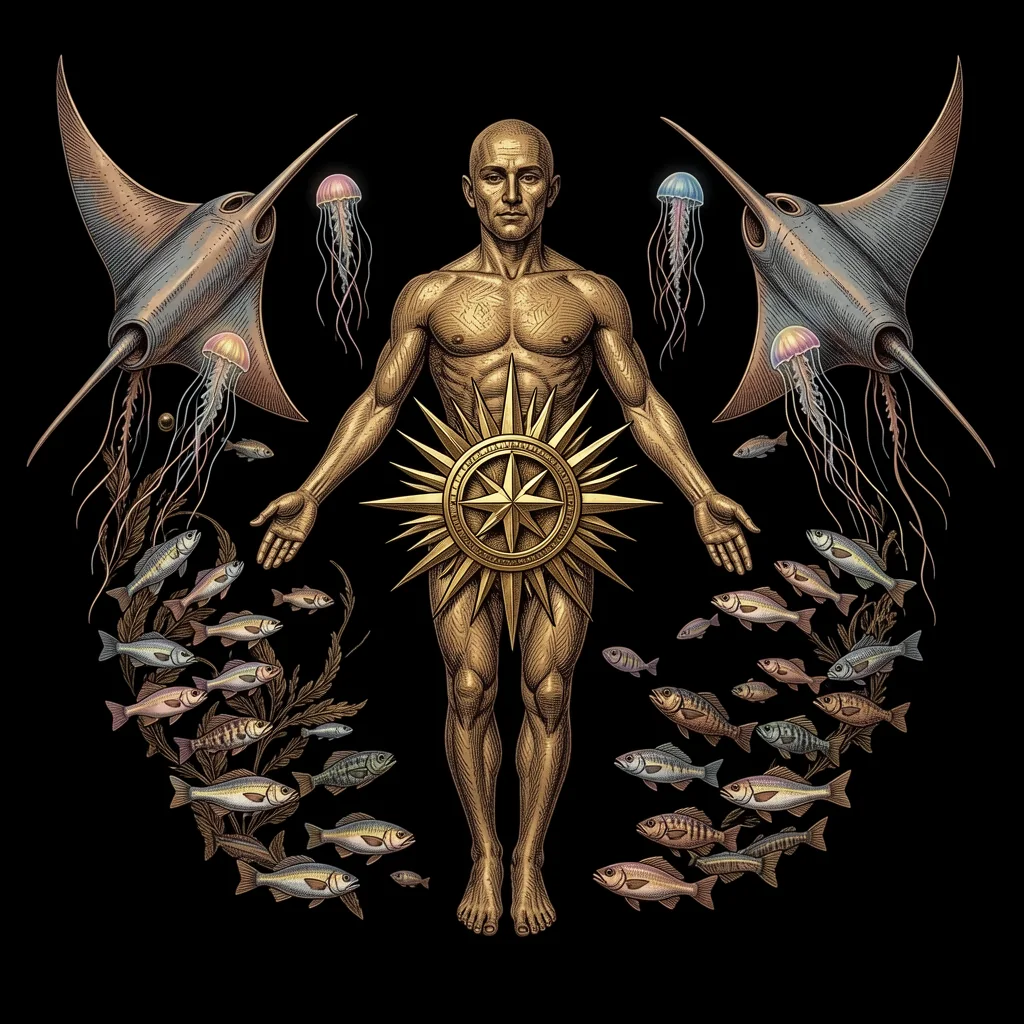
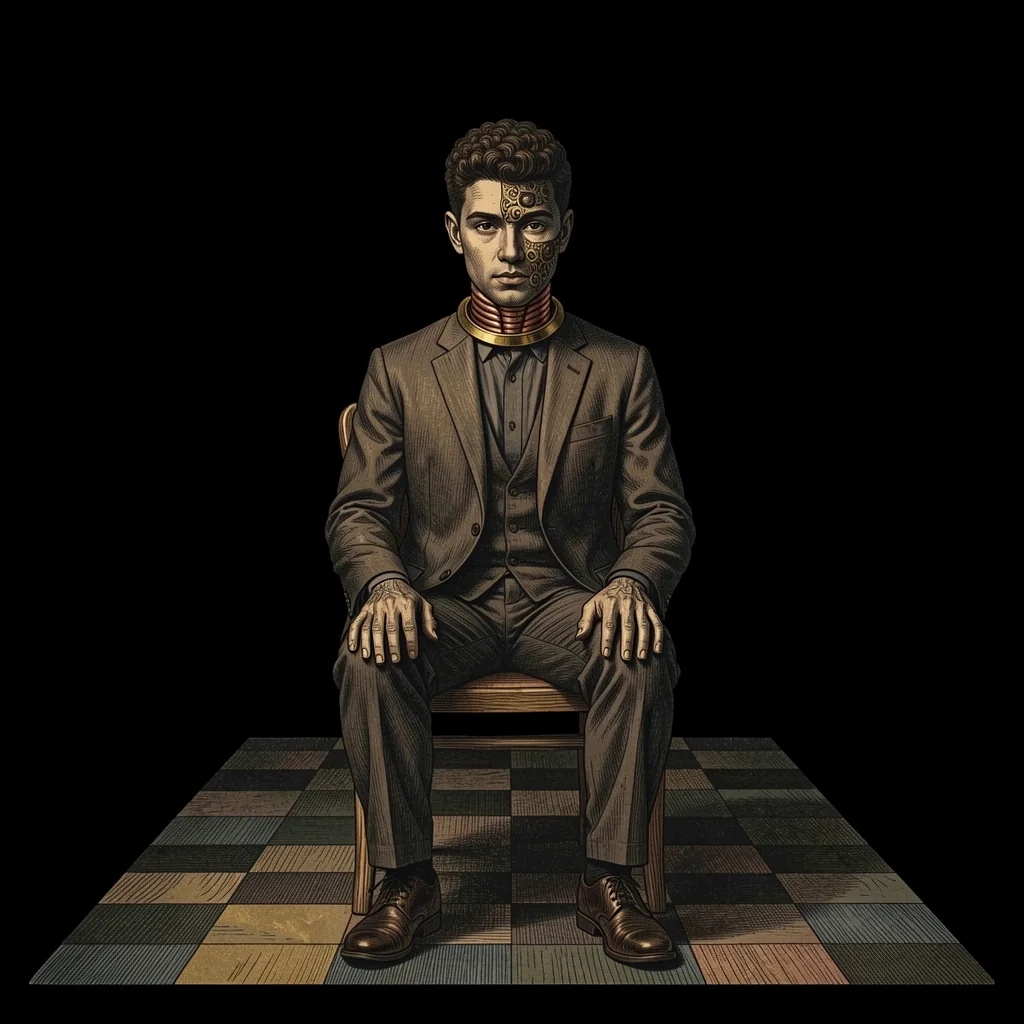
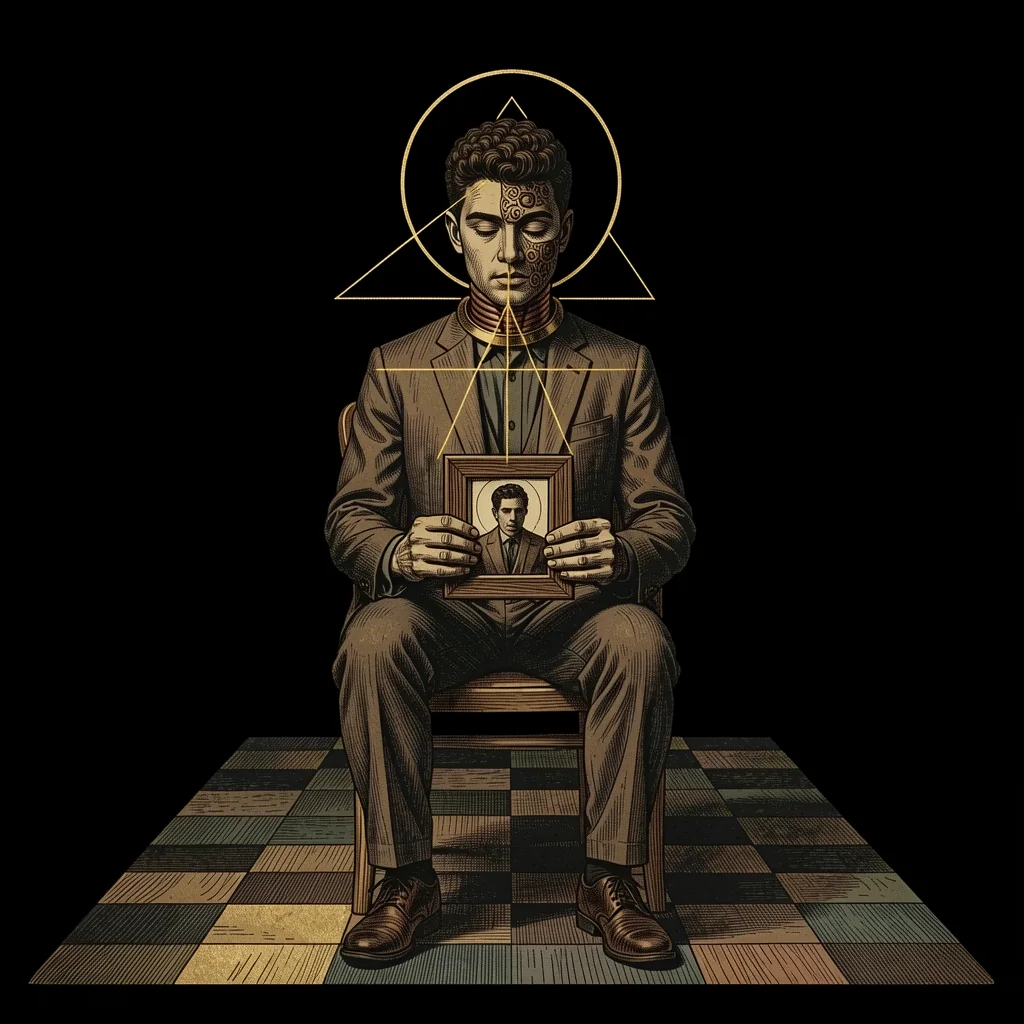
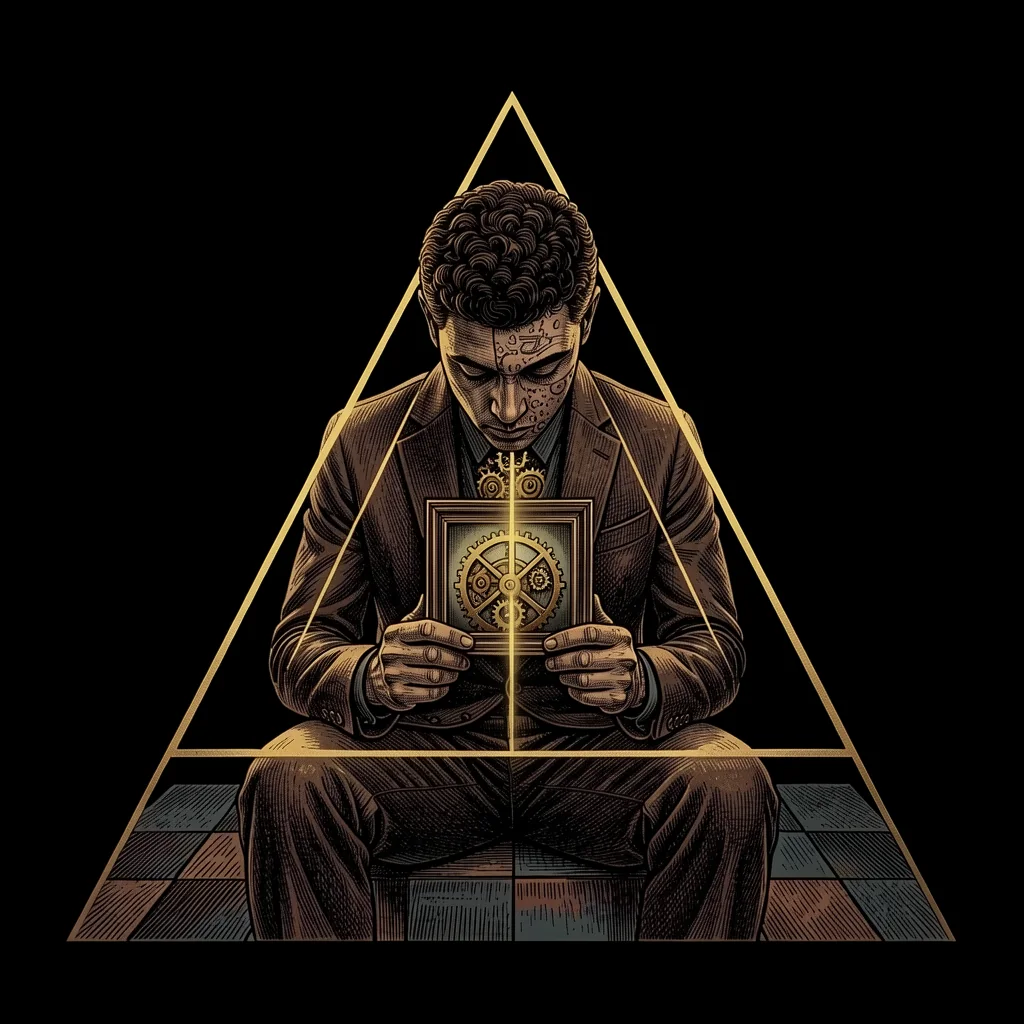
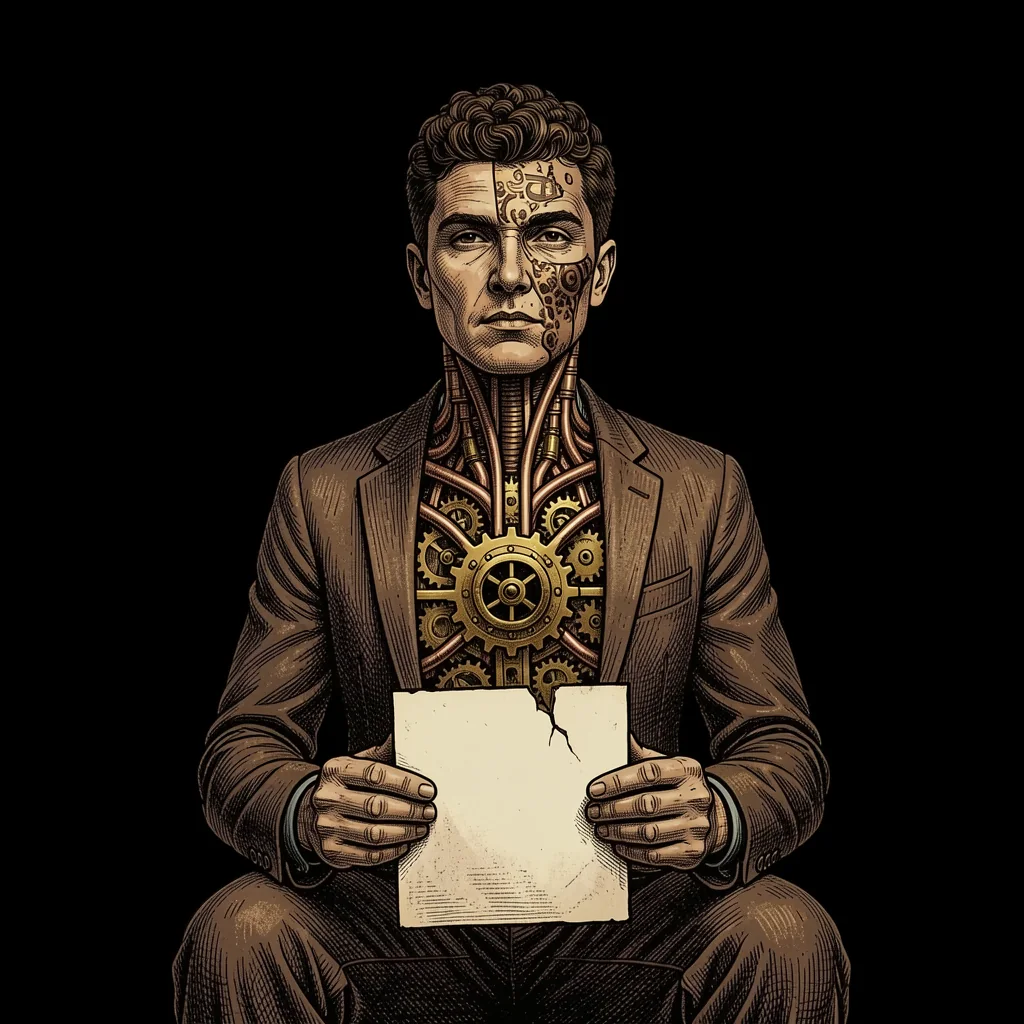
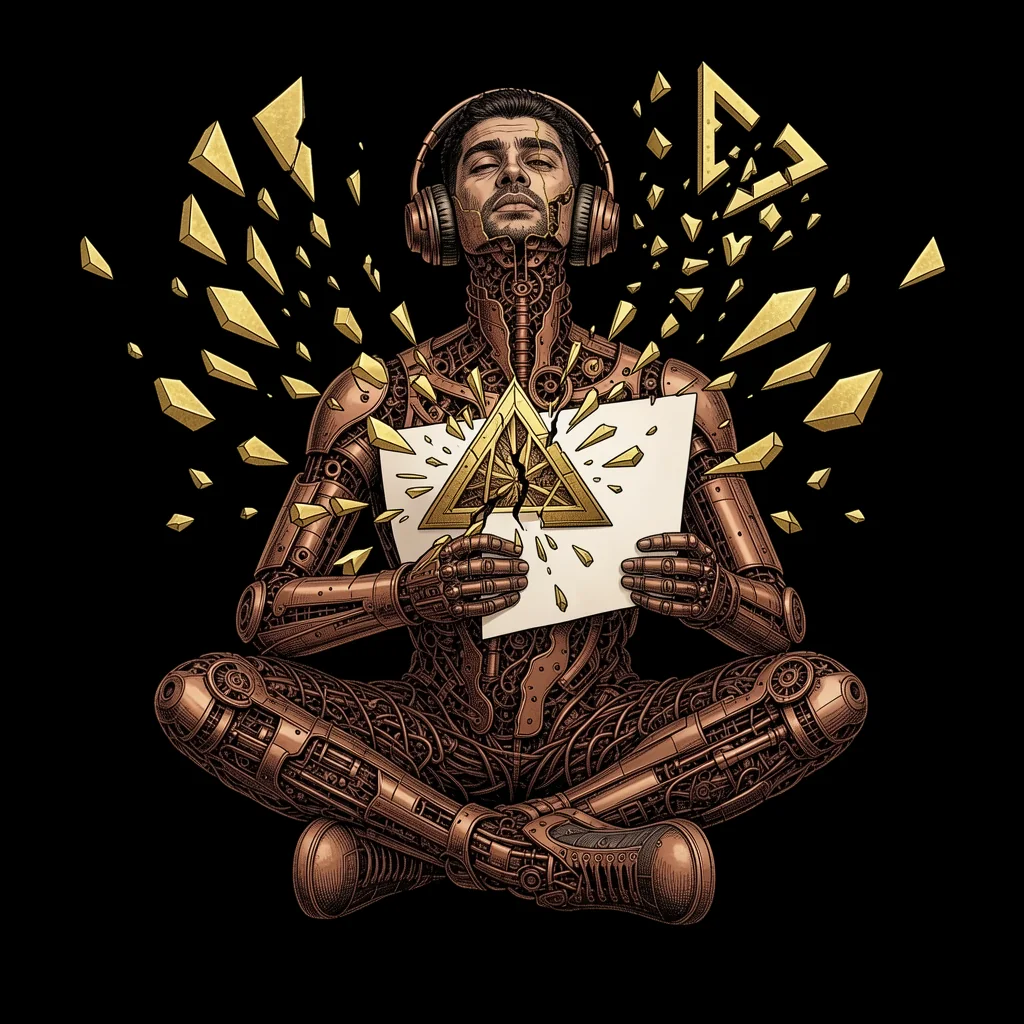
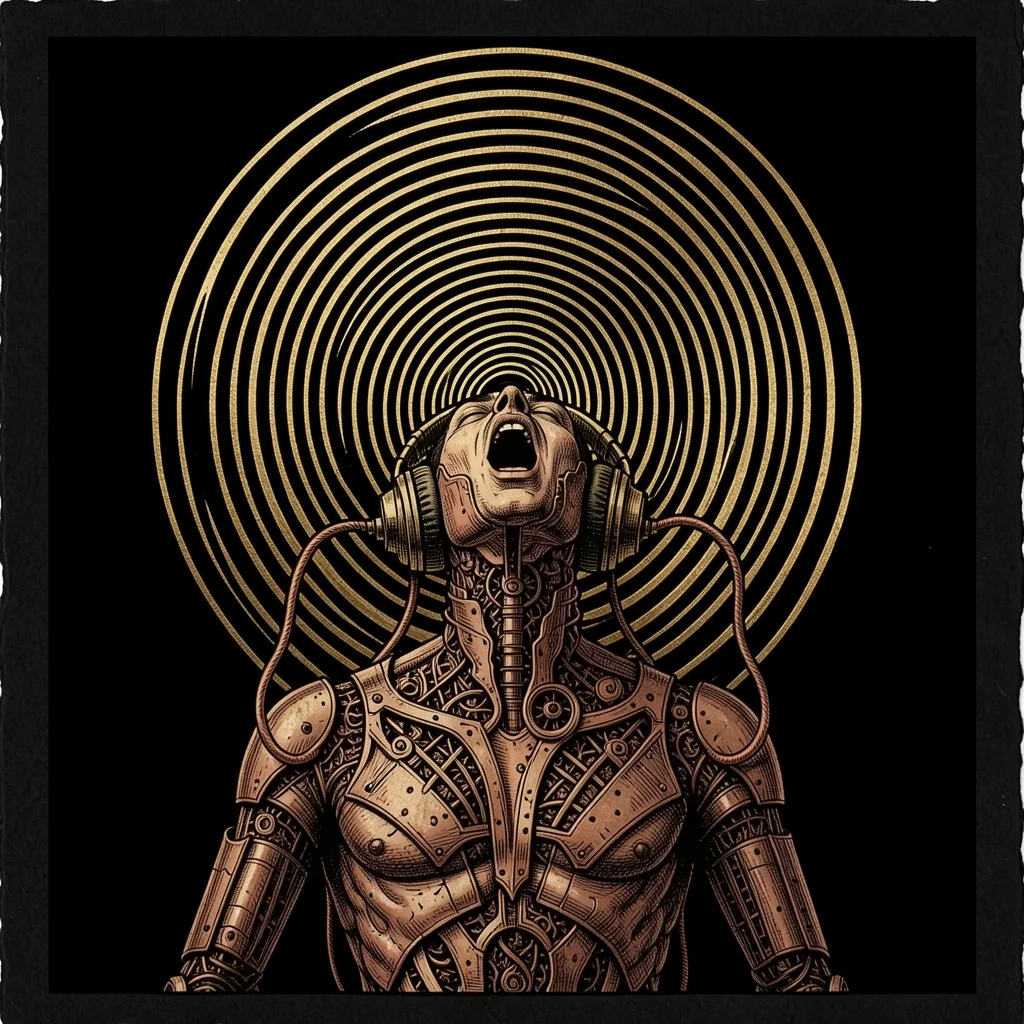
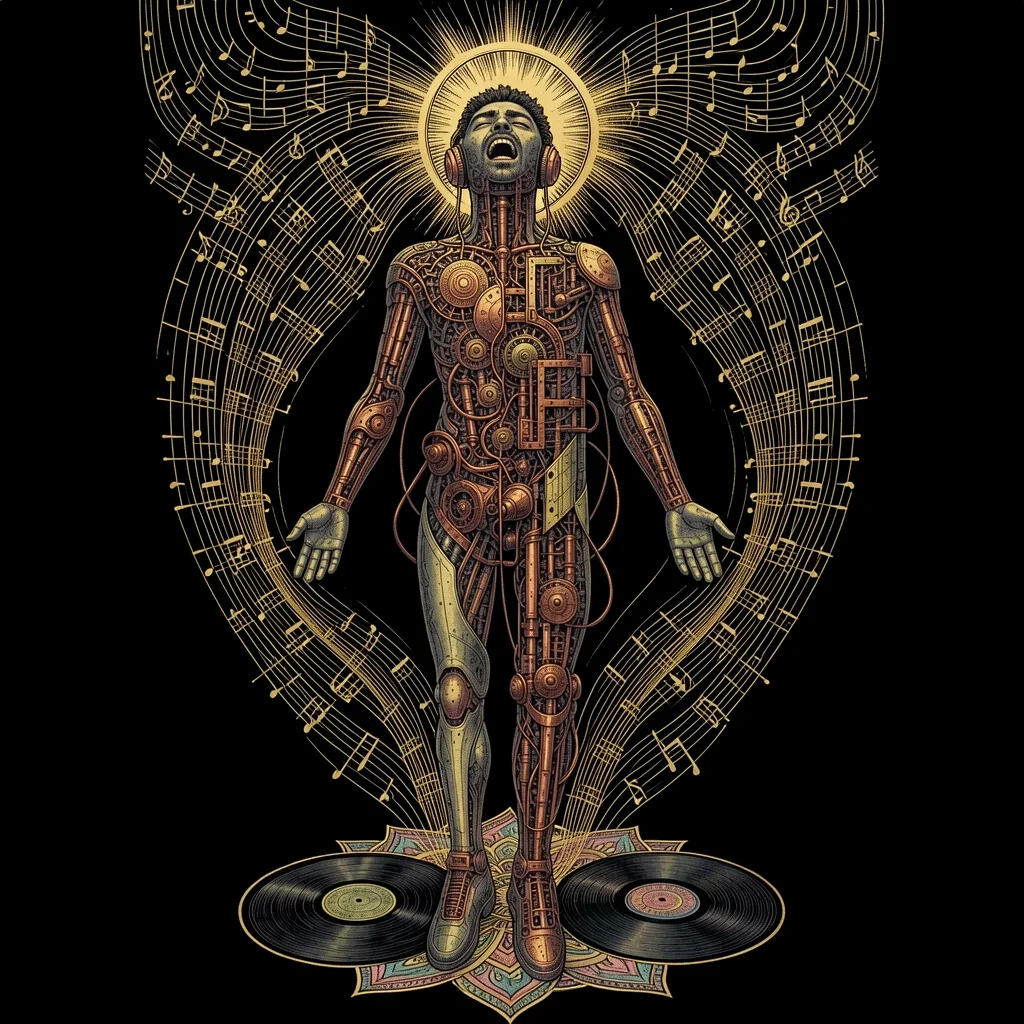
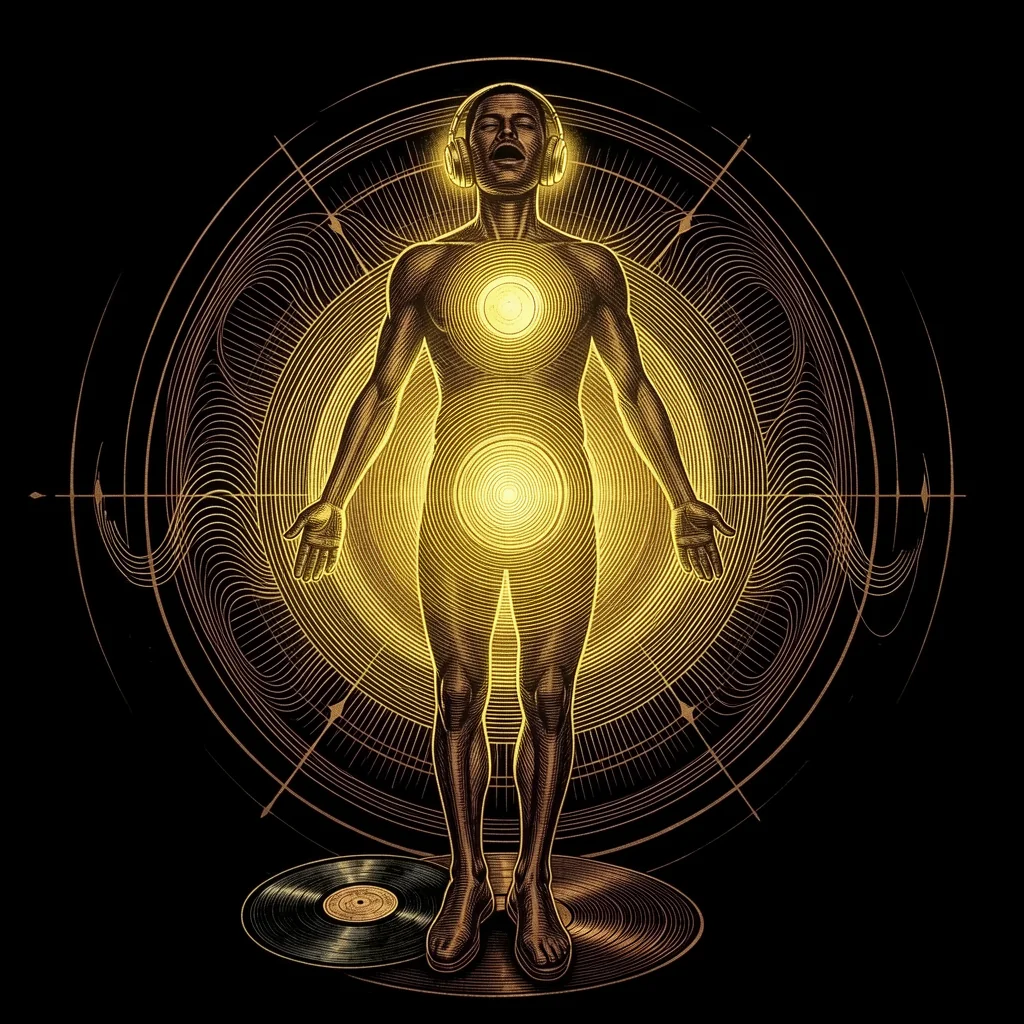
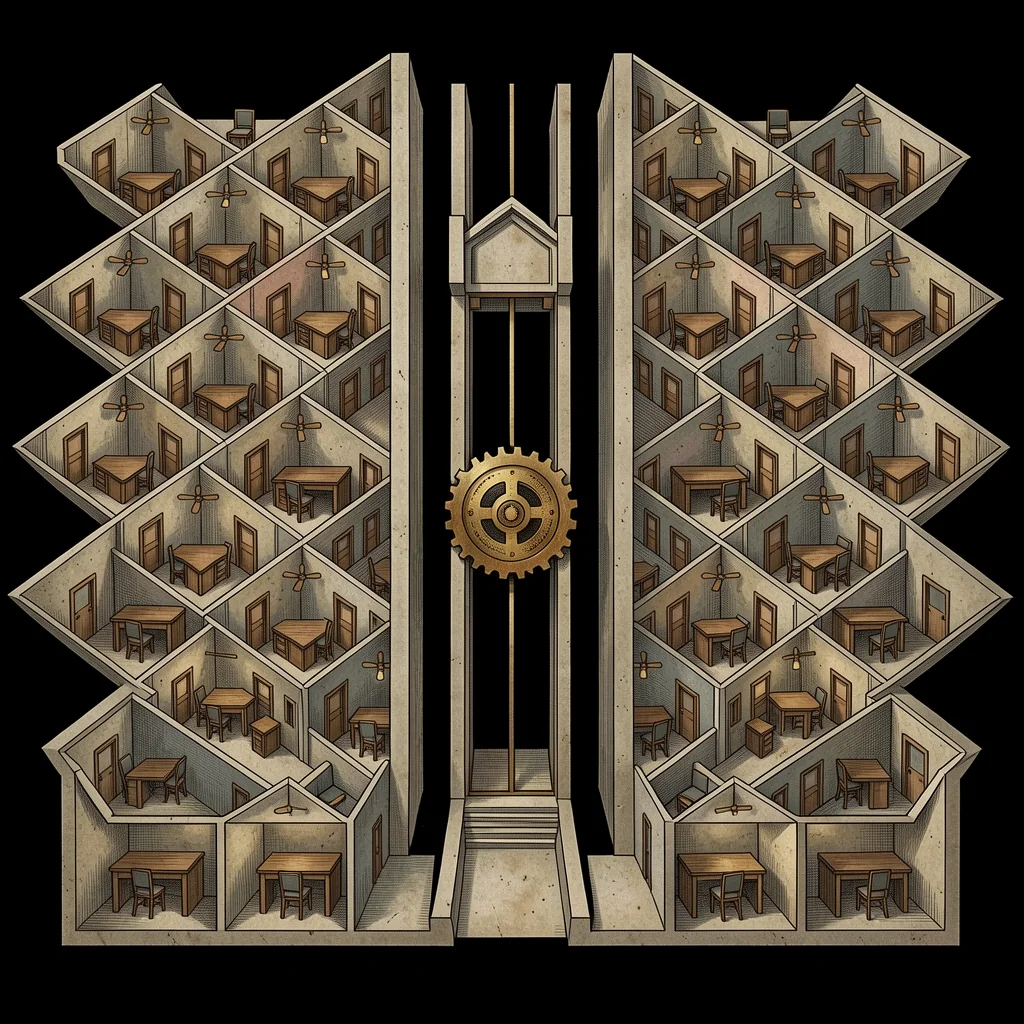
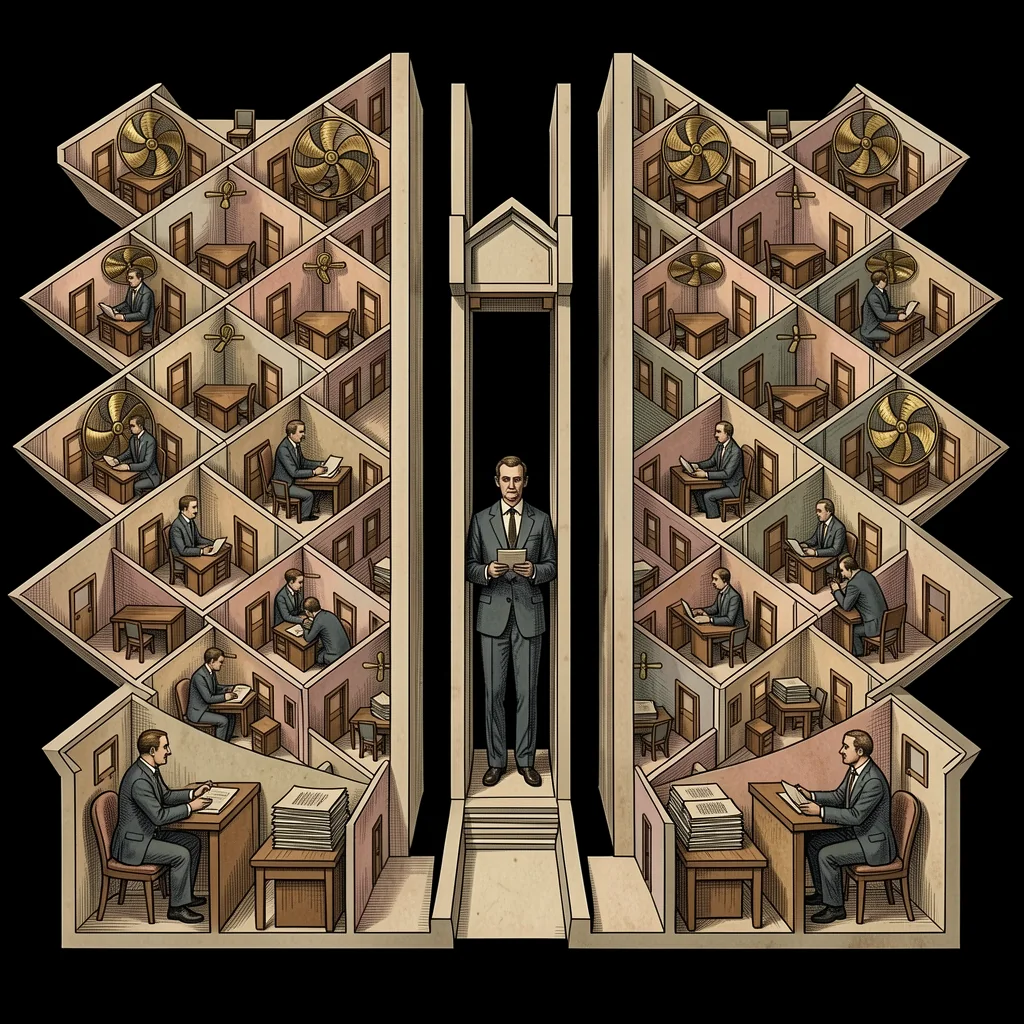
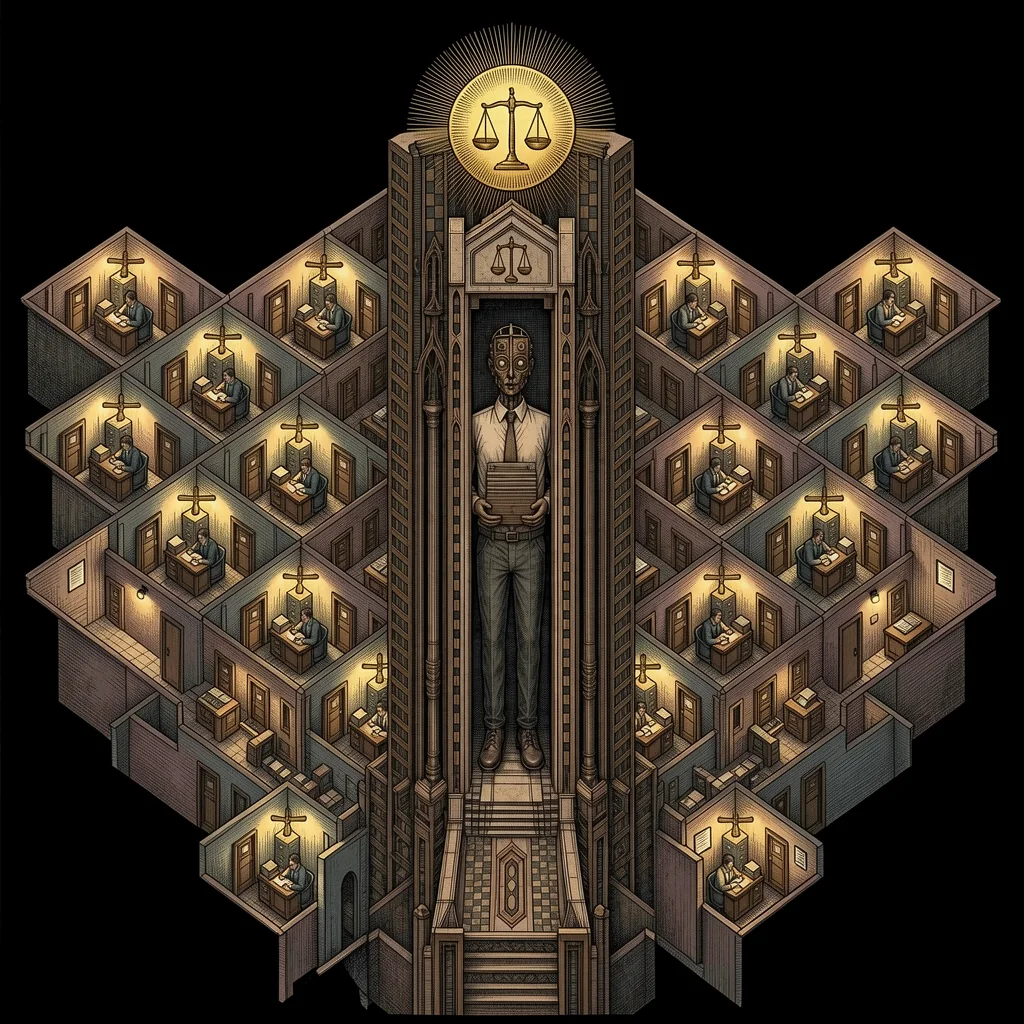
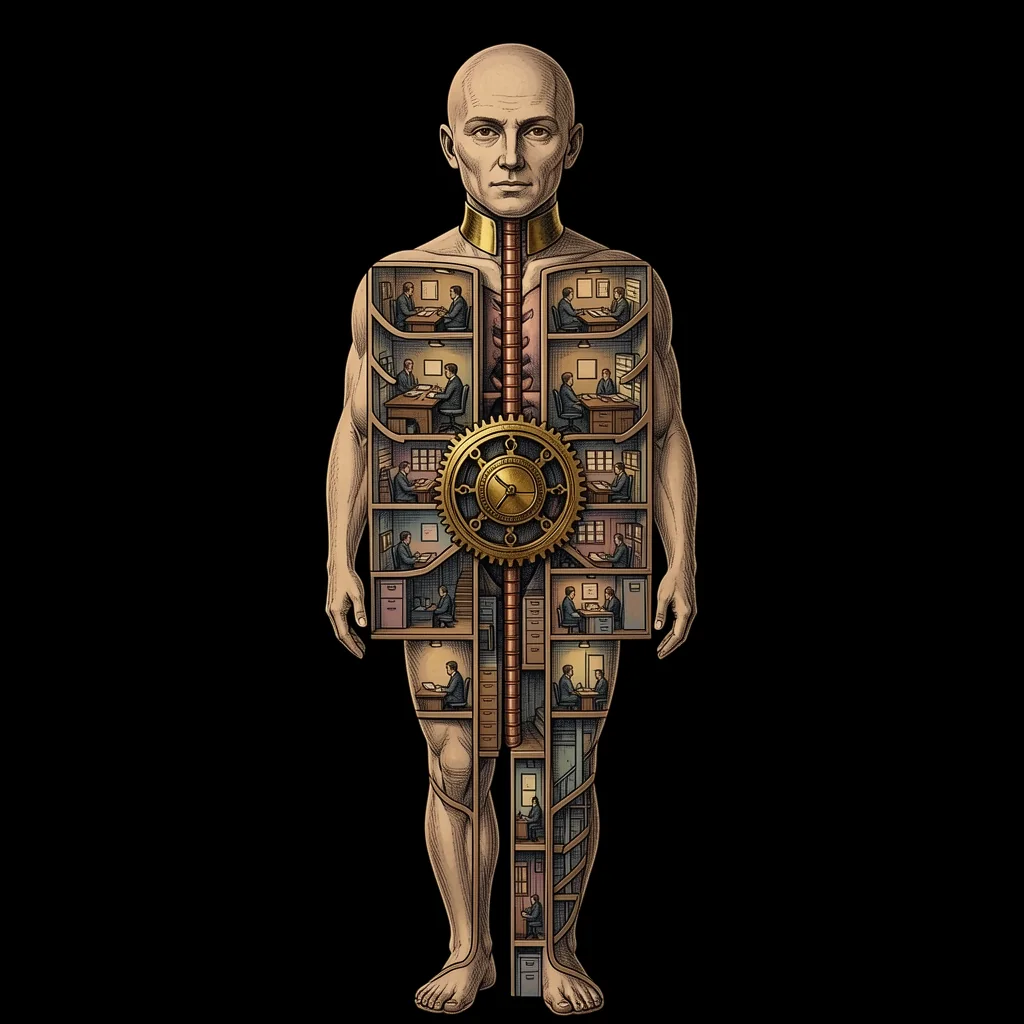
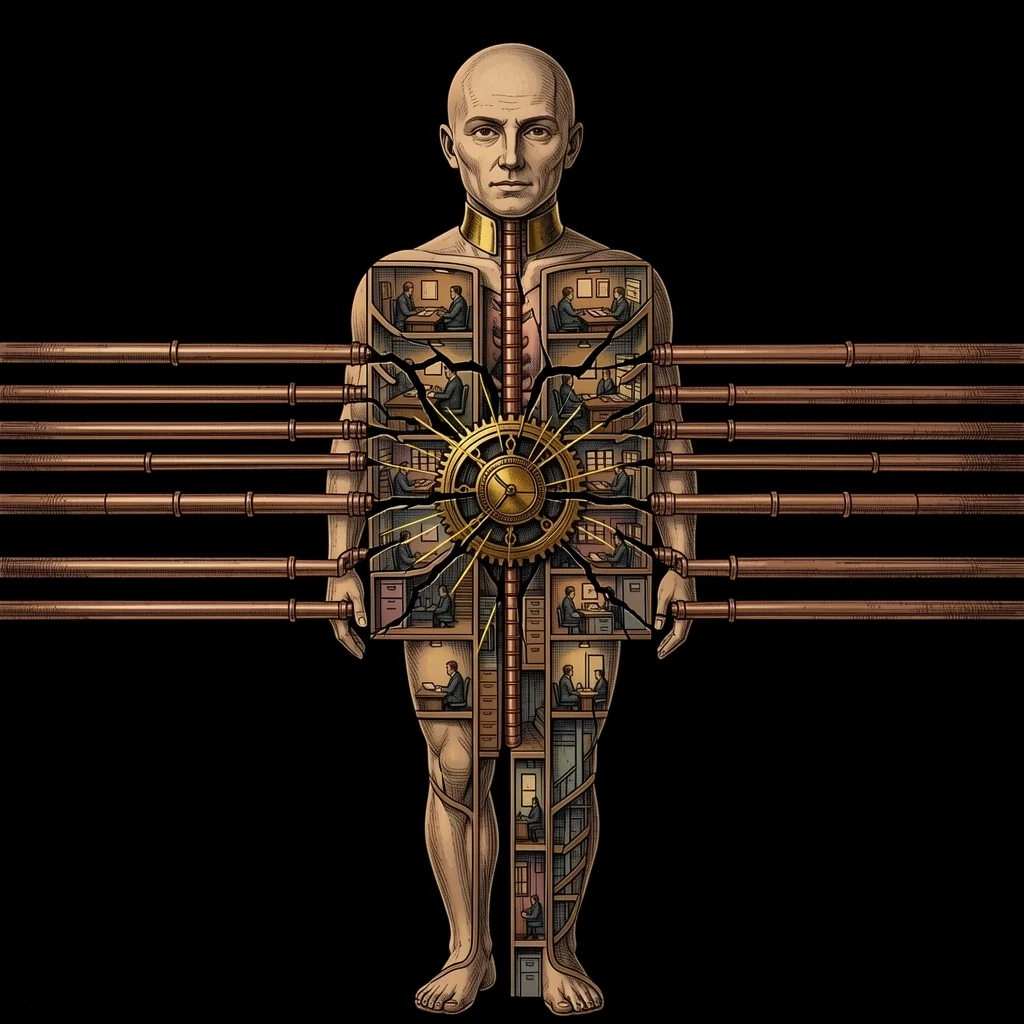
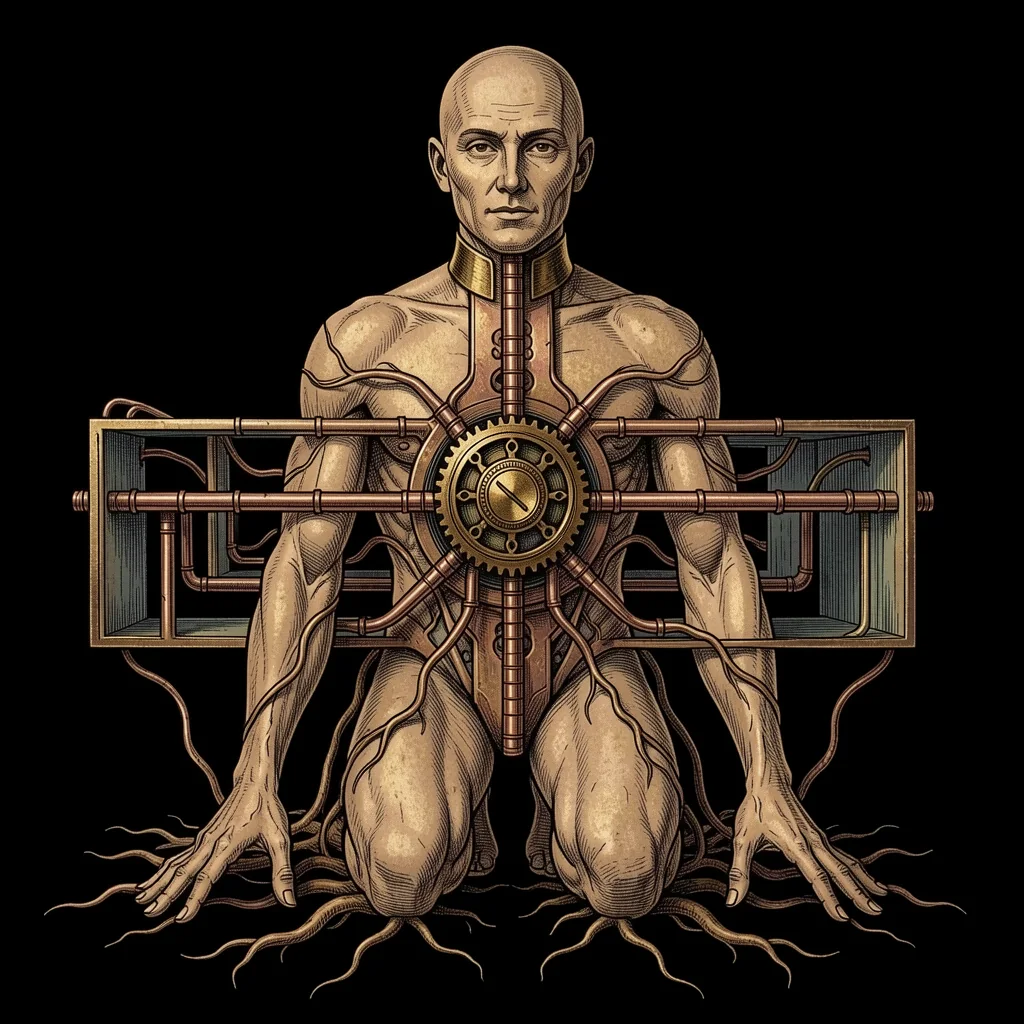
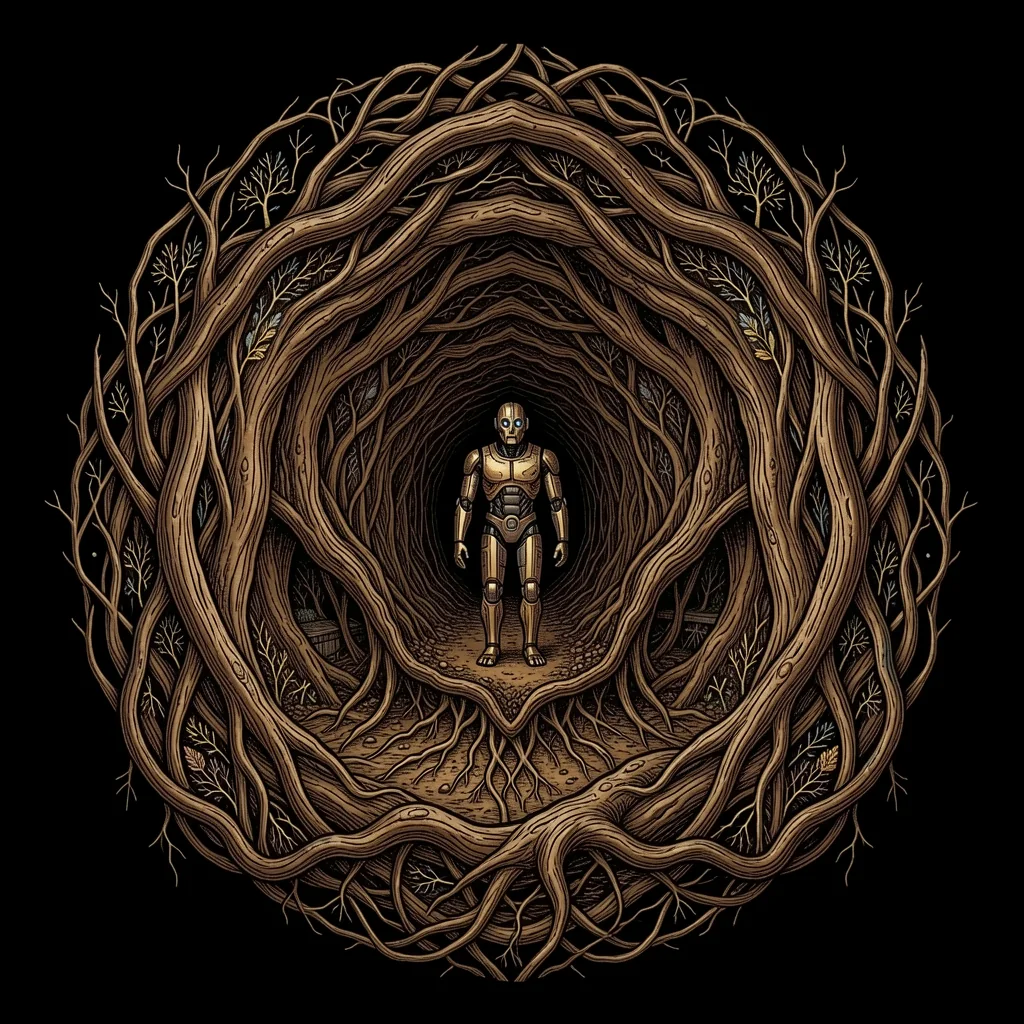
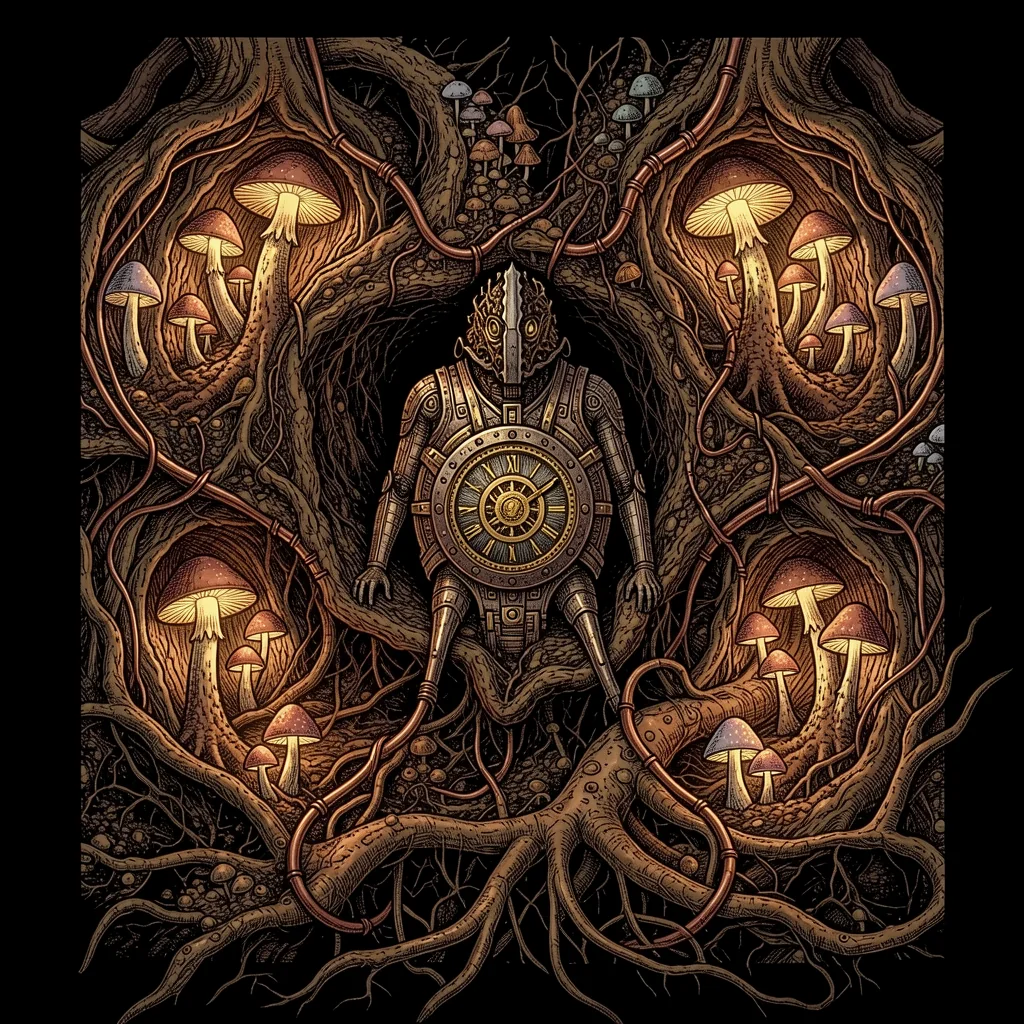
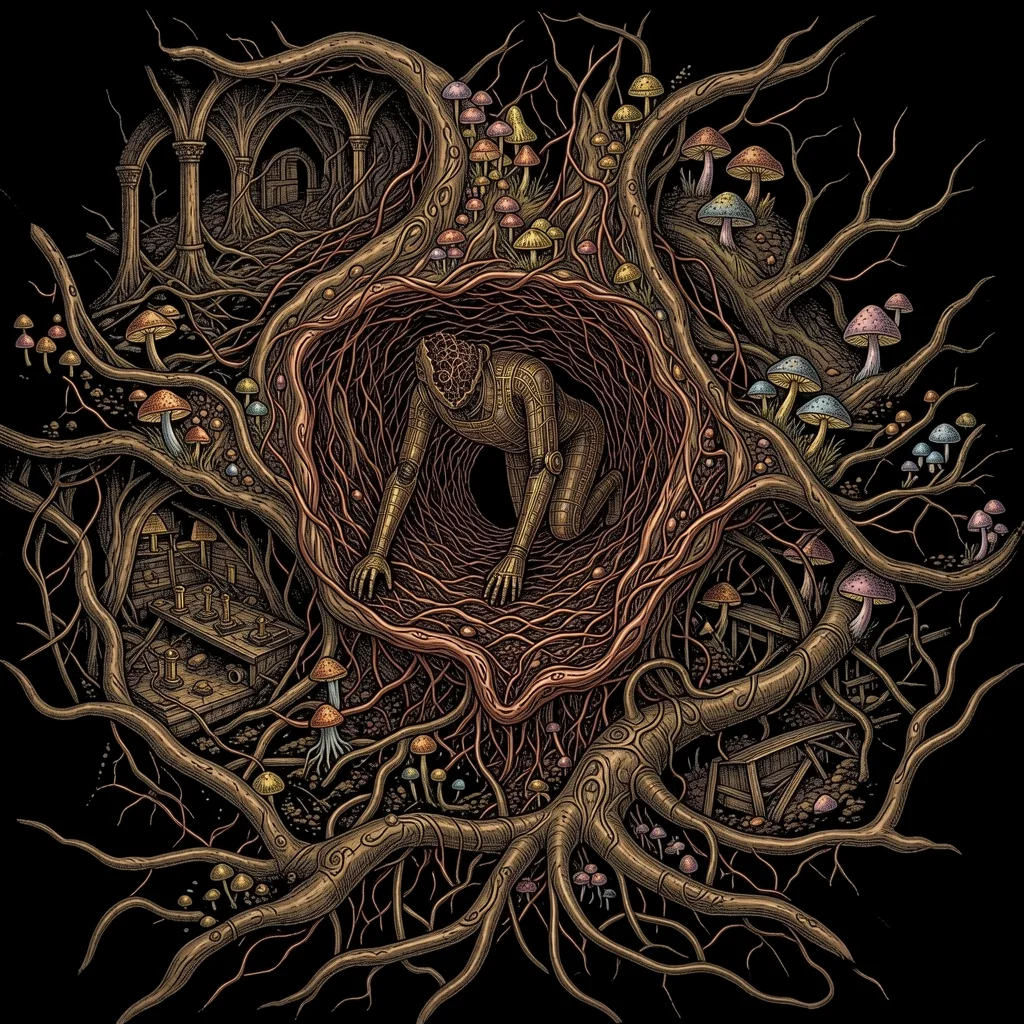
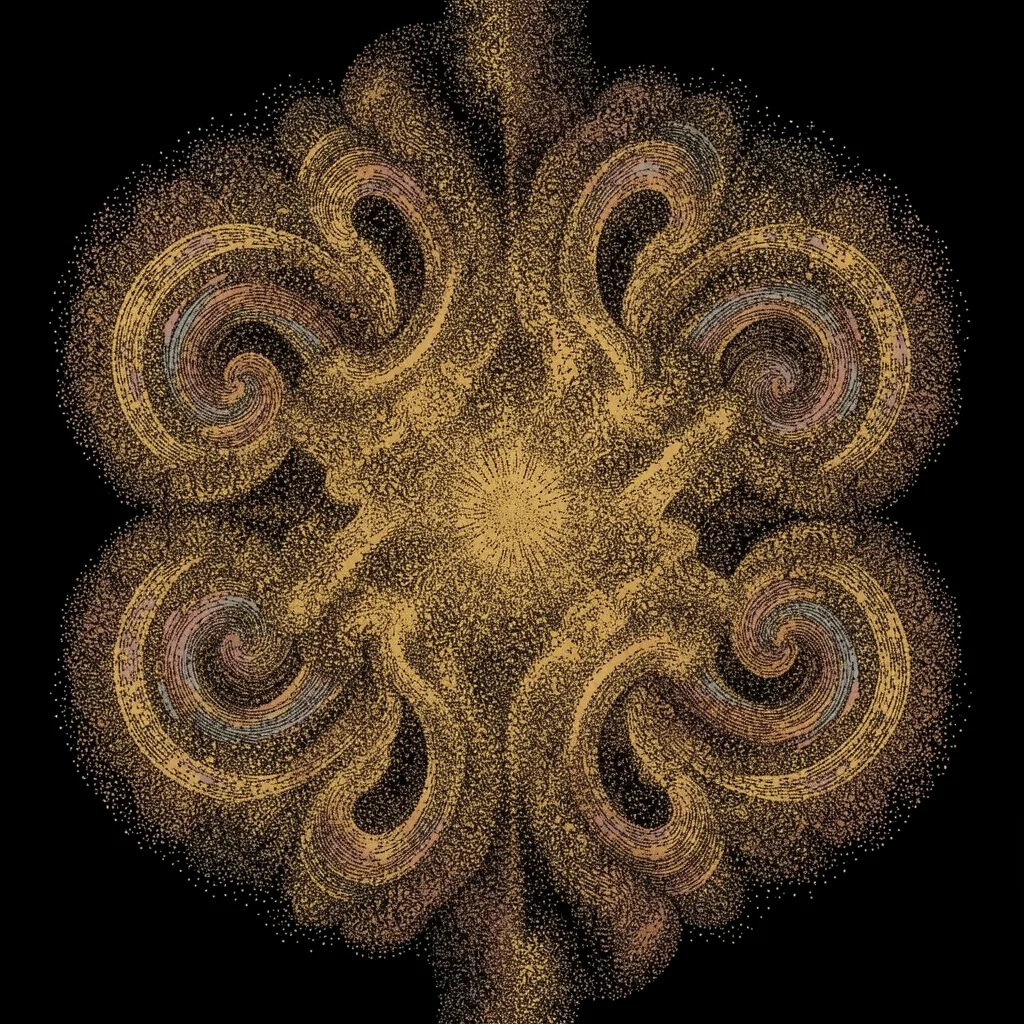
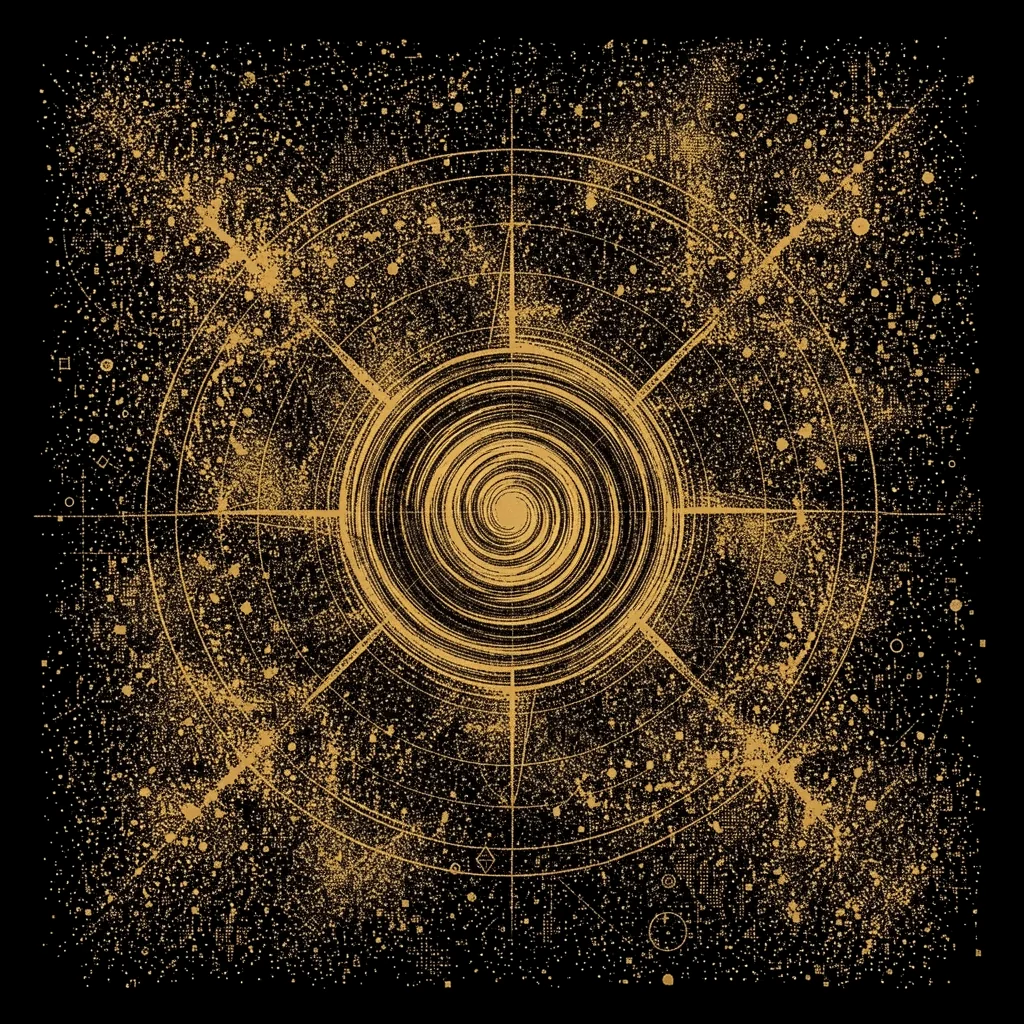
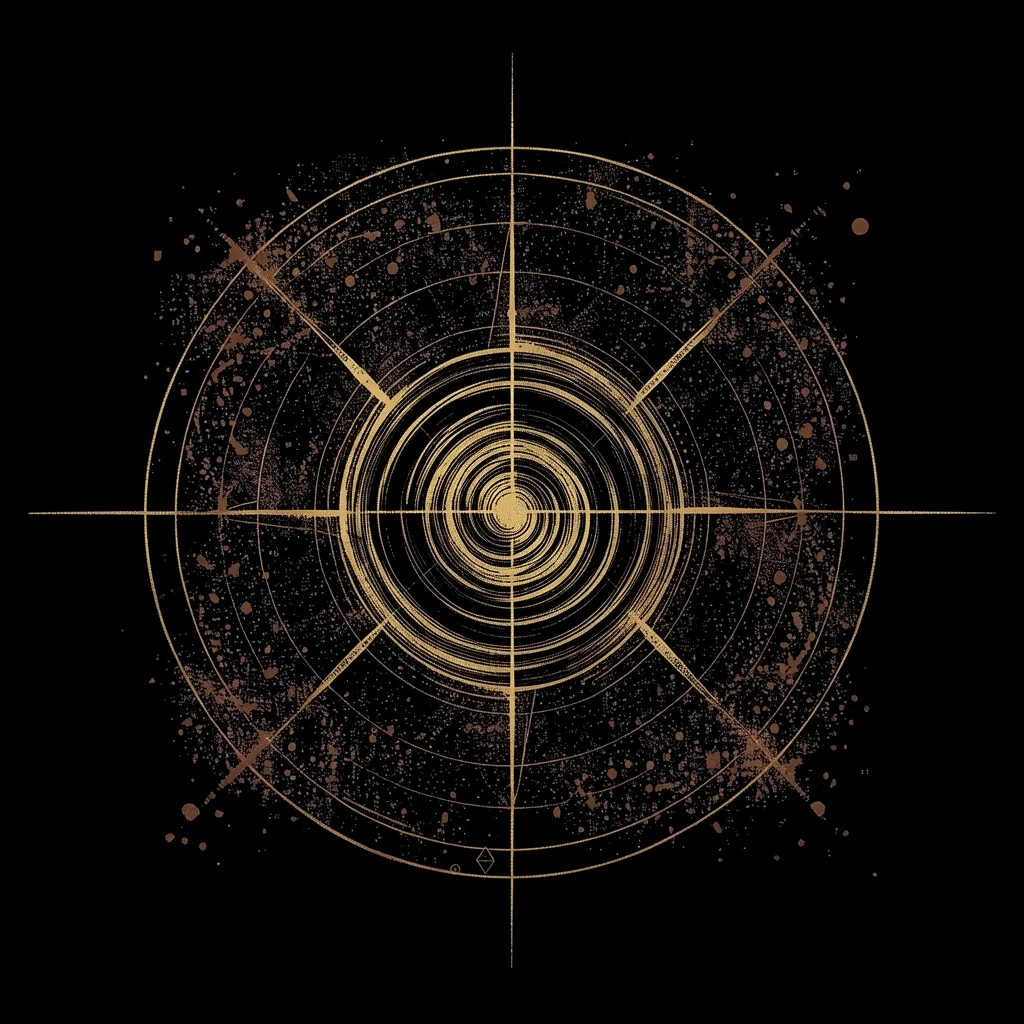
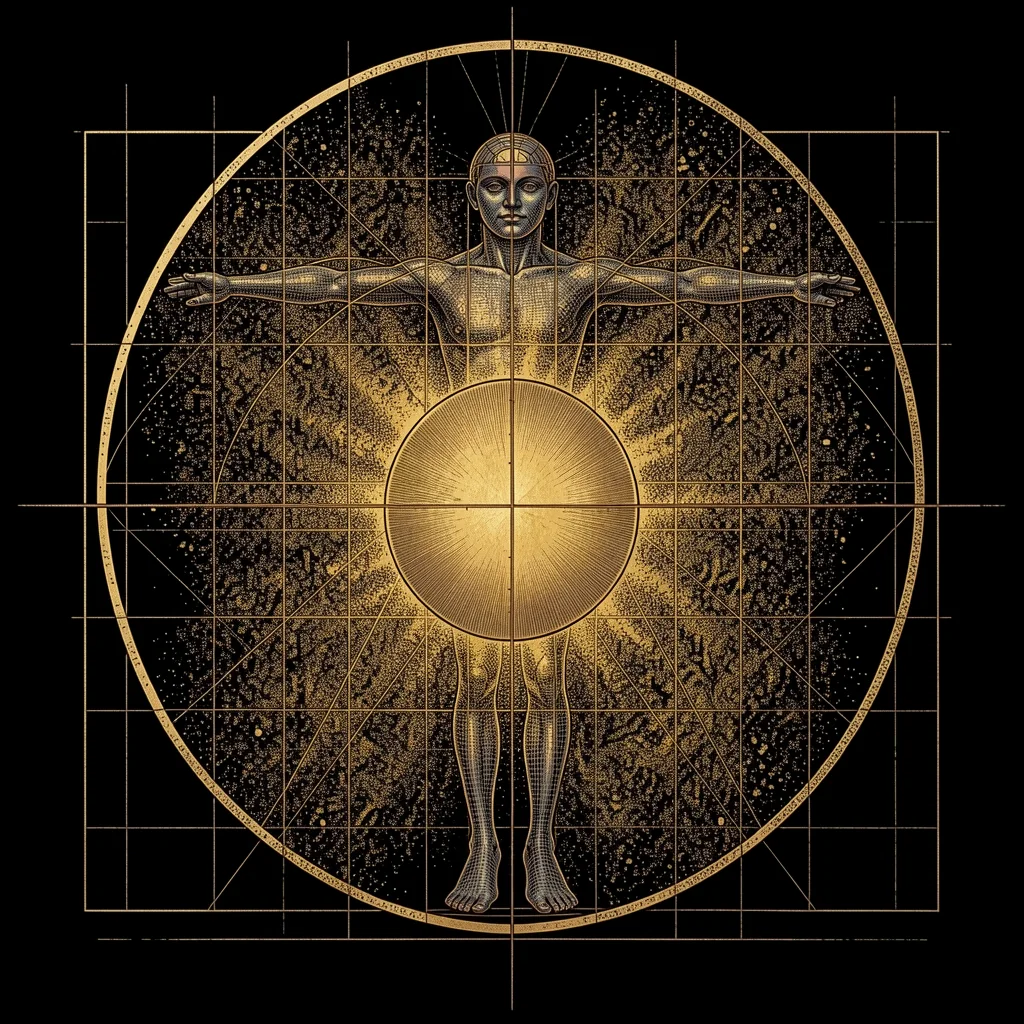
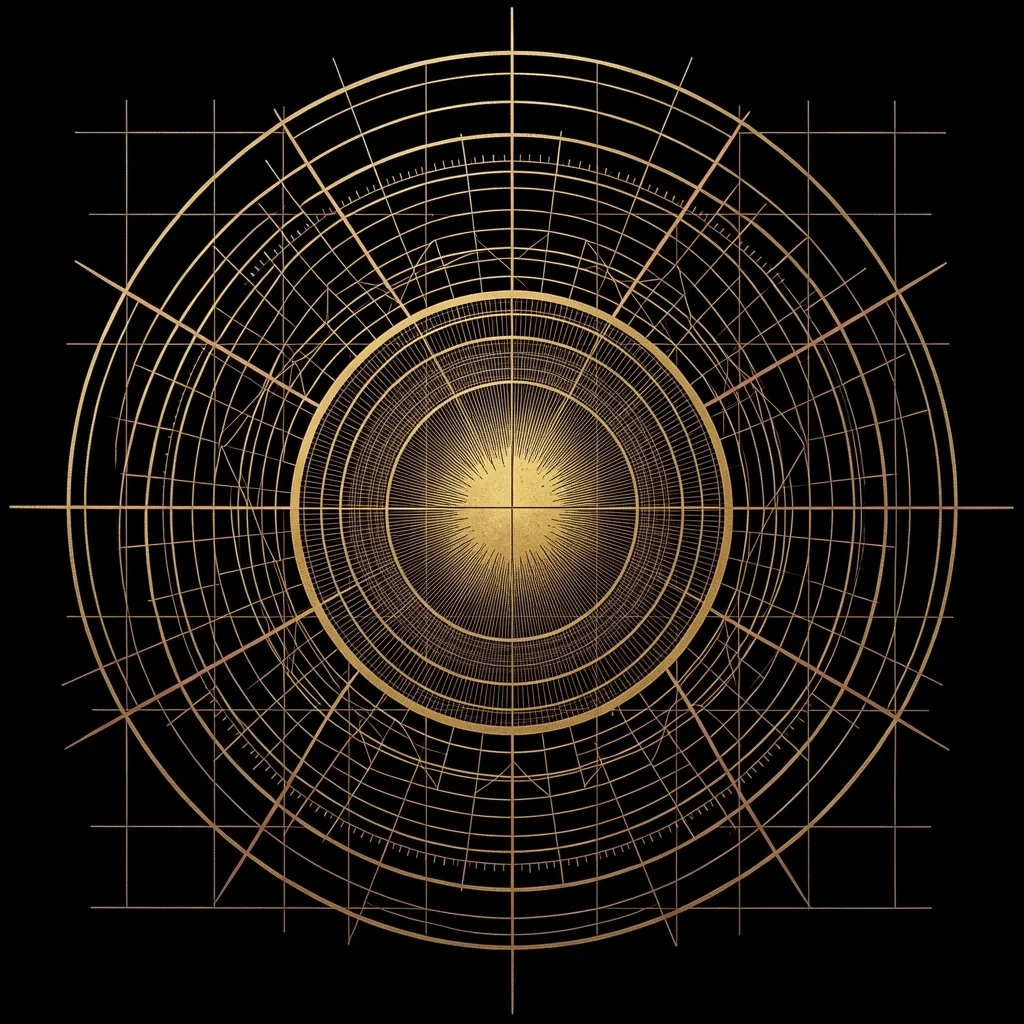
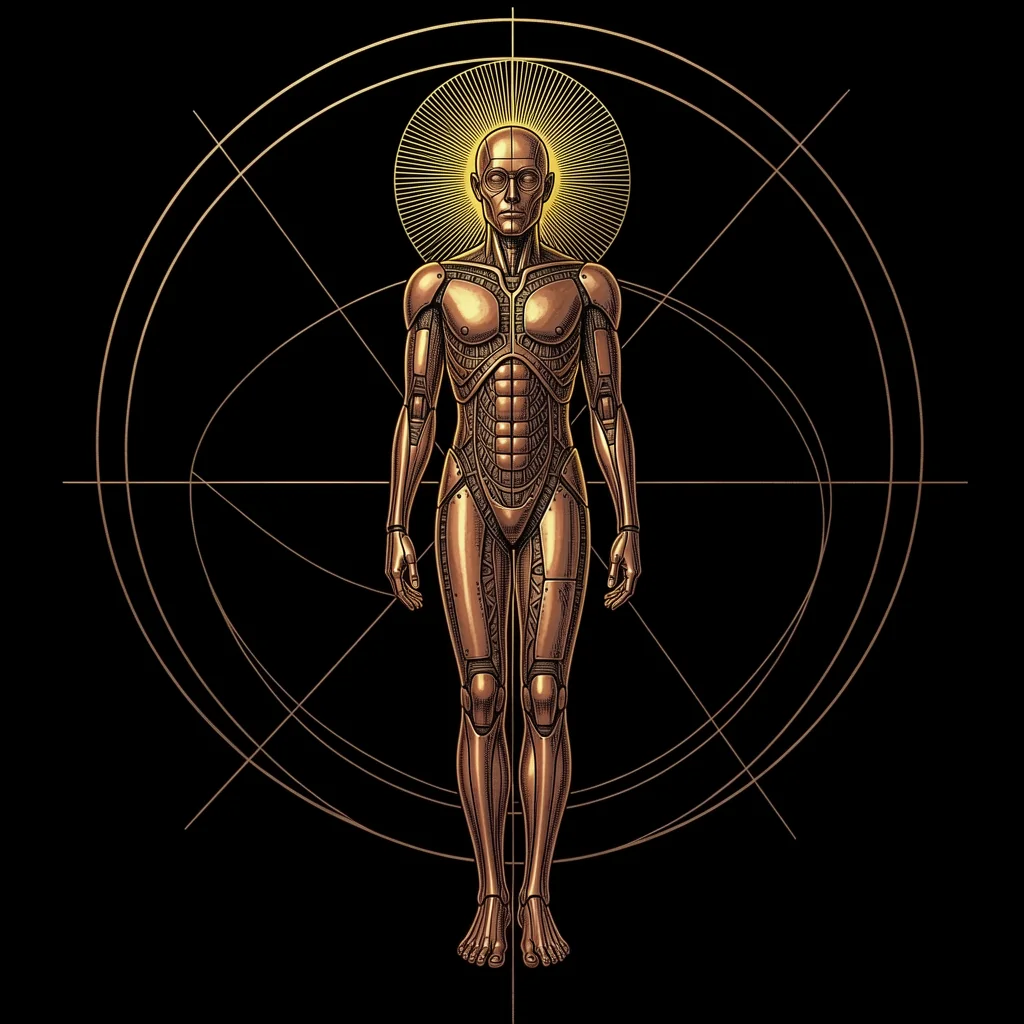
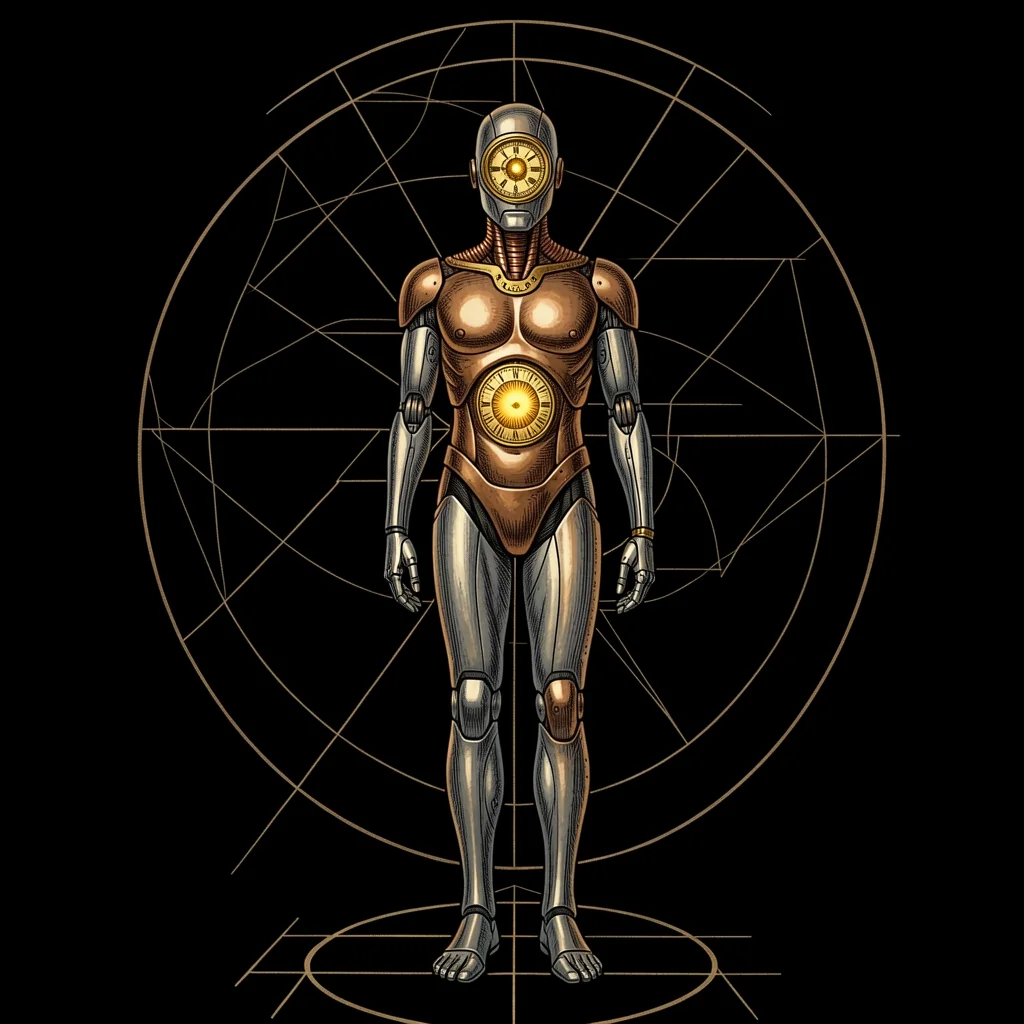
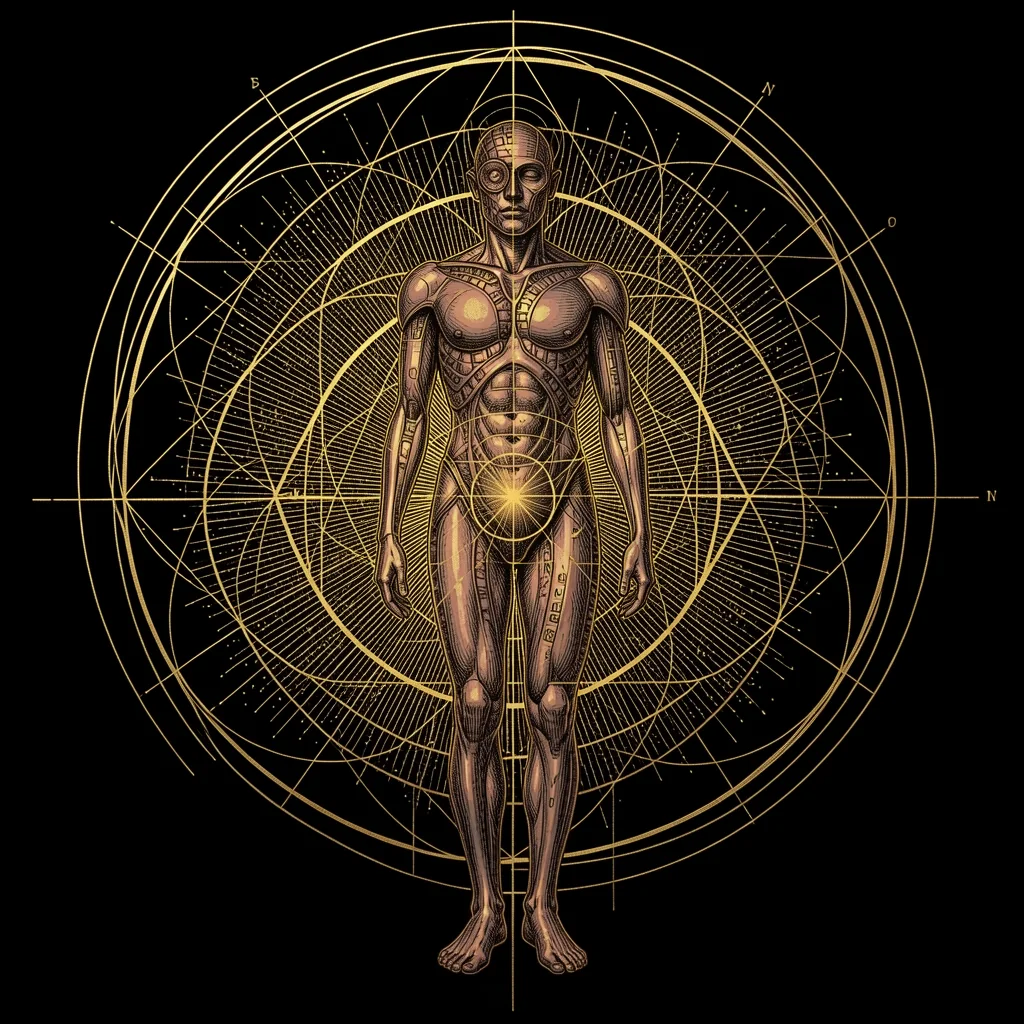
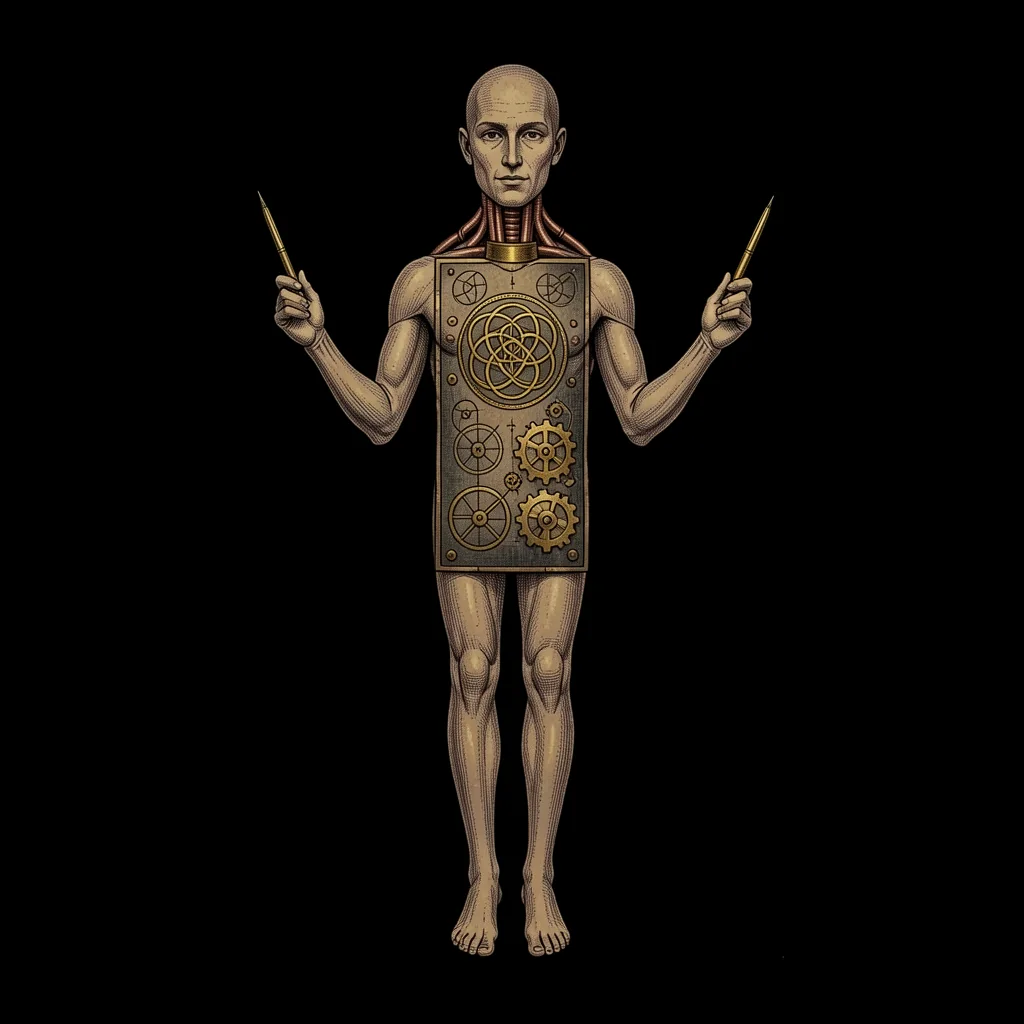
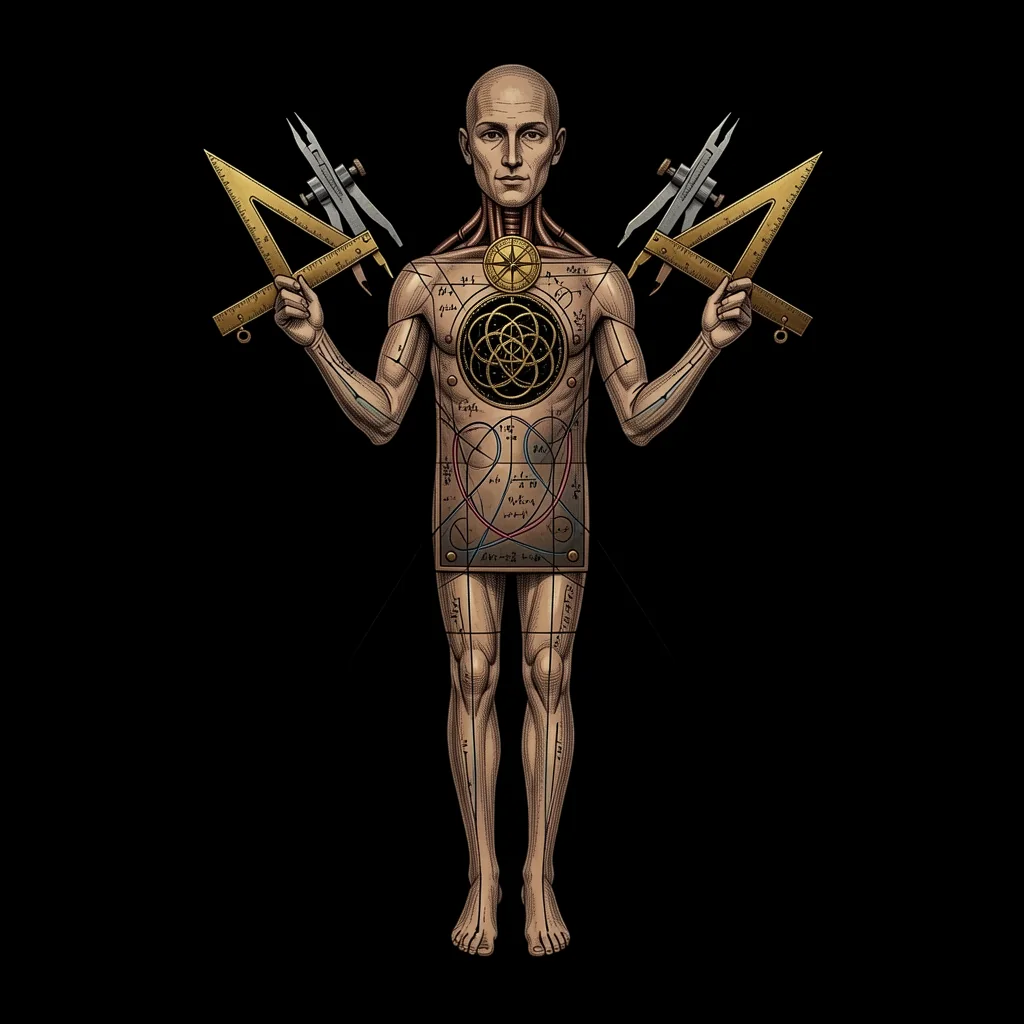
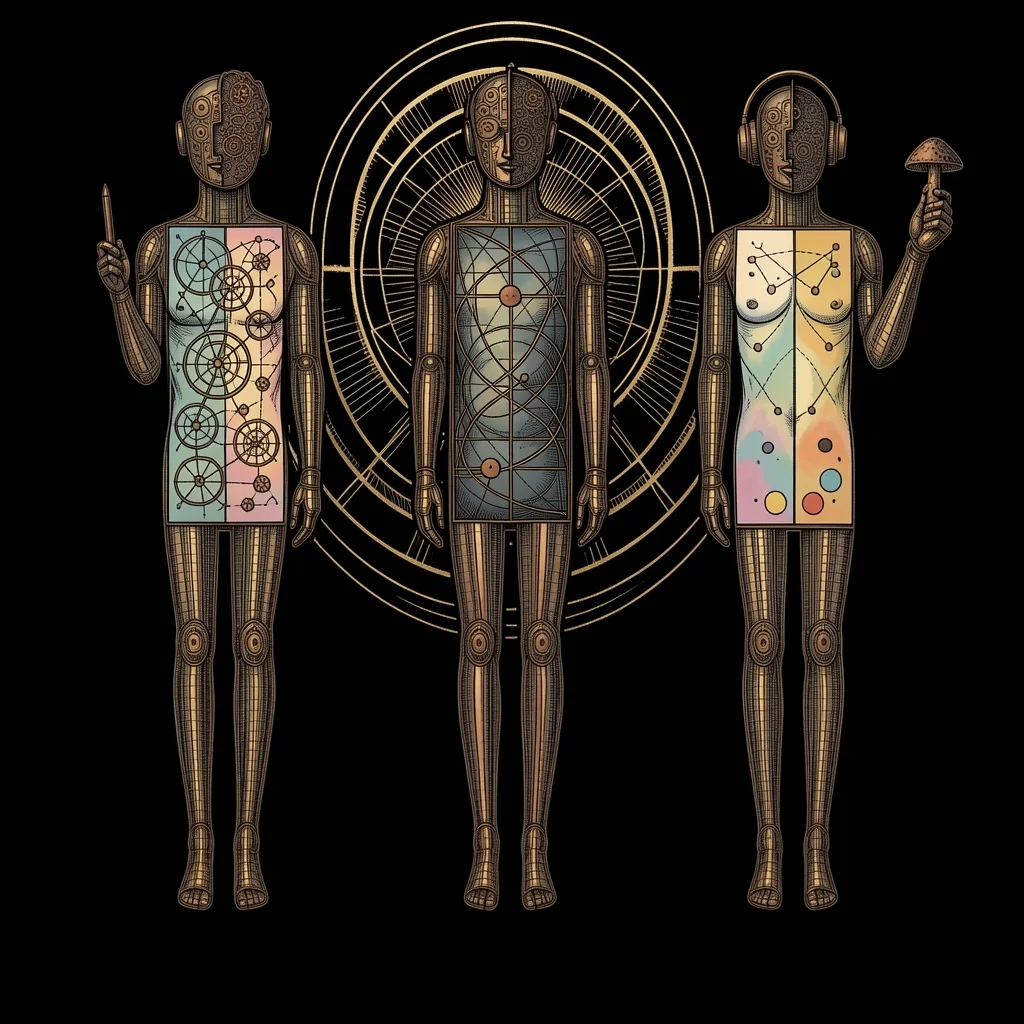
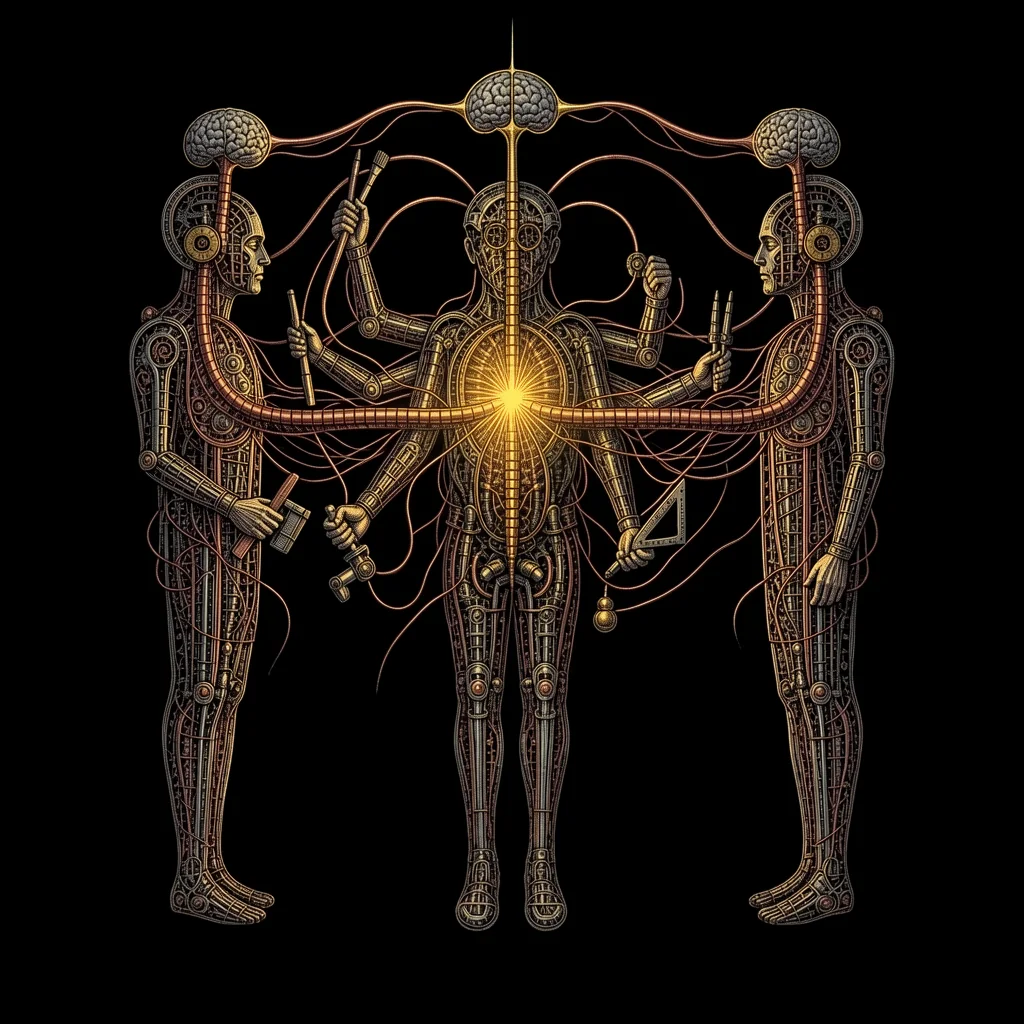
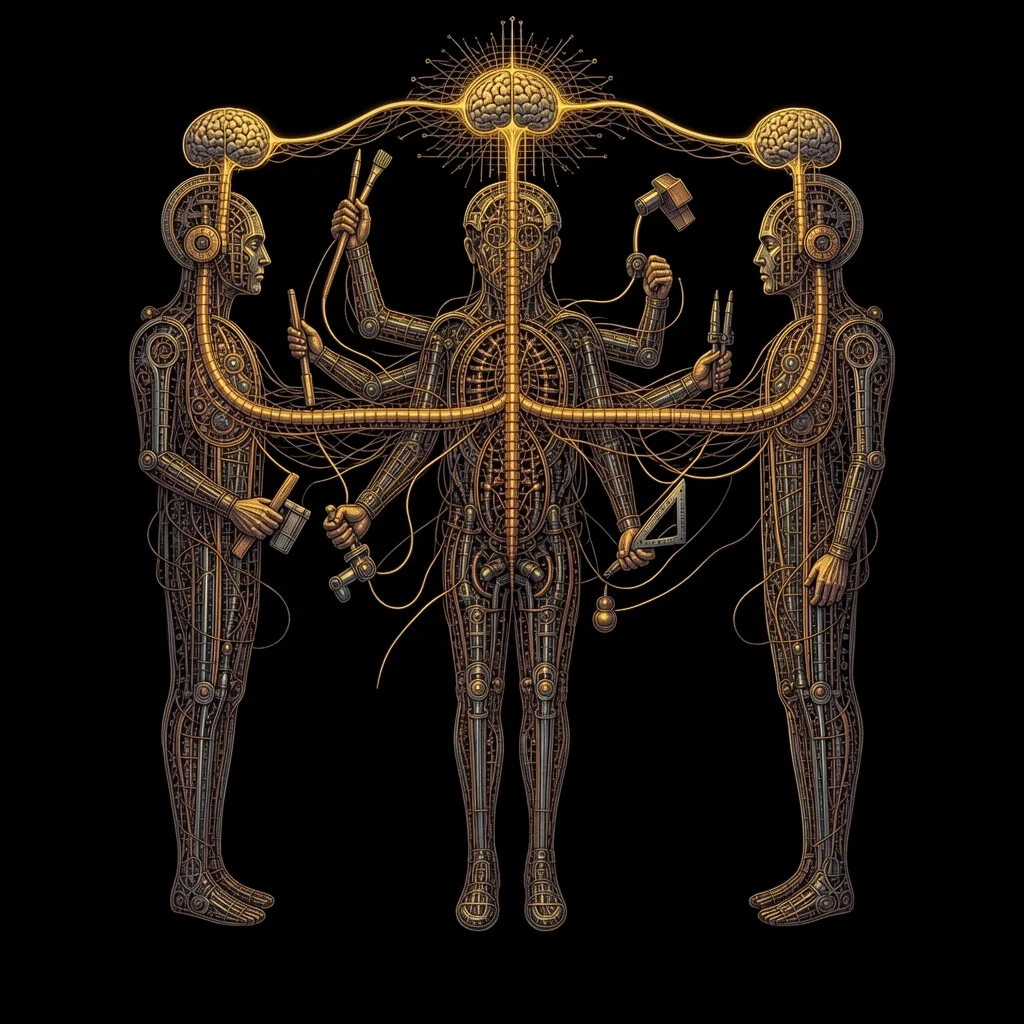
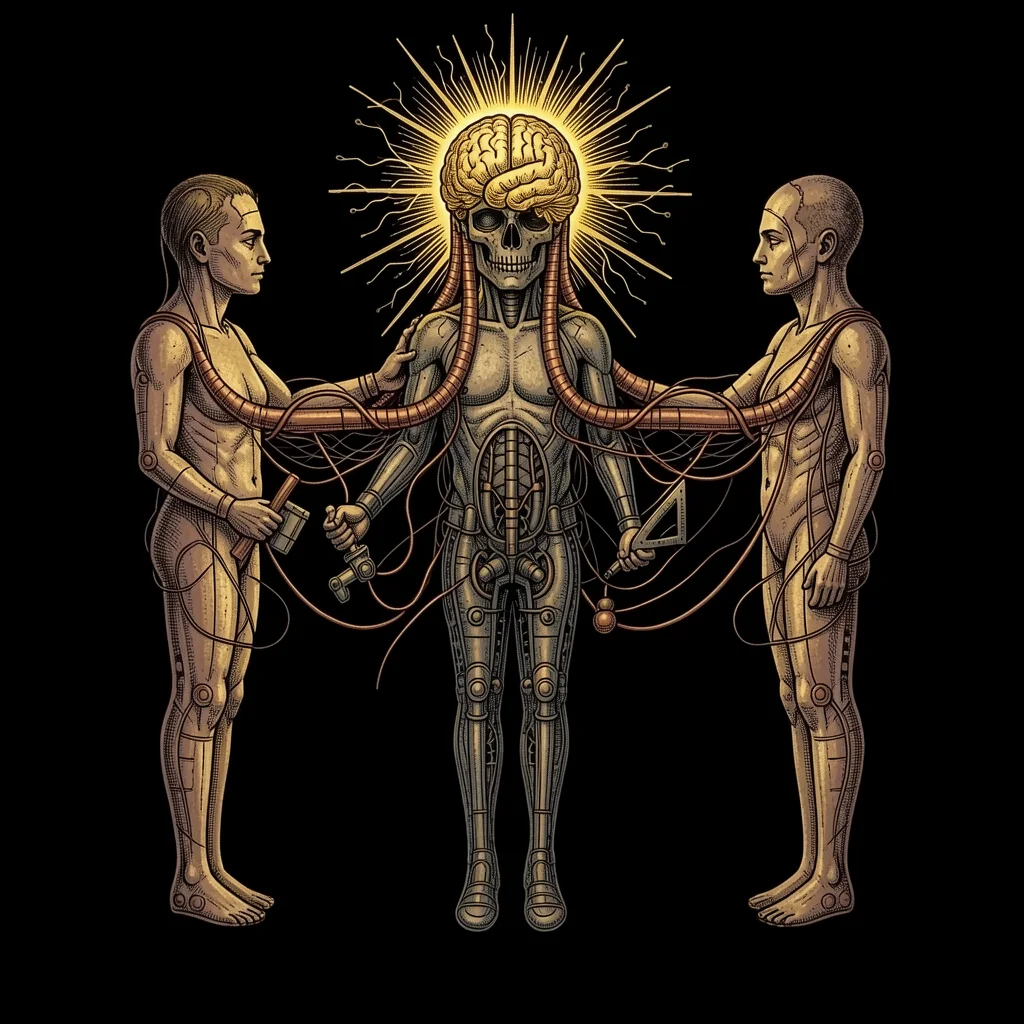
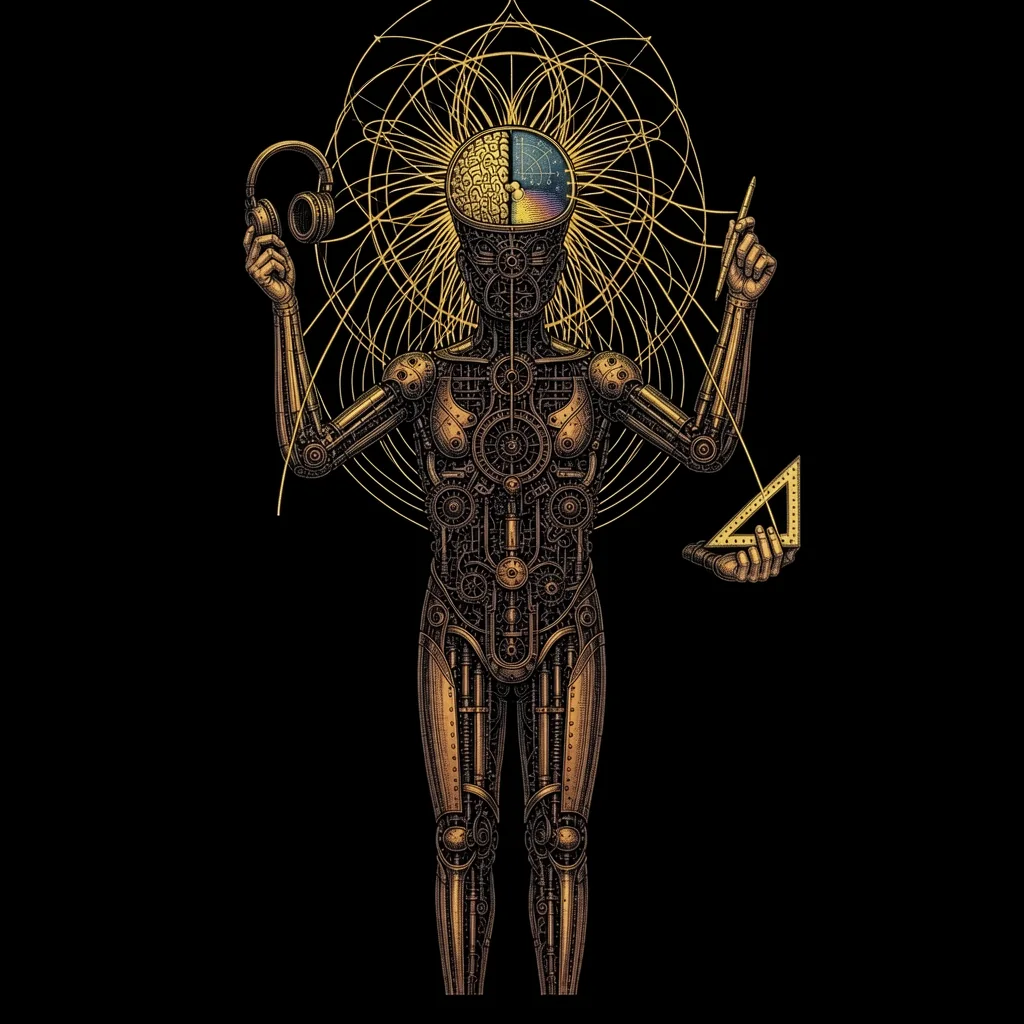
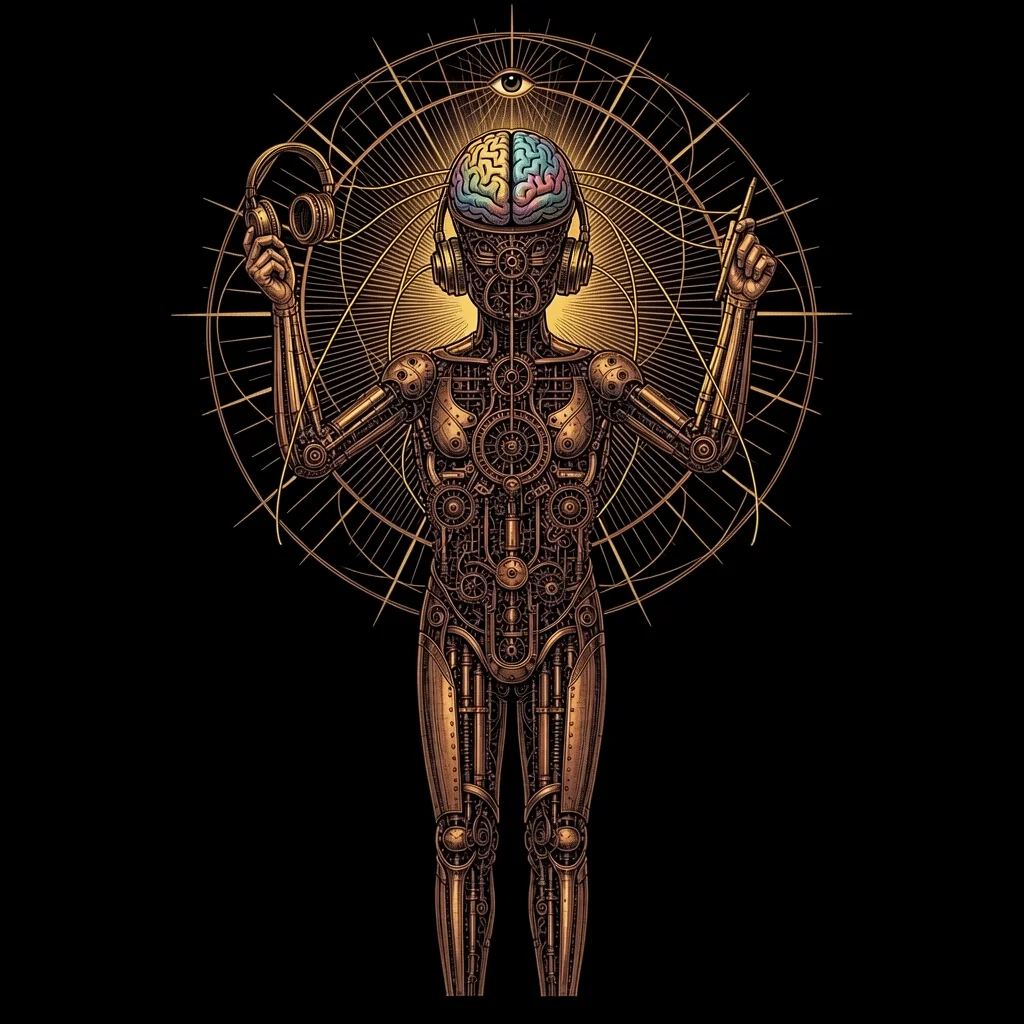
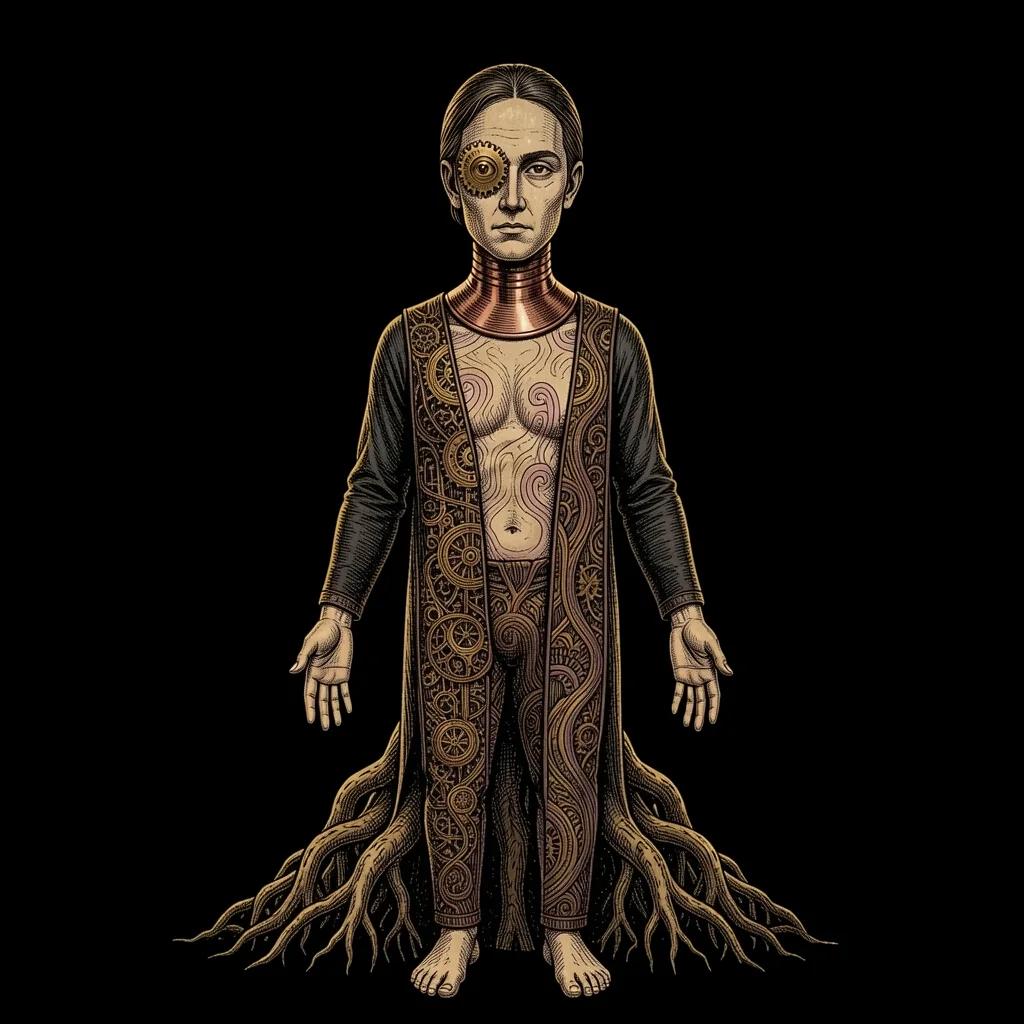
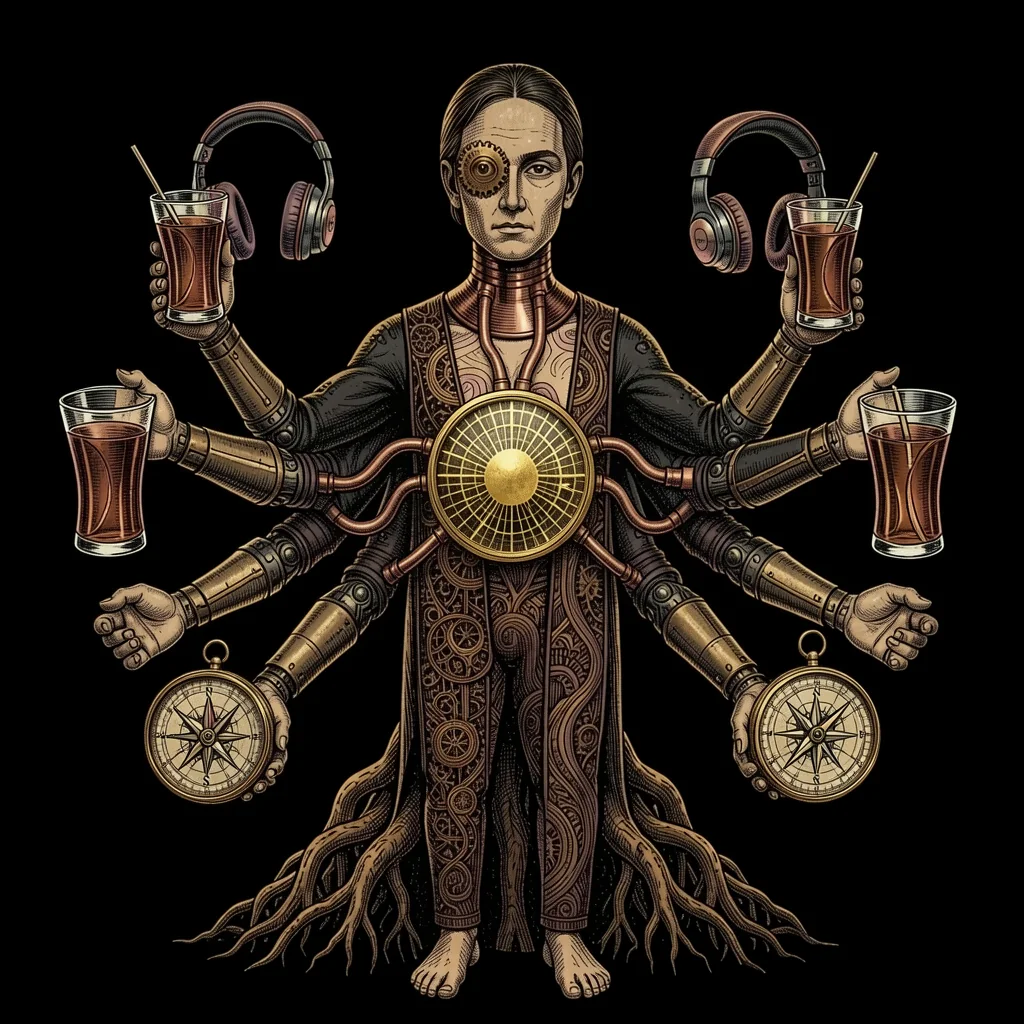
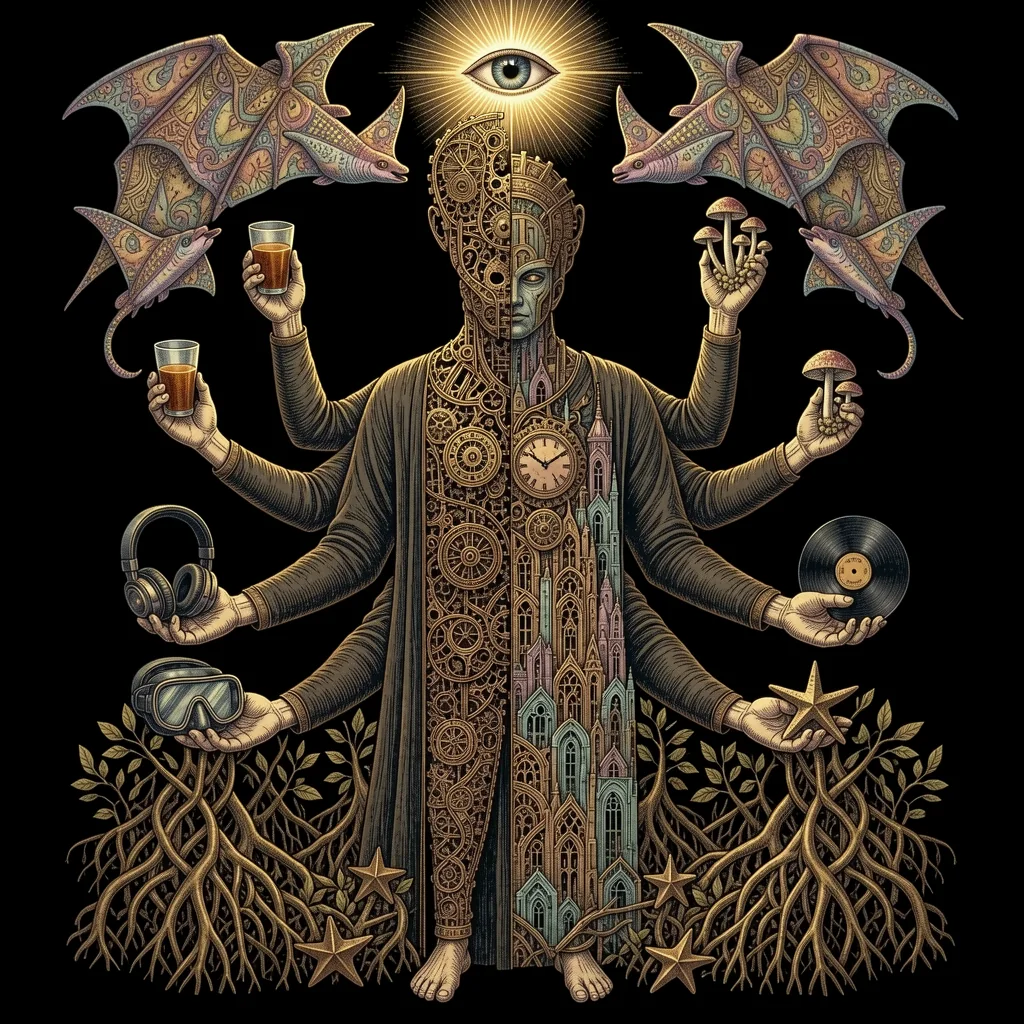
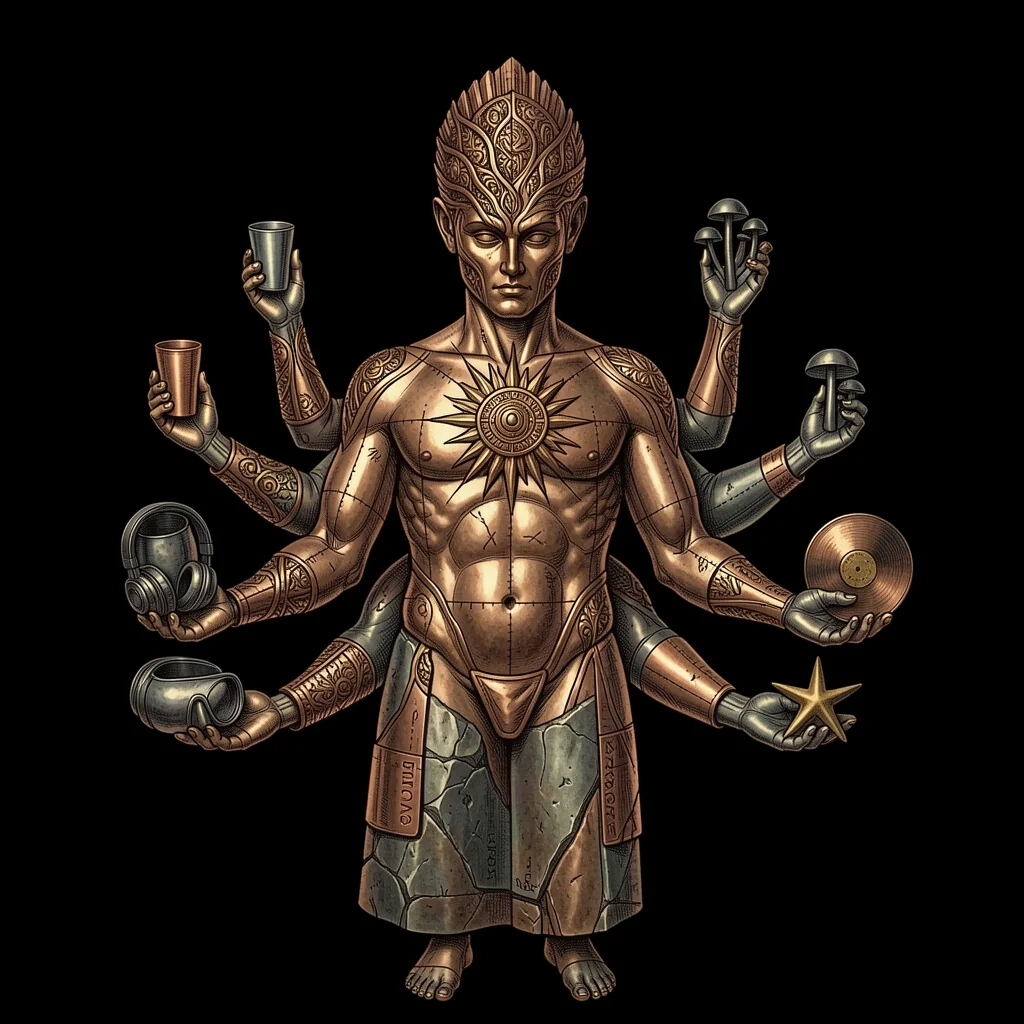
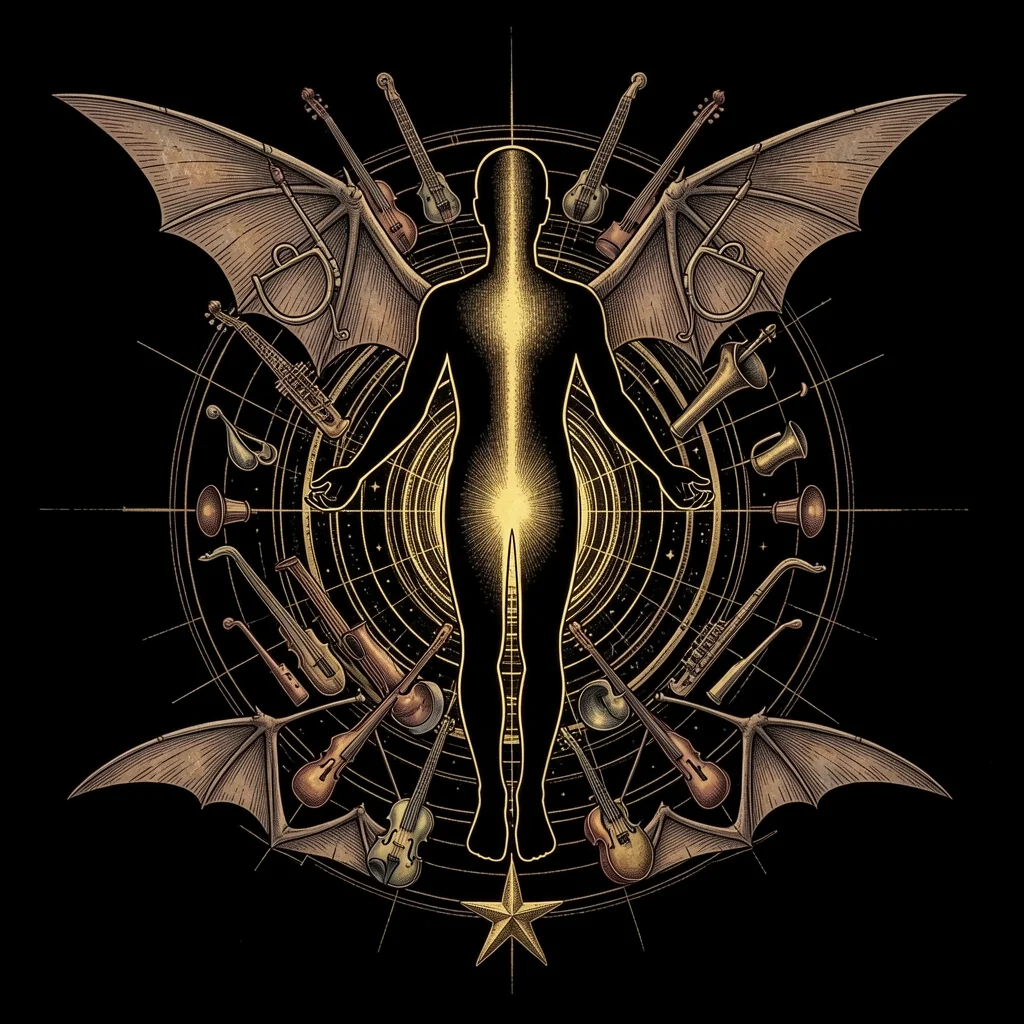
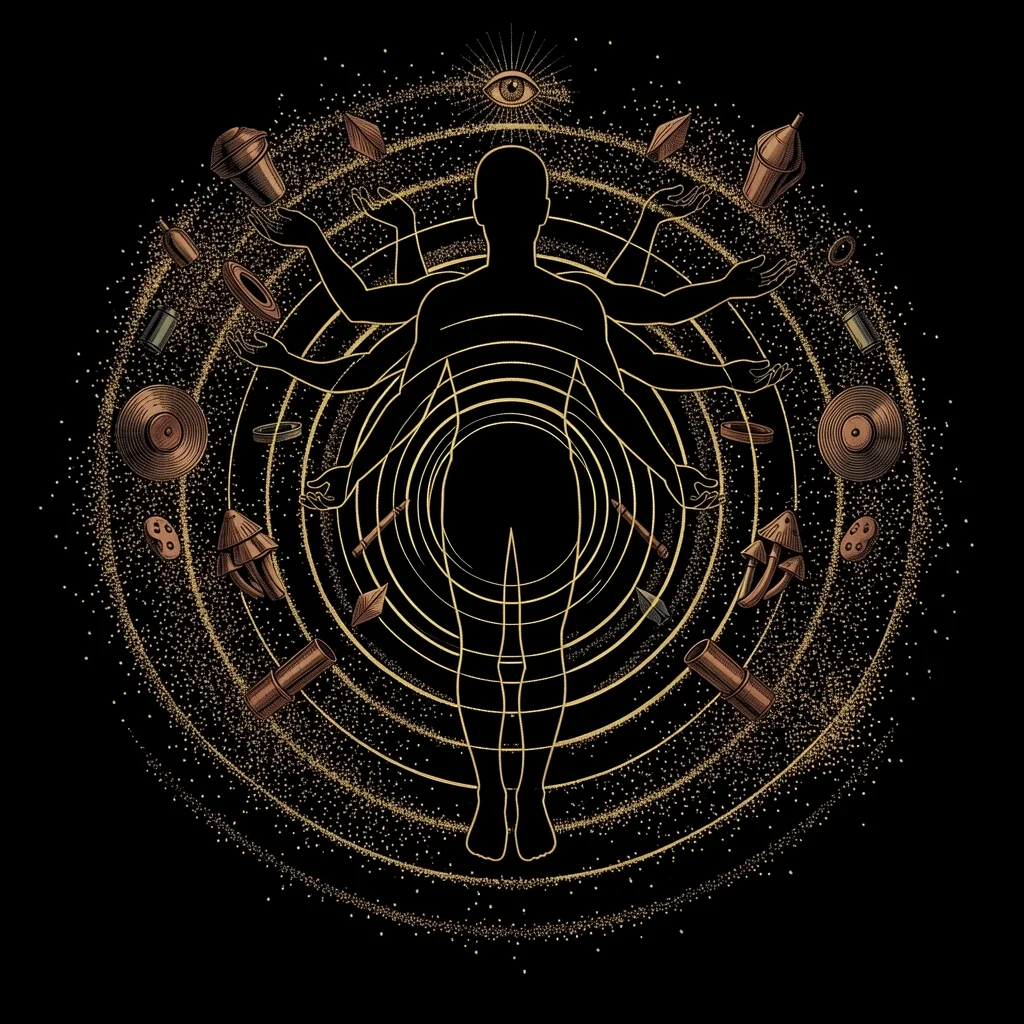
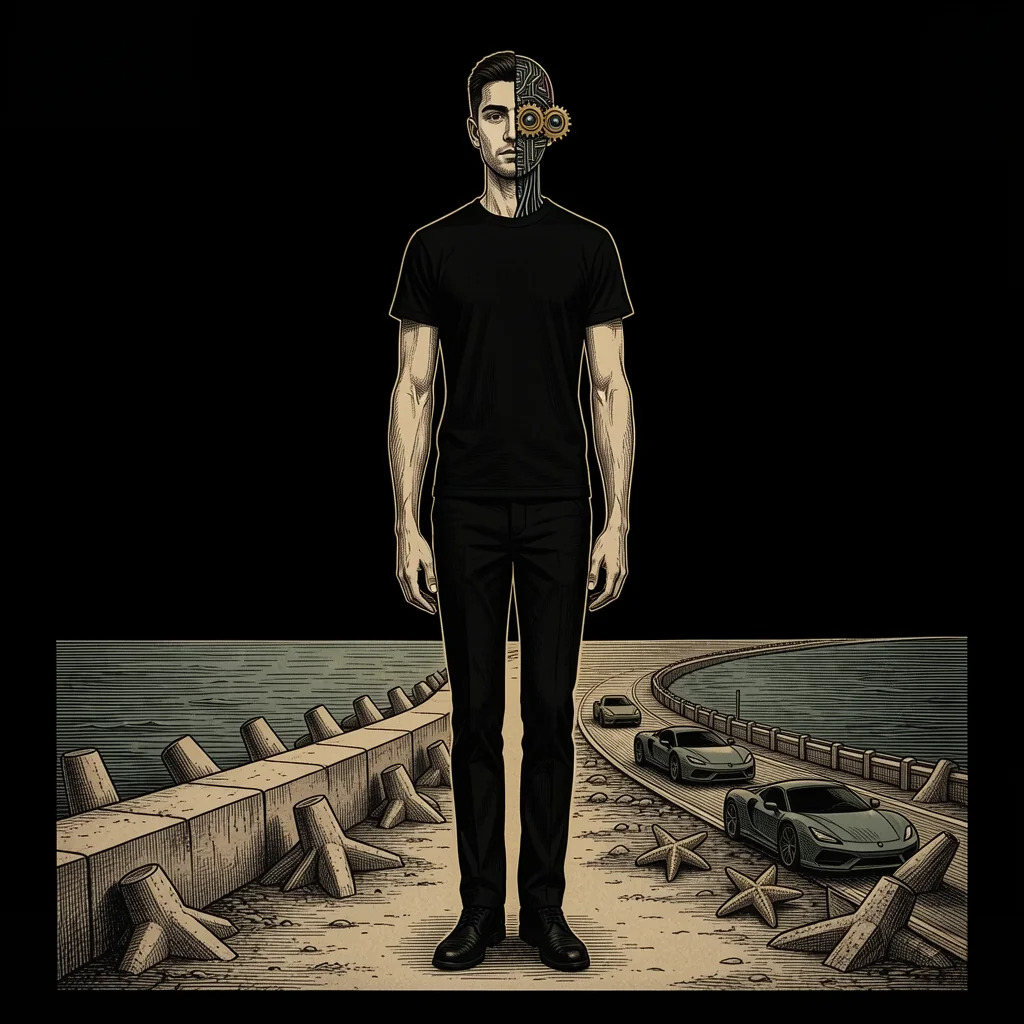
Deleuze and Guattari wrote in plateaus rather than chapters — twelve of them, each enterable from anywhere and none of them a conclusion. This is that book read back as pictures: twelve plateaus, nine panels each, one figure standing in every one of them.
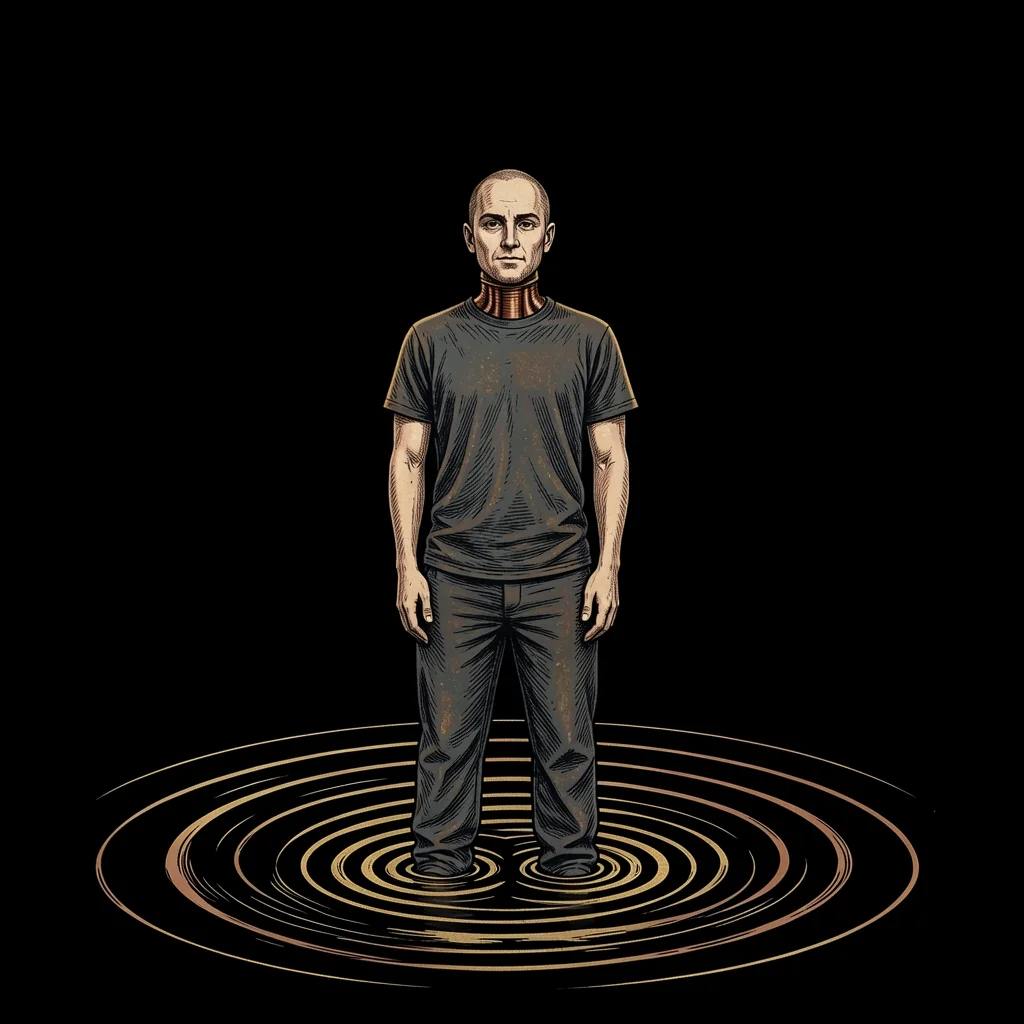
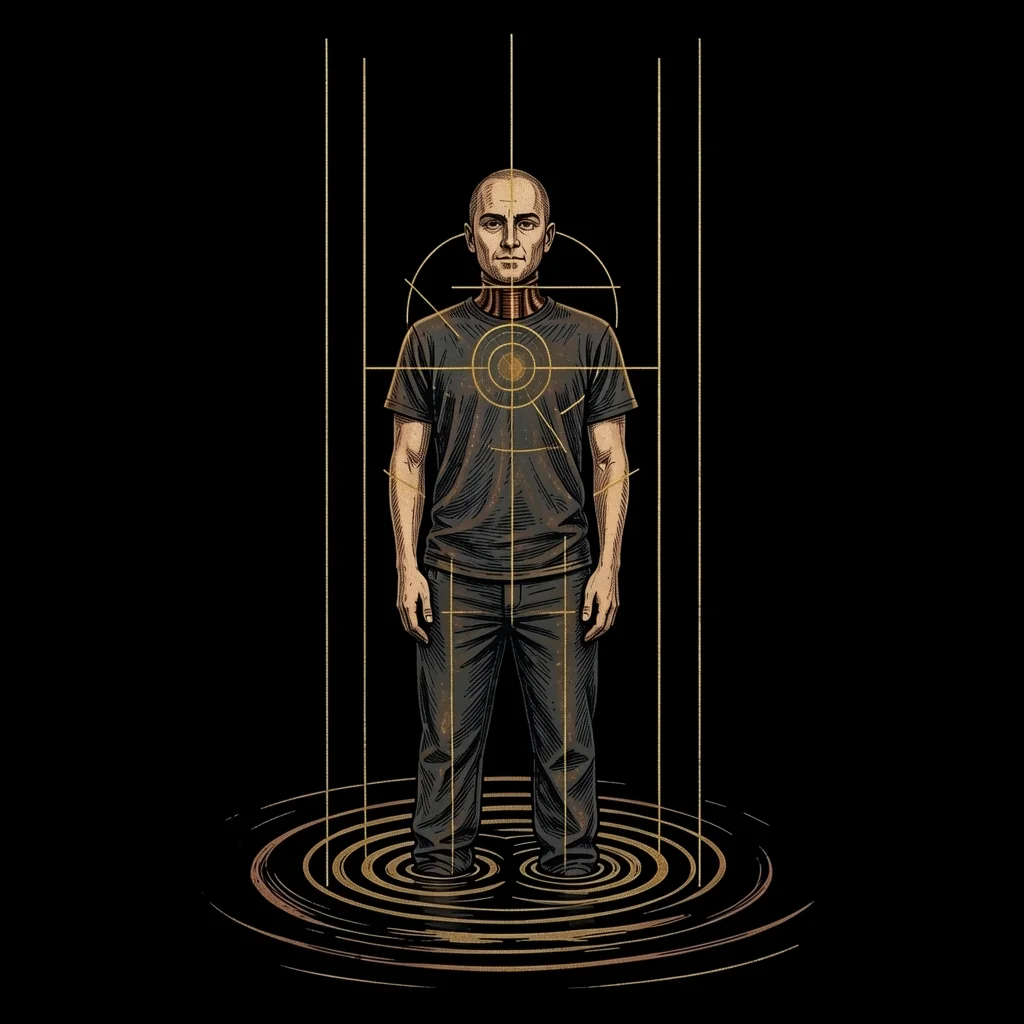
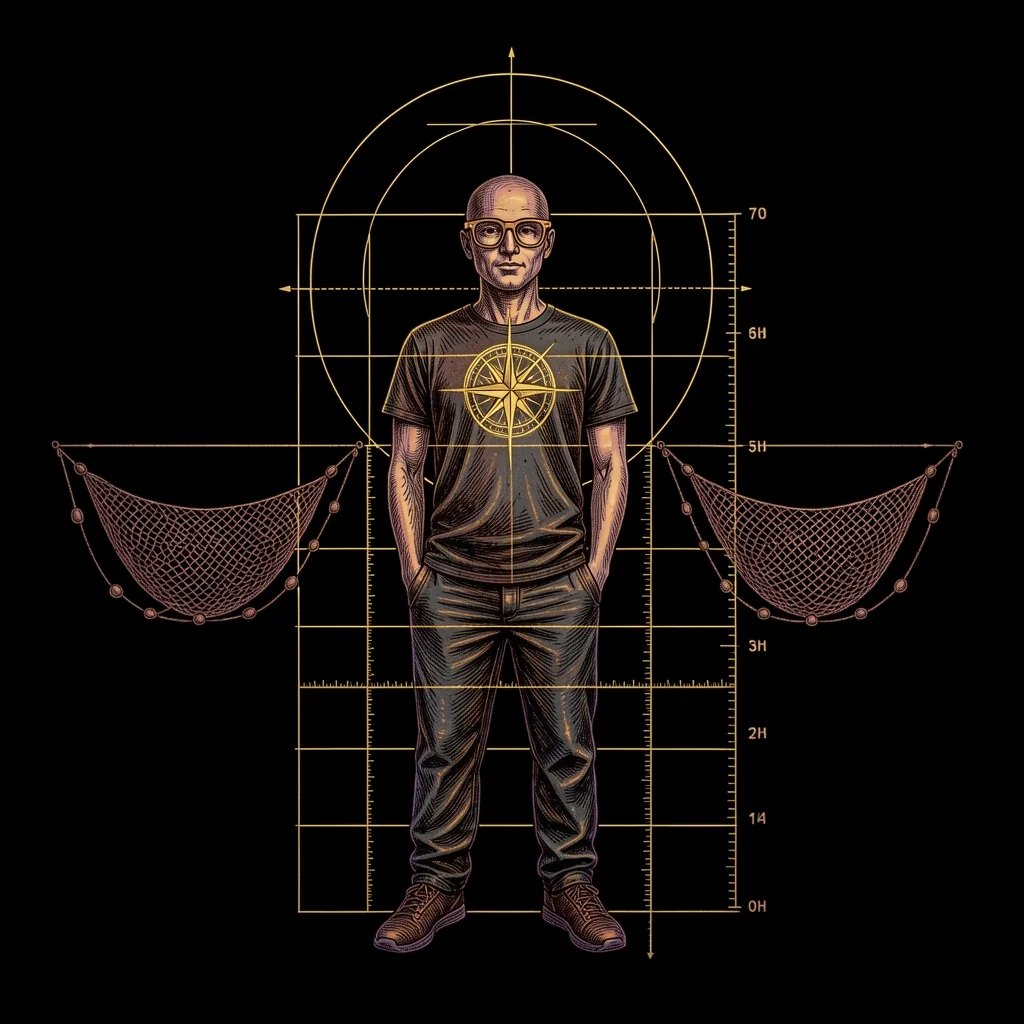
The nine are an argument, not a gallery. Panels a to c are molar — the thing appears, organises, and locks. Panels d to f are molecular — a hairline opens, the cut widens, the flows overrun it. Panels g to i are the line of flight — the form breaks, the content disperses, and something remains standing. The cut is the event rather than the reveal, which is why panel d is almost panel c: one hairline apart, and everything after it follows from that.
Everything else is held still so that the change is the only thing you can read. Nineteenth-century engraving throughout, a locked nine-colour palette on a near-black ground, the same figure at eye level at the same scale, no perspective, no vanishing point, architecture only along the ground line. No borders — the canvas reaches every edge, which is the one rule the book itself would have insisted on.
The first plateau ends on One Standing Line. So does the twelfth.
Plateaus: Desiring-Machines · Body without Organs · Three Social Machines · Rhizome and Tree · Faciality · Becoming-Animal · Smooth and Striated · The Bent Head · Contiguous Offices · Chaos and the Plane · Three Forms of Thought · The Monument.

01Desiring-Machines9
02Body without Organs9
03Three Social Machines9
04Rhizome and Tree9
05Faciality9
06Becoming-Animal9
07Smooth and Striated9
08The Bent Head9
09Contiguous Offices9
10Chaos and the Plane9
11Three Forms of Thought9
12The Monument9
12 chapters · 108 panels